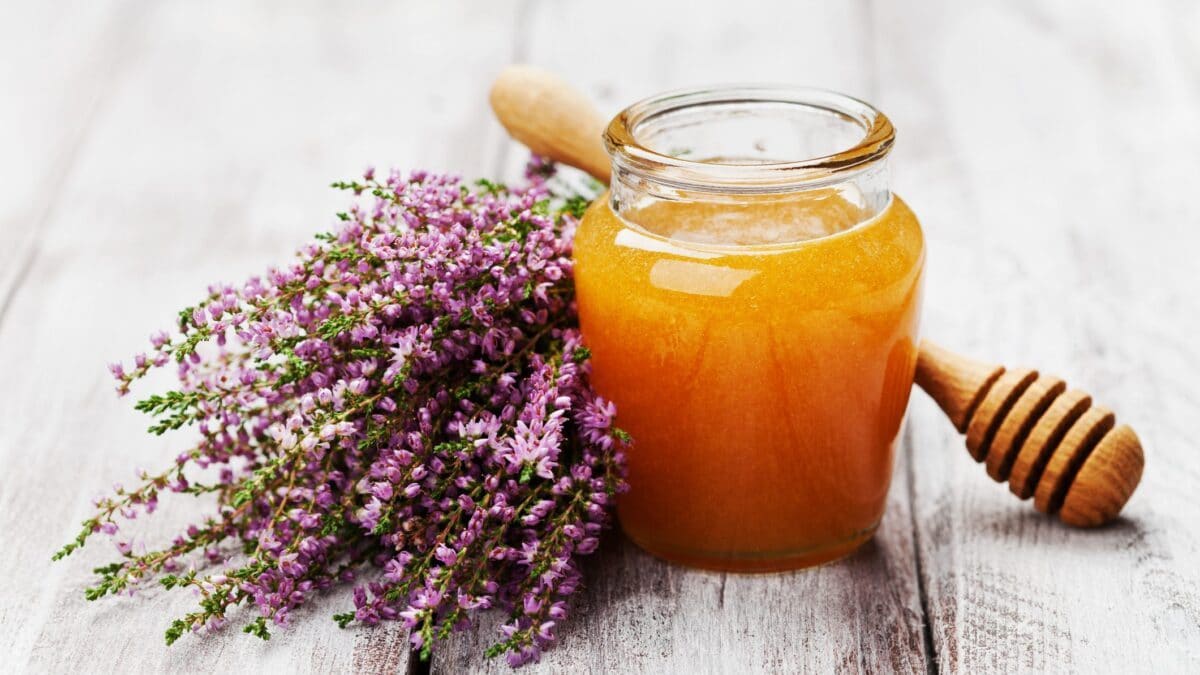
Honey is never exactly the same: it changes color, scent, and flavor depending on the flowers bees encounter during their flight and the area where it is collected. It is precisely this variety that makes honey a way to describe a landscape through flavor, from themost common blooms to the wild and lesser-known ones. Among these is heather, a plant that grows primarily in wild and Mediterranean environments and whose blooms provide bees with a nectar with a distinctive character. This is where heather honey comes from, a variety distinguished by its amber hues, rapid crystallization, and an aromatic profile in which the sweetness of caramel and toffee meets more intense notes, from licorice to earthy and woody nuances. A honey that, more than simply recounts the flower from which it comes, embodies the characteristics of the areas and seasons in which it is produced.
When Does Heather Flower and Where is It Produced?
When talking about heather honey, it also means to look at where the heather flowers used for European production grow. Most authentic heather honey imported into the U.S. comes from the British Isles and northern Europe, where vast areas of heathland provide ideal conditions for bees. In Scotland, England, and Ireland, the main source is ling heather (Calluna vulgaris), which blooms mainly from late summer into early autumn (roughly August to September), creating the characteristic dark, aromatic honey known for its thick texture. Other European heathers, including species found in Spain, France, and Alpine regions, also contribute to specialty varieties, with flowering periods that vary depending on climate and altitude. These long-established European heathlands remain the primary origin of the heather honey found in American specialty markets.

It's precisely this connection to diverse environments that makes heather honey so interesting: behind the same name, different blooms, landscapes, and seasons can be found.
Amber Color and a Taste Reminiscent of Caramel
Heather honey is recognizable by its appearance, with shades ranging from amber to dark amber and possible orange, reddish, and caramelized highlights. One of its characteristics is rapid crystallization —due to the naturally high glucose content—which changes its consistency, making it progressively thicker and creamier. But it's precisely when you taste it that its personality emerges: it's a sweet, medium-intensity honey, with a lingering aroma reminiscent of crème caramel and toffee, accompanied by notes of licorice and more bitter, earthy, and woody nuances. This profile can also vary depending on the heather species and the production area: caramelized notes are characteristic of all flowering heathers, but honey from Erica carnea and multiflora tends to be slightly more delicate than the other.
These characteristics also make it interesting in the kitchen, where it can be used not only as a sweetener but as a true aromatic ingredient: it pairs well with aged cheeses, such as pecorino, parmesan, and gorgonzola, creating a contrast between sweetness and saltiness, but it can also accompany meats and roasts, especially in sweet and sour dishes. More simply, it finds its place alongside yogurt, dried fruit, and spicy desserts, bringing to the dish that intense and slightly wild character that distinguishes it from other honeys.

;Resize,width=767;)
