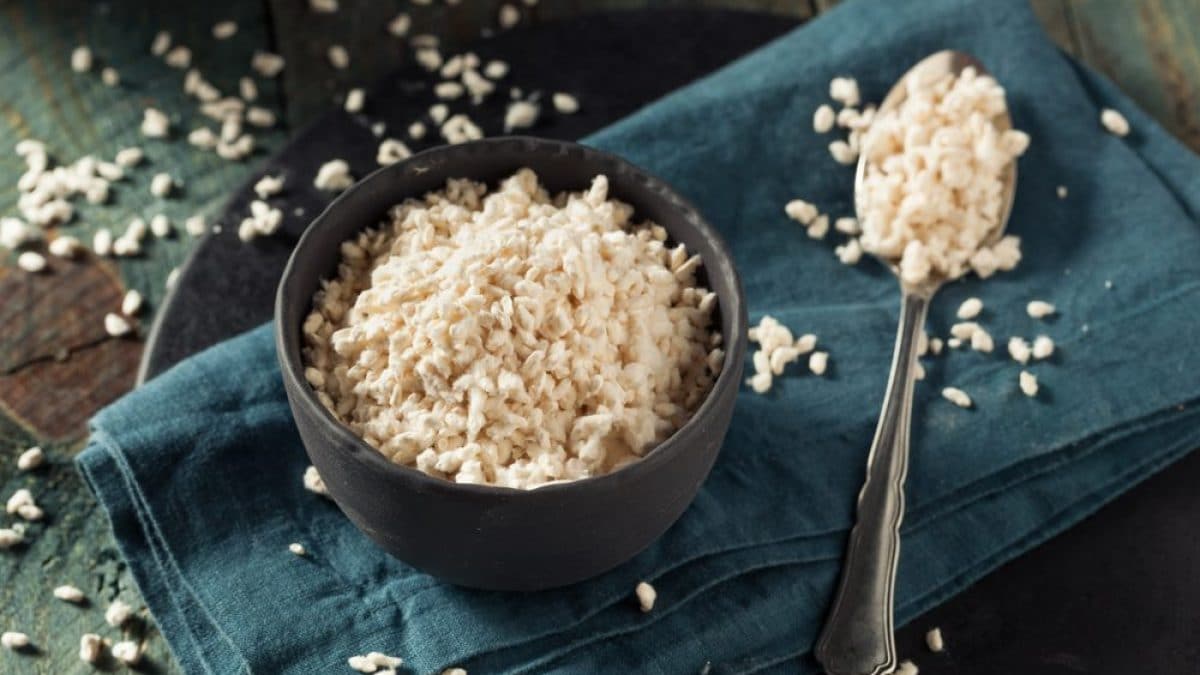
In recent years, there has been increasing discussion about using fermented foods in cooking to give food a new flavor. In the West, we are true experts in this field, thanks to the centuries-old use of molds, employed in some cases to produce specific cheeses and cured meats, such as Gorgonzola . But we are not the only ones to use this process. For example, in Asia, koji is considered a truly magical ingredient, primarily responsible for the distinctive umami taste, the fifth component that adds to sweet, salty, bitter, and sour.
You've probably already tasted it without knowing it: it's a main ingredient in sake, for example, or soy sauce, and in Asia it's been used for millennia to ferment other foods, giving them a truly unique flavor. Now, the Eastern tradition is moving to the West, where great chefs increasingly use koji and where, increasingly easily, we can all find and use it too.
Koji's Ancient Origins
A traditional ingredient in Asian cuisine, used particularly in China and Japan, koji belongs to a particular group of molds first catalogued by an Italian, the botanist and mycologist Pier Antonio Micheli, in 1729. It was a truly incredible discovery for Westerners, as this particular fungus belongs to a lineage that includes many species rich in toxins dangerous to humans. The great revelation was that koji had undergone a unique evolution, completely losing the ability to produce toxins.
Although its discovery is recent for us, koji has been used for millennia in Asian gastronomy: the first traces of its use date back to 300 BC in China, and it is such an iconic element that it has even been named a national heritage of Japan.

What is, Exactly, Koji?
Koji belongs to the mushroom family, but do n't imagine it as a classic mushroom. Aspergillus oryzae – its scientific name – is a filamentous fungus, essentially a mold. Under specific conditions, such as humidity and heat, koji forms on partially cooked rice or wheat, and once harvested, it can be used to ferment various foods and beverages.
In its simplest and purest form, koji has a sweetish odor similar to that of yeast, and its uses are extremely varied: used for fermentation, in fact, it has the power to transform foods, adding umami and activating chemical reactions that completely change the consistency and flavor of the original food.

How to Make Koji at Home and Activate it For Cooking
Developing koji is a very long and complex process, requiring patience, attention, and a thorough knowledge of the mushroom and the process required to make it. This doesn't mean, however, that you can't make it at home. Today, dried koji rice is available commercially, containing the mushroom already formed and dehydrated. This is an excellent solution for reducing the number of steps and still having the preparation ready at home. In this case, the koji simply needs to be activated.
To do this, place the koji rice in an airtight container, add plenty of water that's at least 140°F/60°C, close the container, and let it ferment for a few days. After this time, the fungus will appear and be ready to use. Once fully active, it can be stored in an airtight container in the refrigerator for a few weeks and used to experiment with various culinary methods.

How to Use Koji at Home
You've made your koji, but now how can you use it in the kitchen? There are countless ideas, because this versatile food can be used to transform the flavor and texture of many different foods. For example, adding koji to porridge or smoothies gives them a truly unique umami flavor, but you can also add it directly to bread dough, for example, for a loaf with a unique flavor. Once you understand the principle behind koji, the possibilities are truly endless: for example, you can add it to a pasta filling to enhance its savory flavor, or use it to speed up a marinade and give it a unique flavor.
Chefs at the world's leading restaurants are increasingly experimenting with koji, moving it beyond its traditional uses and employing it in new ways. Some use it to dry-age meat, resulting in a sweeter and more tender flavor; others are testing it on soft cheeses like ricotta, which takes on more defined organoleptic characteristics.
Some people ferment it on biscuits to make cheesecake, others cultivate it on dried beans, and still others use it to make rice cake. And legend has it that at Juniper & Ivy, one of San Diego's most celebrated restaurants, koji is the secret ingredient in at least a dozen different dishes by chef Anthony Wells, even though it's never listed on the menu.
;Resize,width=767;)
