There are breads that accompany a meal and others that tell the story of an entire people: lavash belongs to the latter category. Thin, soft, and sturdy, it is made from just a few ingredients— flour, water, and salt — but behind its apparent simplicity lies a tradition that spans centuries. To discover it, we must travel to Armenia, a small country nestled in the Caucasus Mountains, with a capital, Yerevan, that perhaps not everyone could locate on a map. Yet, right here, generations of families have preserved and passed down an ancient knowledge, transforming a simple sheet of bread into a symbol of identity, hospitality, and sharing, capable of becoming known far beyond the country's borders.
Bread Culture Between the Middle East and The Caucasus
In every corner of the world, bread is much more than a simple food: it is a symbol, a daily ritual. Each region has its own way of preparing it and also of experiencing it at the table. Between the Middle East and the Caucasus, these traditions reach a particular richness, and this is evident by following that thread of flour suspended between one country and the next. In Armenia, as we will see, lavash is cooked in the tonir, a cylindrical pit dug into the floor around which the family gathers.
Equally charged with meaning is challah, the traditional Jewish bread, eaten especially during Shabbat and other holidays. Turkey also offers a mosaic of delicacies: among many, ekmek, very similar to a baguette, stands out, but there are many other typical products. On the shores of the Black Sea, for example, there is Trabzon bread: square, naturally leavened, and baked in a wood-fired oven. In the Aegean region, then, people enjoy pişi, fried bread bites, cousins of our mountain breads, now even present in the breakfasts of the most fashionable hotels. Finally, there is pita, closer to Southern Europe: round, flat, and filled with local ingredients, most likely an ancestor of pizza.

The Preparation Method
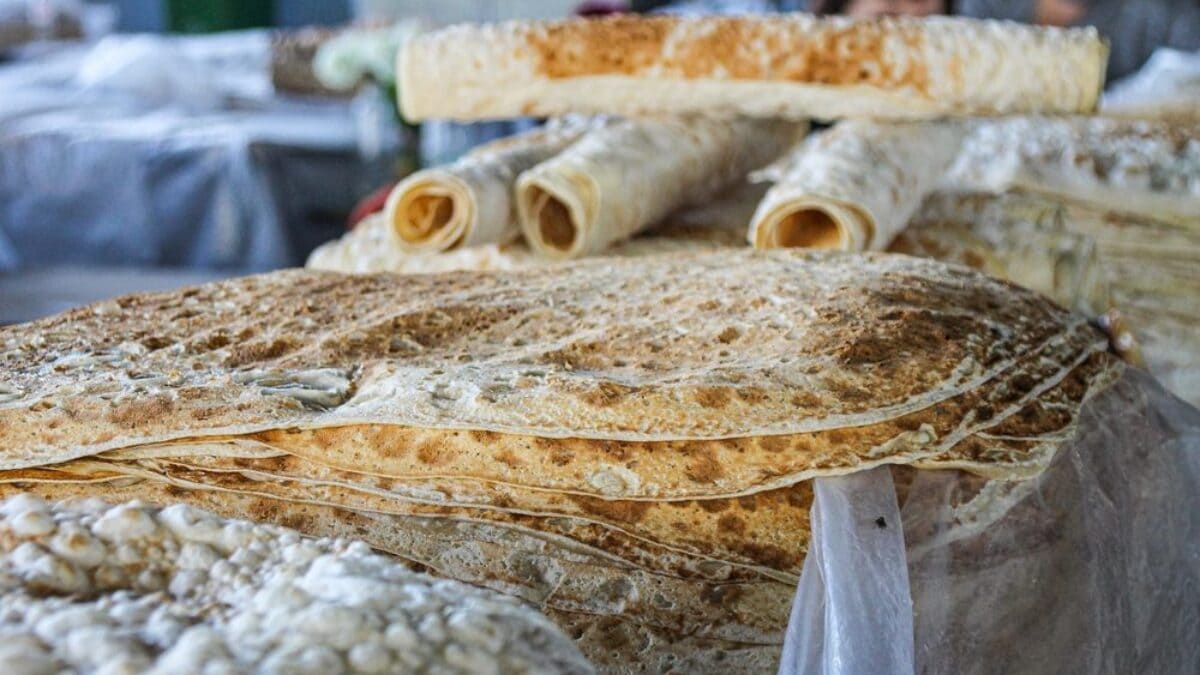
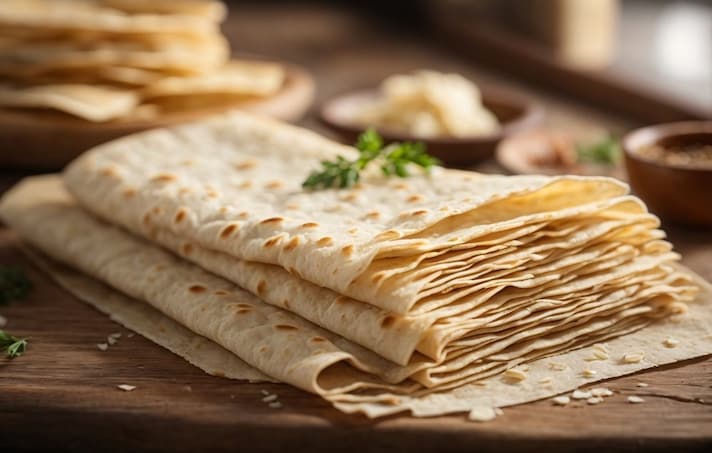
There's little to explain about the ingredients: water, flour, and salt, without yeast, although in some recipes a portion of fermented dough or a leavening agent is added. The work is all in the hands and in the oven. The dough is divided into many balls, and each is rolled out into a very thin sheet, just a few millimeters thick. With a quick movement, it is lifted and placed on a special oval cushion, useful for supporting it and carrying it to the wall of the oven. From there, it is slammed against the hot walls of the tonir, where it remains for a very short time: between 30 seconds and a minute, the bread is ready, puffed up and golden, with some burnt spots in the areas that have been in contact with the clay. Hundreds of pieces can be baked in a single oven, and once dried, lavash can be kept for a long time, up to six months.
For centuries, lavash has been prepared at home and in villages, often in communal settings: multiple hands, multiple doughs, multiple sheets of dough rolled out one after the other. Usually, two or three people work together, with one person rolling out the dough and another baking it, sitting next to the oven with their legs in a pit to lean over the embers more comfortably. In some regions, only women participate in this ritual, but men also play an important role: they build the ovens and pass on the skills to the younger generations, thus keeping the tradition alive. Today, the technique is at risk of disappearing, due to the spread of easily available industrial versions of lavash, and fewer and fewer families still prepare it at home.
Armenian Lavash, a UNESCO World Heritage Site… Twice Over
Over time, a value far beyond the simple act of eating has developed around lavash. In Armenia, it is linked to hospitality, prosperity, and family unity, and accompanies every meal. Even today, in the most traditional families, it is placed on the shoulders of the newlyweds as a wish for fertility and abundance. UNESCO's attention is therefore not surprising. In 2014, it included the Armenian tradition of lavash in the list of the Intangible Cultural Heritage of Humanity, honoring not its thin shape or essential ingredients, but its cultural value. Interestingly, however, this bread has made the list twice. In 2016, Azerbaijan, Iran, Kazakhstan, Kyrgyzstan, and Turkey submitted a joint nomination for thin flatbreads, which included this typical Armenian product, but Turkey was not among the proponents. Thus, two lists for a single food, and an origin that is still disputed. But even admitting some doubts about its cradle, one element remains beyond discussion: the tonir, the traditional oven in which Armenian lavash is baked, occupies a central place in the country's gastronomic culture.

Perfect to Accompany Dishes, But Especially Kebabs
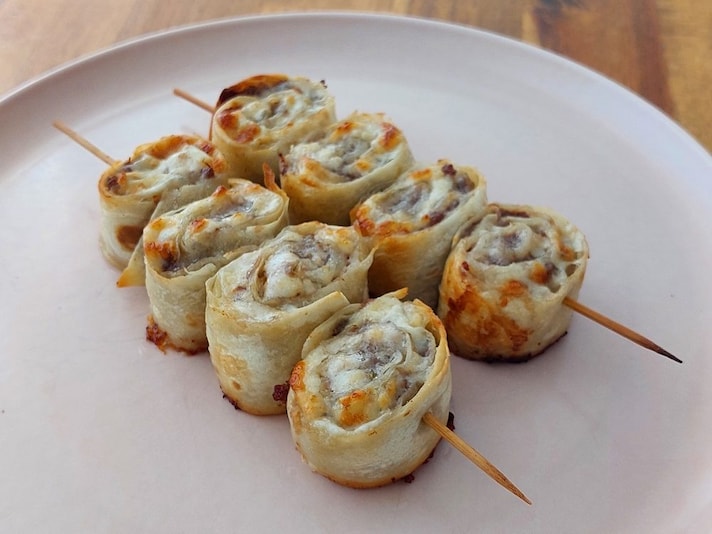
In Armenia, lavash is always on the table, every day and during holidays: in restaurants, it arrives even before the menu, in a basket along with matnakash, a softer leavened bread. It is not served in individual portions, because it is meant to be shared: it is placed in the center, folded, broken with the hands and used to collect food or wrap it. Its most classic pairing is with khorovats, the Armenian meat-based barbecue, enjoyed with vegetables, fresh herbs and, sometimes, a few hot peppers. For a snack, a salty cheese with aromatic herbs suffices, while for breakfast it is found with fresh cheese and rosehip jam. Outside Armenia, the idea is the same. In Turkey, for example, it becomes the basis of dürüm, meat rolls. The fillings vary, but lavash remains the bread that wraps, collects and keeps company.
This ability to wrap makes lavash a highly versatile food, and kebab is the most successful example. Anyone who thinks of kebab as just a sandwich to be quickly filled and closed is missing a big part of the story: in a quality product, every element has its role, including the bread. Extremely thin, almost essential, soft and elastic, lavash accompanies the filling without overpowering it. It thus leaves room for the meat, vegetables, and sauces, making each flavor more recognizable, and for this reason, it is a great ally of artisanal kebabs.

The Lavash Water Trick
Then there's a peculiarity, perhaps the most surprising. Generally without yeast or fat in the dough, lavash can be dried and stored for months, stacked in large, very thin sheets. When needed, simply sprinkle it with water and wrap it in a damp cloth: after a few minutes, it's soft and pliable again, as if freshly baked. A little domestic magic, born from a very concrete need: always having bread available without having to turn on the oven every day.