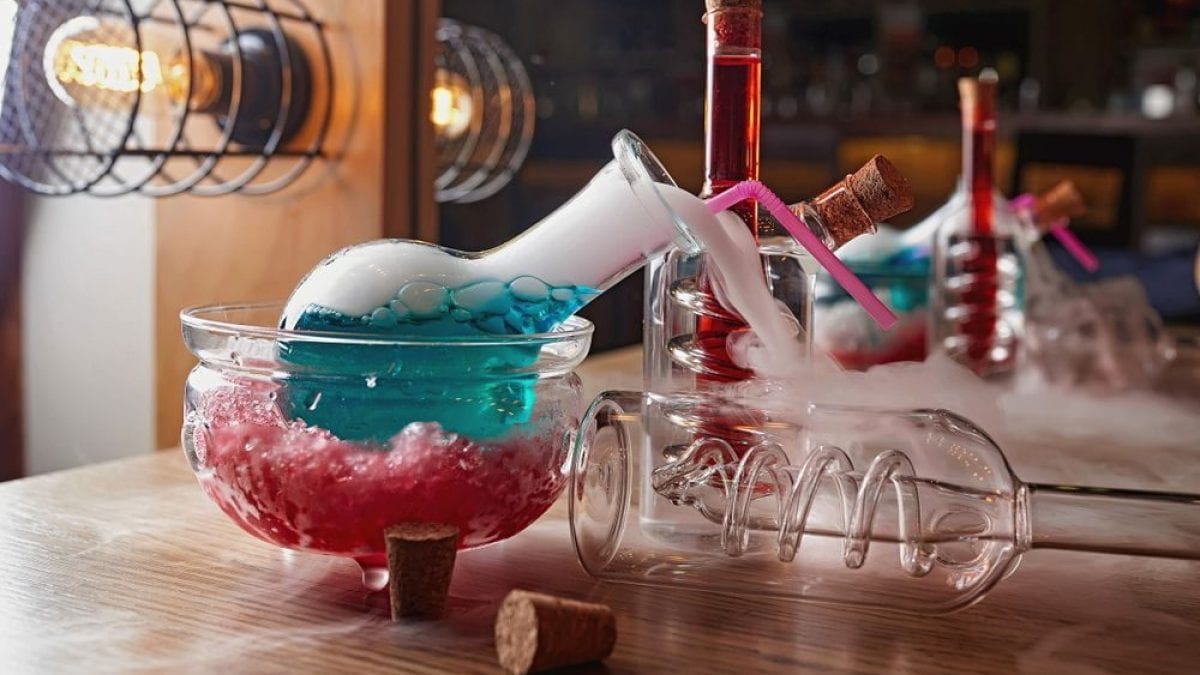
Although somewhat outdated, molecular cocktails remain fascinating and impress both diners and those who try making them at home. Molecular cocktails are drinks made using techniques borrowed from molecular gastronomy, a discipline that studies the physical and chemical transformations of foods during preparation, developed by Ferran Adrià at El Bulli on the Costa Brava. Unlike classic cocktails, which simply mix liquid ingredients with ice or syrups, molecular mixology allows the consistency and appearance of the drink to be modified through the use of natural additives, chemical reactions, and laboratory tools such as siphons, spherification, or liquid nitrogen.
What Is Molecular Mixology?
This trend gained huge popularity in the early 2000s and continued for about ten years. At that time, the cocktail bar scene was just beginning to gain traction, especially in London, before spreading to the rest of Europe. These spectacular drinks, featuring foams, balls, gels, mists, solidifications, and more, were the most popular. In the U.S., the master of this technique is undoubtedly Dave Arnold, the author of Liquid Intelligence; another incredible figure is Grant Achatz of Alinea and the bartender Eben Freeman, who popularized modernist cocktail techniques in American bars.

Although we tend to associate the idea of a "molecular cocktail" with a simple Negroni enclosed in a sphere (just to give an example), in reality this category includes several types of drinks:
- Spherification: A process that transforms liquids into small caviar-like spheres, which explode in the mouth, releasing the flavor of the cocktail.
- Gelation: a technique that allows you to obtain cocktails in solid or gelatinous form, to be enjoyed with a spoon.
- Aromatic foams and airs: obtained with soy lecithin, they create a soft and light texture on the surface of the drink.
- Smoke effect: thanks to the use of liquid nitrogen or dry ice, cocktails can release spectacular smoke, making the experience even more immersive.
- Transparent or layered cocktails: by exploiting different densities of the ingredients, you can obtain drinks with spectacular visual effects.
It's therefore important to understand that we're talking about a set of techniques and procedures that enable the creation of new drinks by applying principles and reactions from the worlds of chemistry and gastronomy. The consistency and color of ingredients are modified through reactions triggered by various reagents such as agar agar or liquid nitrogen.
How to Make Molecular Cocktails
The basis of these drinks is the same as molecular cuisine. In addition to the classic ingredients, molecular cocktails require specific ingredients such as sodium alginate, calcium chloride, agar agar, soy lecithin, and xanthan gum.

Making a molecular cocktail requires precision, basic knowledge of food chemistry, and the use of specialized tools. Unlike traditional mixology, where a shaker and jigger are sufficient, here laboratory equipment such as measuring syringes, siphons, and a pH meter come into play.
Spherification
The most famous technique is undoubtedly spherification, which relies on the use of sodium alginate and calcium chloride, two natural ingredients that react to form a gelatinous film around the liquid. In practice, you can transform any cocktail into small spheres that burst in your mouth, releasing the drink's flavor in a surprising way. Mix the cocktail liquid with sodium alginate, draw the mixture with a syringe, and drop it into a bath of calcium chloride. After a few seconds, gelatinous spheres form that can be served with a spoon or directly in a drink.
Gelation
Gelling agents such as agar agar, gelatin, or xanthan gum are used to transform liquids into solid or semisolid jellies. The result is a drink to be enjoyed in an unusual way, perhaps with a spoon or as an ingredient in layered cocktails.
Foams and Airs
To create a fluffy foam on the surface of a cocktail, soy lecithin is used , a natural emulsifier that captures air and creates a fluffy texture. This technique is perfect for enhancing aromas and flavors, adding a touch of elegance and lightness to the drink. Soy lecithin is added to a flavored liquid mixture, and an immersion blender is used to incorporate air and create a stable foam, which is then delicately poured into the glass.
Liquid Nitrogen
Liquid nitrogen is one of the most spectacular tools in cooking and mixology. With a temperature of -320°F/-196°C, it allows ingredients to be instantly frozen, creating cocktails with spectacular visual effects. When liquid nitrogen is poured into a glass, it releases a cloud of vapor that makes the drink resemble a magic potion. This technique is used to create ultra-cold slushies or to quickly chill ingredients without watering down the cocktail with ice.
;Resize,width=767;)
