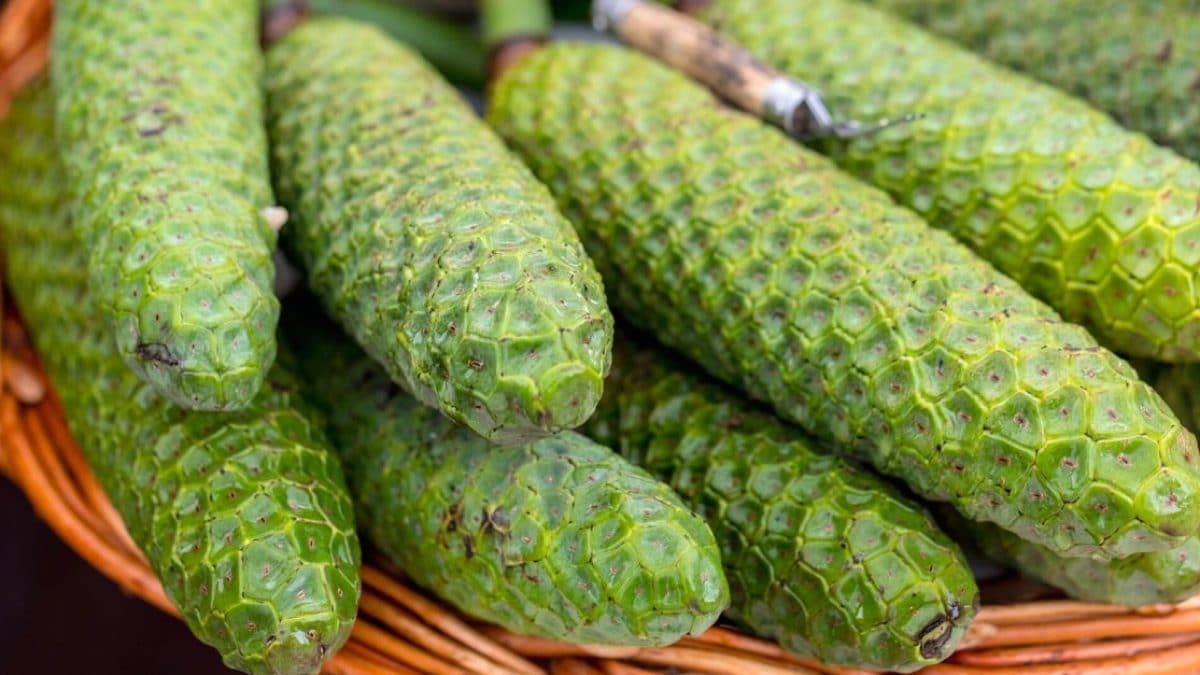
Delicious, aromatic, tropical, curious, yet potentially dangerous and toxic. In a few words, this is how Monster Fruit, the fruit of the plant called Monstera deliciosa, can be described. Monstrous and delicious, or monstrously delicious, depending on your perspective and how you want to interpret it. The fact is, the term doesn't refer so much to the plant's aesthetics (though its leaves are indeed large), but rather to the dangers of the fruit if consumed when not yet fully ripe.
What is Monster Fruit?
This is precisely the name given to the distinctive and peculiar fruit of the Monstera deliciosa. It is a tropical plant also used as an ornamental in homes, native to central and southern America but also present in Europe (where, due to differing climatic conditions, it mostly does not produce fruit).

It is found mainly in Mexico, Panama, and neighboring countries. Large green leaves, larger than the fruit that grows among the branches of this plant, are characteristic of this plant. The fruit, in size (it can grow up to 30 centimeters) and shape (elongated), resembles an ear of corn, but one must be very careful when eating it. If eaten while immature, it can be toxic, causing severe and unpleasant irritation to the throat and skin. How do you know when is the right time to enjoy it?

Until it's ready to eat, the fruit remains covered in green hexagonal scales that peel off on their own when the Monster Fruit ripens, revealing a white, fleshy pulp.
What Does Monster Fruit Taste Like?
In fact, when still unripe, and therefore with the scales still firmly attached to the pulp, Monster Fruit is characterized by a high level of oxalic acid. Is this dangerous to your health, some might ask? Suffice it to say that this element is used to bleach wood and remove rust from steel. Understanding why it is best not to ingest it, in short, is simple. After all, it is a form of defense for the plant itself against external predators.

The story changes completely when the fruit ripens: the bite reveals a mix of flavors of pineapple, coconut, and banana, strong tropical, therefore summery, notes that make the fruit a popular ingredient in its native countries, especially on its own or in rich fruit salads. Jams and creamy desserts are also made from it.
As mentioned, you need to wait for the hexagonal scales to fall off before you can safely consume the fruit. To aid the ripening process, you can place it in a glass jar, covered with a cloth, for a few days. When the green scales fall off naturally, the fruit will resemble an ear of corn, and the pulp is ready to be eaten.
;Resize,width=767;)
