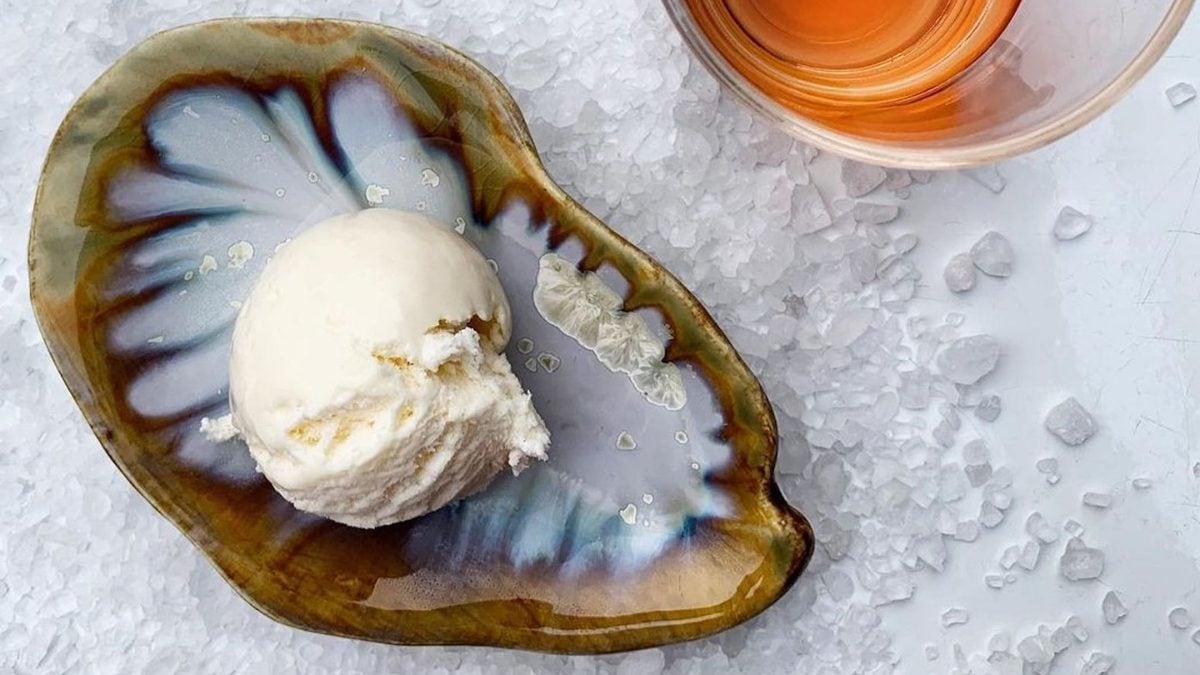
Oyster ice cream sounds like one of those foods invented purely to shock the internet— the kind of thing you expect to see on a dare menu or a reality TV challenge. Cold, creamy dessert meets briny shellfish? Hard pass, right?
And yet, oyster ice cream is very real, it has a surprisingly long history, and it’s not always meant to be a prank. In some contexts, it’s even considered elegant. The confusion comes from the fact that oyster ice cream isn’t one single thing— it’s an idea that’s been interpreted very differently over time.
The Original Oyster Ice Cream Wasn’t a Gimmick
Oyster ice cream dates back to the late 19th century, when oysters were cheap, abundant, and wildly popular in the United States. At the time, oysters were eaten at all hours — raw, cooked, stewed, and yes, occasionally frozen into desserts. In Victorian-era America, especially in the Northeast, oyster ice cream was often served as part of formal multi-course meals. It wasn’t dessert in the modern sense. Instead, it functioned more like a savory ice or palate cleanser, similar to how we might serve a sorbet between courses today.
These early versions were subtle: cream, egg yolks, a touch of sugar, and finely minced oysters. The goal wasn’t to overwhelm diners with seafood flavor, but to create something cool, rich, and faintly briny— a novelty, yes, but not a joke.
So What Does Oyster Ice Cream Actually Taste Like?
This is the question everyone wants answered, and the honest response is: it depends entirely on how it’s made. In restrained versions, oyster ice cream doesn’t taste “fishy.” Instead, it has:
- A creamy base similar to custard
- A gentle salinity
- A mineral note that lingers rather than shouts
Think less “clam chowder milkshake” and more “savory cream with a coastal edge.” Modern versions, however, are all over the map. Some chefs lean into the brine, others pair oysters with vanilla or lemon, and some treat it as a conceptual art piece meant to challenge expectations. Those are the versions most likely to go viral — and to unsettle people.

Why It Keeps Coming Back
Oyster ice cream has a habit of resurfacing every few decades, usually when chefs or food writers start asking bigger questions about what dessert is supposed to be. In fine dining, it fits neatly into a long tradition of savory-sweet experimentation. Salt enhances sweetness. Fat carries flavor. Temperature changes perception. Oyster ice cream sits right at the intersection of those ideas. It also taps into a broader cultural curiosity about using every part of an ingredient and revisiting historic recipes, blurring the line between savory and sweet.
Is Oyster Ice Cream Actually Popular?
Not exactly — and that’s part of its mystique. You’re unlikely to find oyster ice cream in a grocery store freezer or on a casual restaurant menu. When it appears, it’s usually:
- At food festivals
- In experimental tasting menus
- As a limited-run novelty
Its rarity is what keeps it interesting. Oyster ice cream isn’t trying to replace vanilla or chocolate. It exists on the margins, where curiosity lives.
Part of the discomfort comes from how Americans mentally categorize food. Oysters live firmly in the savory world. Ice cream lives in the sweet one. Combining the two feels like breaking an unspoken rule. But we’re already comfortable with similar ideas, like salted caramel, cheese with fruit, olive oil in dessert and sea salt on chocolate. Oyster ice cream just pushes that logic a few steps further — far enough to make people stop and think.

;Resize,width=767;)
