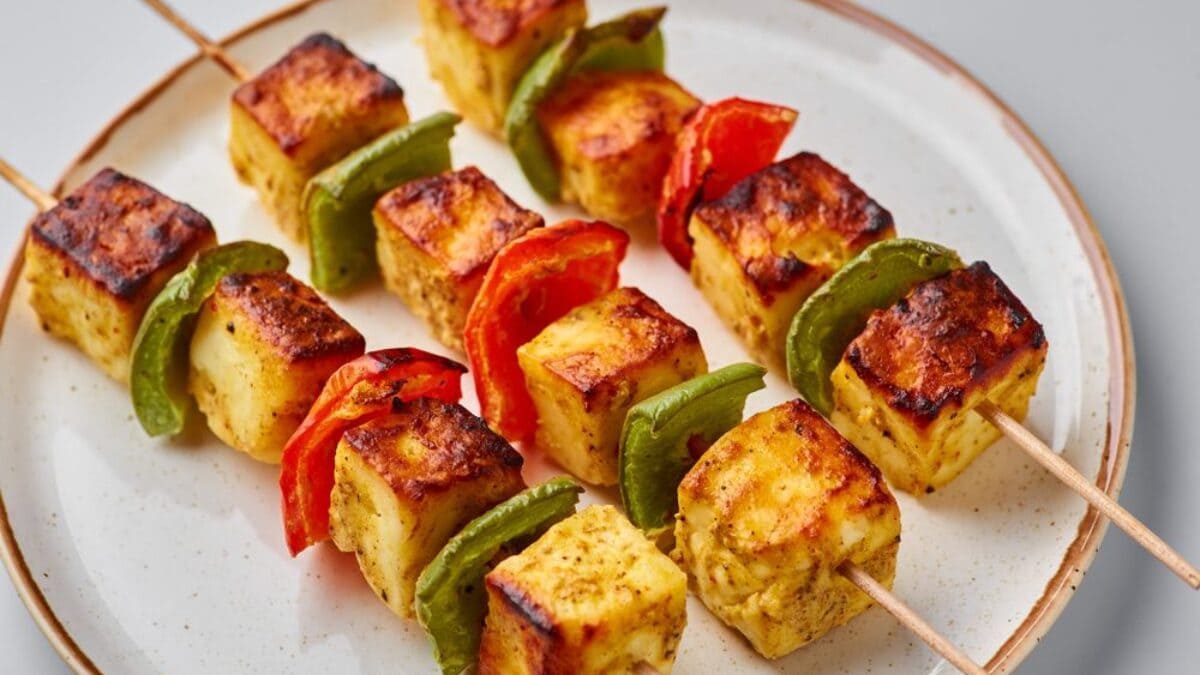
There's an ingredient that, in recent years, has gained increasing popularity even outside of Indian cuisine, attracting the attention of food enthusiasts, vegetarians, and those curious about new flavors. It looks like a simple fresh cheese, but behind its simple appearance hides truly surprising characteristics: a unique texture, extraordinary versatility, and the ability to adapt to a wide variety of preparations. It's paneer, a type of soft fresh cheese typical of Indian cuisine, popular in India, Pakistan, Nepal, Bhutan, and Afghanistan; its name, "paneer," derives from the Persian and literally means "cheese."
It is made by curdling cow's or buffalo's milk with an acid like lemon juice or vinegar, without the use of animal rennet (usually an enzyme extracted from calves' stomachs), a characteristic that also makes it ideal for vegetarians. What sets it apart from other fresh cheeses is that it doesn't melt or dissolve when cooked, a feature that makes it suitable for cooking by dicing it and sautéing it in a pan, frying it, or dipping it directly into sauces and soups. Let's find out what paneer is, its characteristics, and how to enhance it in the kitchen.
What is Paneer and Why It's Essential to Indian Cuisine
Paneer is the quintessential fresh cheese in Indian cuisine and one of the most iconic ingredients in the subcontinent's gastronomic tradition. Its distinctive feature is that it is not aged and does not use animal rennet: it is simply made by curdling milk with an acidic ingredient, such as lemon juice, vinegar, or yogurt. The curd is then separated from the whey, collected in a cloth, and pressed until it forms a compact mass, ready to be cut into cubes or slices. In appearance, it is very similar to tofu and primo sale, and like these cheeses, it has a particularly firm and compact consistency, while its delicate flavor is more similar to that of cottage cheese or ricotta. These characteristics, in addition to the fact that it does not melt when cooked, make paneer a staple in numerous recipes.

The extraordinary popularity of paneer in Indian cuisine is primarily linked to the country's food culture. In many regions of India, a significant portion of the population follows a vegetarian diet, influenced both by the religious traditions of Hinduism, Jainism, and Sikhism, and by established cultural habits related to the local availability of certain foods over others. Paneer is high in protein, making it ideal for those who need protein but don't want to get it from animals, but also for that segment of the population (far too many in India) who cannot afford meat in their daily lives. This cheese, also rich in calcium and milk fat, is a nutritious alternative to meat but is much easier to obtain, which is why it is often used as the main ingredient in everyday meals. Paneer, in fact, can easily be made at home using just a few ingredients and no special equipment: for centuries, it has been produced in Indian families with fresh milk and a common acidifying agent, becoming an affordable, accessible, and always-available food.
Even today, many families prefer to prepare it by hand, resulting in a fresher and softer product than the industrial version. Its adaptability to a wide variety of preparations further contributes to its success. Today, paneer is considered one of the symbols of Indian cuisine around the world, but the growing popularity of vegetarian diets and the ever-increasing spread of multiethnic cuisine have made it increasingly popular even outside its homeland.

How is Paneer Made
The method of preparation is one of the characteristics that make paneer such a unique cheese. As mentioned, it is obtained by coagulating milk using a natural acidifying agent. Unlike most Western cheeses, its production does not involve the use of animal rennet or lactic acid bacteria: the milk is simply brought to a boil and then acidified, causing the curd to separate from the whey. The curd is then collected in a cotton cloth, carefully drained, and lightly pressed, which eliminates excess moisture and gives the cheese its characteristic firm consistency. Paneer is traditionally prepared with whole buffalo milk, particularly common in northern India, or with cow's milk. Buffalo milk produces a richer, creamier, and firmer cheese thanks to its higher fat and protein content, while cow's milk gives rise to a more delicate and light paneer. Aesthetically, paneer appears as a white cheese, without a rind and with a smooth surface. The dough is compact but soft, easily cut into regular cubes without crumbling, but if worked for a long time it can also become creamy like ricotta.
Naturally salt-free, paneer is also particularly nutritionally rich: it is a good source of high-biological-value proteins and calcium, as well as providing phosphorus, vitamin B12, and other nutrients typical of dairy products. The fat content varies depending on the milk used: paneer made with whole milk is richer and higher in calories, while that made with semi-skimmed milk is lighter while still maintaining a good protein content. Being a fresh, unripened cheese, paneer has a relatively limited shelf life. It should be kept refrigerated and consumed within a few days of preparation, or stored immersed in cool water, which helps preserve its softness and moisture. Alternatively, you can freeze it for a few months.

What Does Paneer Taste Like?
One of paneer's most appealing characteristics is its extremely delicate flavor: it possesses fresh, slightly sweet milky notes, without the pronounced acidity of other fresh cheeses like feta or goat cheese. This neutrality is one of its greatest strengths: rather than overpowering other ingredients, paneer acts as a sort of "blank canvas" capable of absorbing spices, herbs, sauces, and marinades, enriching itself with the surrounding aromas without losing its own identity. It can be eaten raw, thanks to its firm texture that makes it ideal for slicing and enjoying, but what makes it truly unique is its reaction to cooking.
Thanks to its structure, paneer is ideal for cooking: unlike most cheeses, it doesn't melt when exposed to heat, but maintains its shape, without turning creamy or releasing large amounts of fat. This is possible thanks to the production process: the absence of rennet and acid coagulation create a highly stable protein network that resists high temperatures. Consequently, paneer can be pan-fried, grilled, roasted, fried, or added to stews and curries without risking disintegration. In fact, cooking further enhances its organoleptic characteristics: pan-fried or grilled, the surface develops a light browning, creating delicate toasted notes and a thin crust that contrasts pleasantly with the soft and juicy interior.

Its ability to absorb flavors is another reason for its culinary success. While not as porous as a sponge, paneer easily absorbs the aromas of marinades and sauces during cooking. Spices like cumin, coriander, turmeric, and garam masala are ideal for flavoring it, as they bind to its surface and gradually penetrate the outer layers, creating a harmonious contrast between the delicate flavor of the cheese and the intensity of the seasonings.
How to Use Paneer in Cooking
In Indian cuisine, paneer is the protagonist of some of the most iconic traditional dishes. One of the best-known and most beloved is paneer tikka, often served as an appetizer or main course: the cheese is marinated in yogurt along with spices like turmeric, paprika, cumin, coriander, and garam masala, then grilled or baked until lightly golden and aromatic. The result is a dish rich in aromas, in which the cheese maintains a soft center while the exterior develops a pleasant smoky note. Also beloved and equally famous are palak paneer, in which the cheese cubes are dipped in a creamy spinach sauce flavored with garlic, ginger, chili pepper, and garam masala, and matar paneer, made with a tomato, onion, and spice sauce enriched with peas, which lend a pleasant sweet note. Another much-loved specialty is shahi paneer, characterized by a velvety sauce made with tomato, cream, cashews and aromatic spices, with a more delicate and refined flavor.
Indian street food deserves a separate chapter, where paneer is used extensively: it is used as a filling for rolls and wraps, inserted into kathi rolls, added to spiced sandwiches, or served inside samosas and parathas. There are also a number of sweets that use paneer, soft and milky desserts, often served in syrup or with condensed milk: the most famous are rasgulla (paneer balls cooked for a long time in a sugar syrup), rasmalai (paneer balls flattened and dipped in a thick, spiced milk sauce), and paneer kheer (a pudding made with reduced whole milk, sugar, and pieces of paneer, served cold and garnished with dried fruit).

Outside of traditional cuisine, paneer proves to be an equally versatile ingredient. If you'd like to try incorporating it into your diet, it's perfect added to grain salads like farro, barley, or quinoa, where it provides a pleasant protein boost whether added raw or sautéed. This cheese pairs particularly well with grains, but it's also excellent added to mixed salads, cold pasta, or rice salads, or drizzled on crostini or bruschetta. Cooked, it's delicious any way you like it—fried, grilled, or griddled: you can eat it on its own, accompanied by seasonal vegetables and dressed with a sauce, for a delicious second course. If you combine it with other creamier cheeses, such as ricotta, paneer softens enough to be used in sauces or fillings with a more velvety consistency, such as in vegetarian lasagna, flans, or savory pies.

Paneer pairs particularly well with intensely flavored ingredients, which enhance its delicacy without overpowering it. Spices are its natural complement, helping to enhance its flavor profile. As for vegetables, the most successful pairings are with spinach, peas, tomatoes, peppers, eggplant, cauliflower, zucchini, and onions, ingredients that often recur in traditional recipes. Legumes, such as chickpeas and lentils, also pair perfectly with paneer, creating complete and nutritionally rich dishes. Dried fruit plays an important role in both sweet and savory pairings: cashews, almonds, and pistachios add a pleasant crunch and a slightly sweet component that harmonizes well with the taste and texture of the cheese.
;Resize,width=767;)
