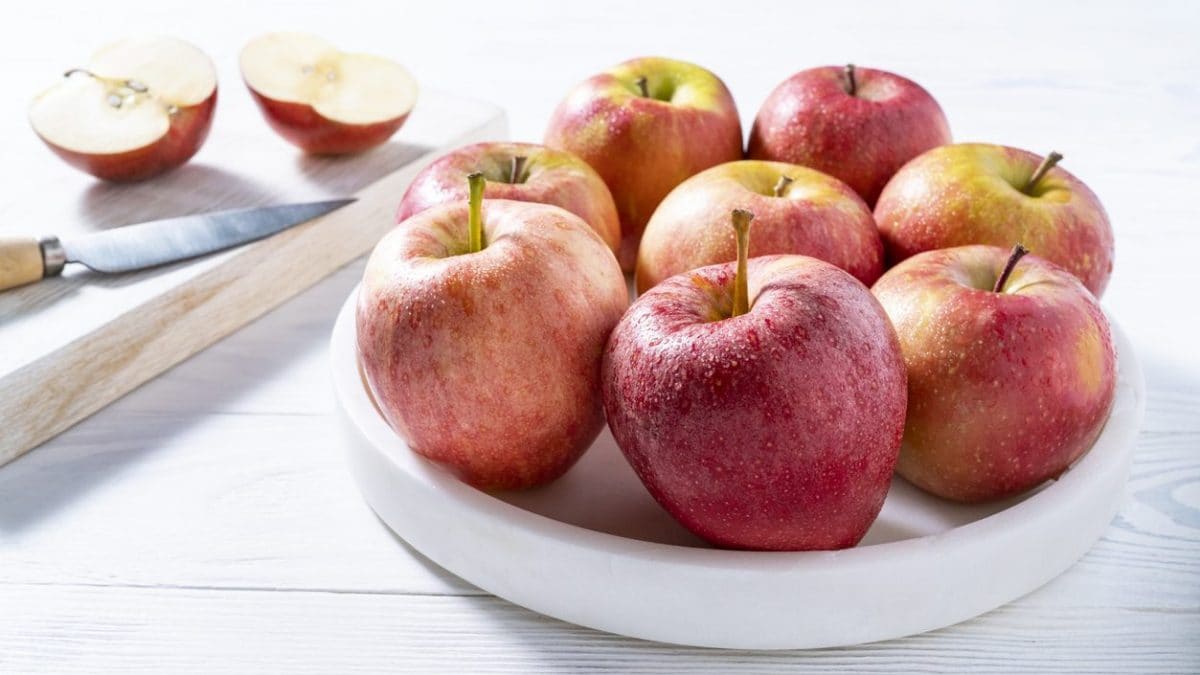
There's an apple that, upon first bite, tickles your taste buds like a sip of sparkling water, but without the added carbon dioxide. It's called Paradis Sparkling, and among the many apple varieties available, it's the most unique, combining an uncommon crunch with a freshness that feels like effervescence in the mouth.
Let's find out where it comes from, how it was born, why it really gives this fizzy sensation, how to recognize it among other varieties and how to best enjoy it.
What is Paradis Sparkling?
Paradis Sparkling was born in a Swiss nursery specializing in the selection of fruit trees for home gardening, thanks to the work of Markus Kobelt. In September 2006, he discovered it by chance among thousands of seedlings—young plants grown from seed that every breeding program monitors for years. The tree did not look promising, but the fruit revealed a firmness unlike any other plant in the field. Its final name was given in 2007, after tasting by other experts in the field.
The cross combines two European varieties well-known to nursery gardeners. The first is Resi, selected in Dresden-Pillnitz, Germany, a sweet variety resistant to apple scab, the fungal disease that stains leaves and fruit. The second is Pirouette, a Czech selection also known on the market as Rubinstep, prized for its firm flesh and long shelf life.
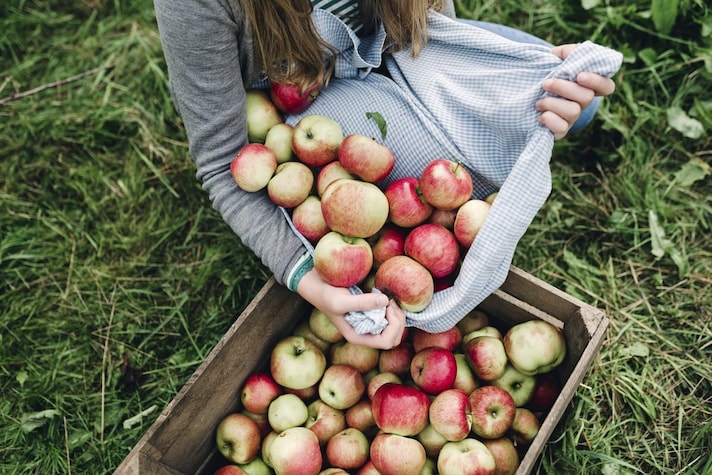
The plants arrived on the market in spring 2015 and are now available from specialized nurseries. Their canopy doesn't exceed two or three meters and they adapt well to a variety of soils, while the fruits are not distributed through large-scale retailers and are virtually impossible to find.
Why Does Paradis Sparkling "Fizz"?
The effervescence isn't caused by human intervention but depends on the composition and structure of the pulp. The cells of this apple are larger than average and have very resistant walls, so they don't gradually crumble under the teeth but instead yield simultaneously, suddenly releasing the juice. The sensation on the palate is therefore similar to that of a carbonated drink.
The second factor that recreates the tingling sensation of effervescence concerns the flavor, a balance between the sugary and acidic elements that, as it matures, shifts the needle toward sweetness without dulling the acidity, supported by a full and recognizable apple aroma. The juice, however, retains none of this, because once blended or juiced, the Paradis Sparkling turns into a completely normal liquid.
How Do You Recognize a Sparkling Apple?
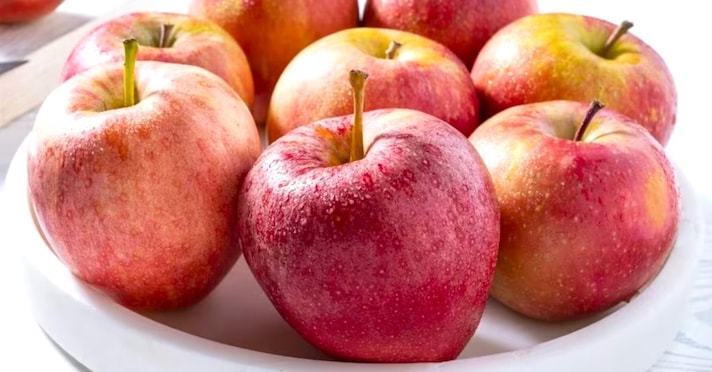
The fruits are medium-large and round, with yellow skin streaked with red when fully ripe. Different sizes and irregular colors coexist on the same tree, because ripening occurs gradually and requires three or four harvests between late September and late autumn. The fruits are then picked one by one and stored in the cellar until January.
How to Eat Paradis Sparkling
The best way to appreciate it is also the simplest: in bites, whole or at most divided into segments, preferably freshly picked. Its firm flesh and lively acidity make it suitable for savory pairings, where it holds its own with aged and blue cheeses, and enhance it in salads with fennel, walnuts, or celery, cut into thick slices to preserve its structure.
It's best to keep it away from the oven and the saucepan, because the firmness that makes it effervescent dissolves with heat. For an apple pie, it's best to use varieties that are more suitable for baking, such as Renetta or Golden Delicious.
As for Paradis Sparkling, cooking it is equivalent to buying sparkling water and leaving the bottle open all night.
;Resize,width=767;)
