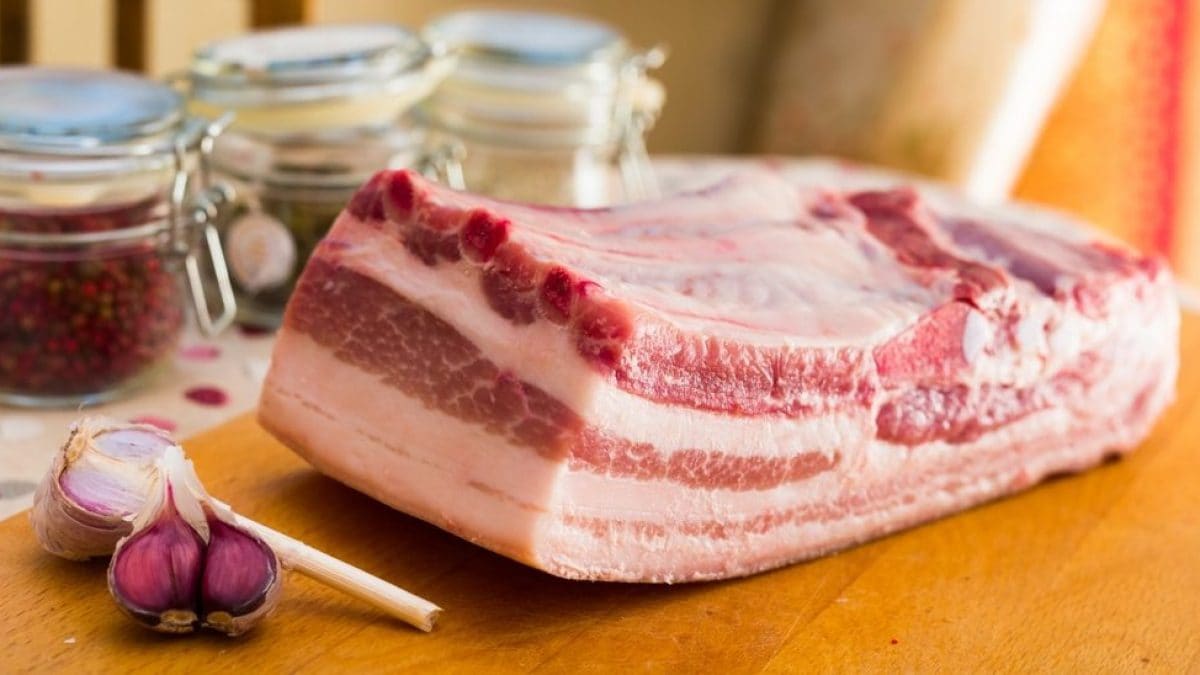
Among the most versatile cuts of pork, pork belly holds a special place, offering an ideal blend of flavor, tenderness, availability, and affordability. After all, it's well known that no part of the pig is wasted, using its parts both fresh and as cured meats and sausages, as per pork butchering tradition. Pork belly is tasty and requires slow cooking to bring out the best in it, often creating a pleasant contrast between the melt-in-the-mouth interior and a crispy exterior. In recent times, thanks in part to the rise of increasingly authentic Asian dishes, pork belly has become an ingredient not to be underestimated, almost gourmet. Let's get to know it and see how to enhance it in the kitchen.
What is, Exactly, Pork Belly?
Compared to other cuts of pork (but not only), identifying which part of the pig the belly comes from is fairly intuitive. It is, in fact, a boneless cut that comes from the animal's abdomen: a rectangle that weighs on average 1.5 kg and is characterized by a significant presence of fat. We are talking about the fattiest part of the pig, complete with rind, where the lean part, composed of muscles, is in a significantly smaller percentage: for this reason, the belly is economical and tasty, thanks precisely to that fat that melts during cooking, lending not only flavor but also tenderness. It is often also called pancetta, but the latter can refer to the famous cured meat, smoked or sweet, and not just the fresh belly. Furthermore, it is forbidden to confuse pancetta with guanciale, a high-quality processing of the cheek.

How to Use It in Cooking
Pork belly will give you a lot of satisfaction. The reason is simple: being particularly flavorful, it doesn't take much to make it the star of inviting dishes, also managing to give an elegant touch to an otherwise very rustic cut. The best results are obtained with slow cooking, which can be done in the oven, in a casserole dish, or sous vide. In fact, with the slow cooking approach, you can bring to the table simple yet impressive recipes such as crispy pork belly: the whole cut with its rind – in which you have made diamond-shaped incisions to facilitate the release of the fat – is first browned with herbs (garlic, sage, rosemary), softened and refined with wine and water in a pan, and then placed in the oven and cooked like a roast. You can also proceed with a preliminary marinade overnight, dry-seasoning it with your favorite rub (mixture).
Chinese-style braised pork belly, known as hongshao rou, is now famous. It's distinguished by its almost buttery and succulent texture, thanks to cooking in a thick liquid (which serves as a sauce) made from ginger, garlic, rice wine, soy sauce, chili pepper, and star anise. It comes in the form of tender cubes that are easy to pick up with chopsticks. Pork belly is perfect for barbecue, glazed with honey and the typical hoisin sauce, lending a delightful umami flavor.

Even Japan offers inspiration for a very versatile recipe: it's called chashu and involves first trimming the belly into a linear rectangle, which is then rolled up with kitchen string and braised in soy sauce, mirin, sugar, and ginger. The result is tender and fragrant, perfect as a main course, perhaps accompanied with pak choi and white rice, or as the perfect garnish for richer, more substantial ramen.
;Resize,width=767;)
