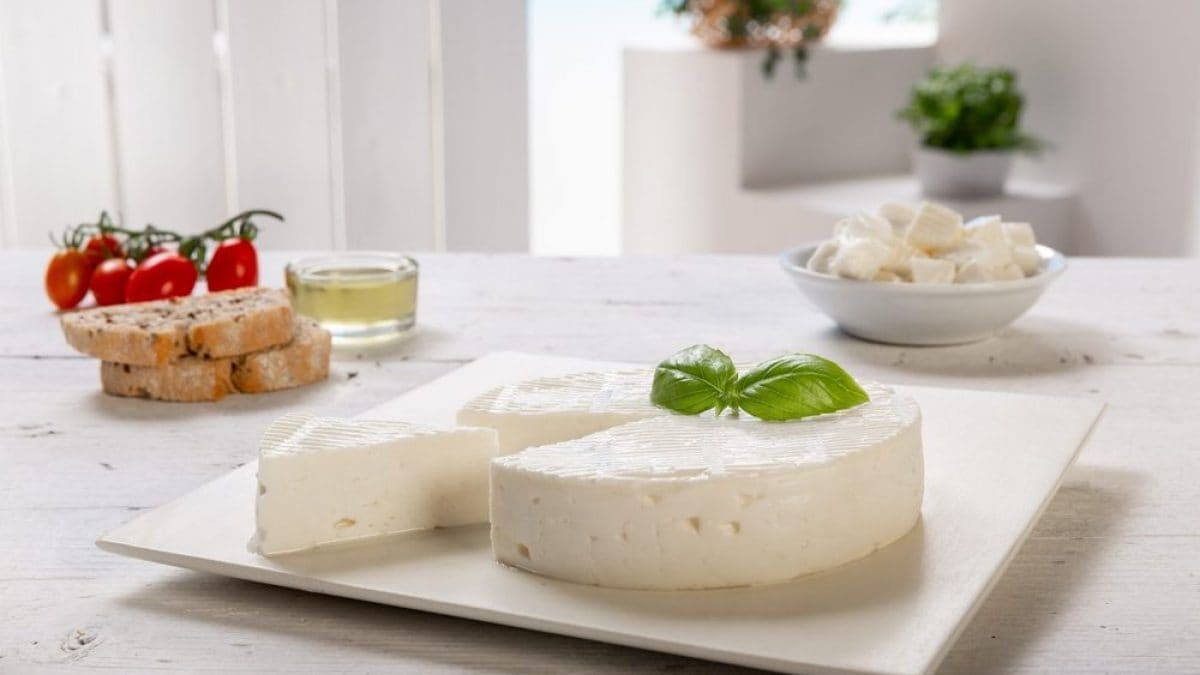
Primosale (literally first salt) is one of the most popular fresh cheeses in the Italian dairy tradition. It owes its name to its very short maturation period, which gives it a pearly white color, a tender texture, a delicate flavor, and great culinary versatility. Popular especially in southern Italy and central Italy, and available in the U.S. in areas with strong Italian-American communities (like New York, New Jersey or California) it can be made with cow's or sheep's milk, either mixed or used individually, and in some cases, goat's milk is added. It's perfect for cold pasta dishes, salads, but also as a filling for omelettes and as a delicious appetizer. Let's get to know it better.
What is Primosale?
Primosale is a cheese typical of Southern Italy, found in tubs or loose at delicatessen counters. It's easily found in markets and supermarkets throughout the country. It can be round or rectangular, depending on the mold used to mature it. It's a fresh, soft cheese with a smooth texture, yet firm when cut, and has a few holes. Traditionally, it's made from whole sheep's milk, mostly raw, to which goat's milk may be added. However, over time, pasteurized cow's milk has become increasingly common, and buffalo milk is also available. Its flavor is distinctly milky, milder when cow's milk is used, and sweeter and more intense when sheep's and goat's milk are used.
Its main characteristic is highlighted in its very name: after being coagulated with rennet, the milk is broken into curds, placed in molds (the classic baskets also used for ricotta) to firm up, and then subjected to a single salting process, either dry or in brine. At this point, maturation may be minimal or non-existent: usually present in pecorino cheeses, it lasts up to a month, resulting in small, short-aged cheeses with a very thin rind ranging from ivory white to straw yellow.

Primosale Cheese's Benefits and Contraindications
From a dietary and wellness perspective, primosale offers advantages, particularly compared to aged cheeses and feta, with which it often shares the same culinary uses. It is one of the low-fat cheeses that contains little sodium, with a calorie intake ranging between 260 and 300 kcal, and total fat between 20 and 25 grams per 100 g. It is a good source of protein and minerals such as calcium, but should not be considered a light food. Primosale contains dairy, so it is not suitable for those who are intolerant, although dairy-free versions are available.
How to Use It in Cooking
Primosale is a versatile cheese, used both in cold dishes and in cooking, as it softens without completely melting. For example, it's perfect for enriching salads with tomatoes, olives, and tuna, a worthy substitute for classic mozzarella or feta, and even in summer pasta dishes and rice salads. It's an excellent accompaniment to grilled vegetables as a complete main course, simply seasoned with a little extra virgin olive oil and a sprinkling of pepper. As an ingredient, it works well as a filling for savory pies, as it pairs with a wide variety of vegetables, from artichokes to zucchini, and even in omelettes. A very tasty idea is to serve primosale breaded and fried, as a finger food. During its processing it can be stuffed with chili pepper, pepper, pistachios and walnuts: it is cut into wedges and served on a brunch platter, with honey or bitter or sweet and sour jams.

;Resize,width=767;)
