Sweet, creamy, nutritionally rich (especially in vitamin C, but not only), delicious, and versatile: the kiwi is a beloved fruit, and for good reason. Its scientific name is Actinidia, and it is the fruit of a very ancient plant, dating back to 600 BC. Its spread outside of China, its country of origin, owes its spread to New Zealand. It arrived there in 1906, but it was in the 1920s that it began to be cultivated and promoted extensively, so much so that its symbolic bird (the kiwi, to be precise)—brown, furry, and rather comical in appearance— inspired its name.
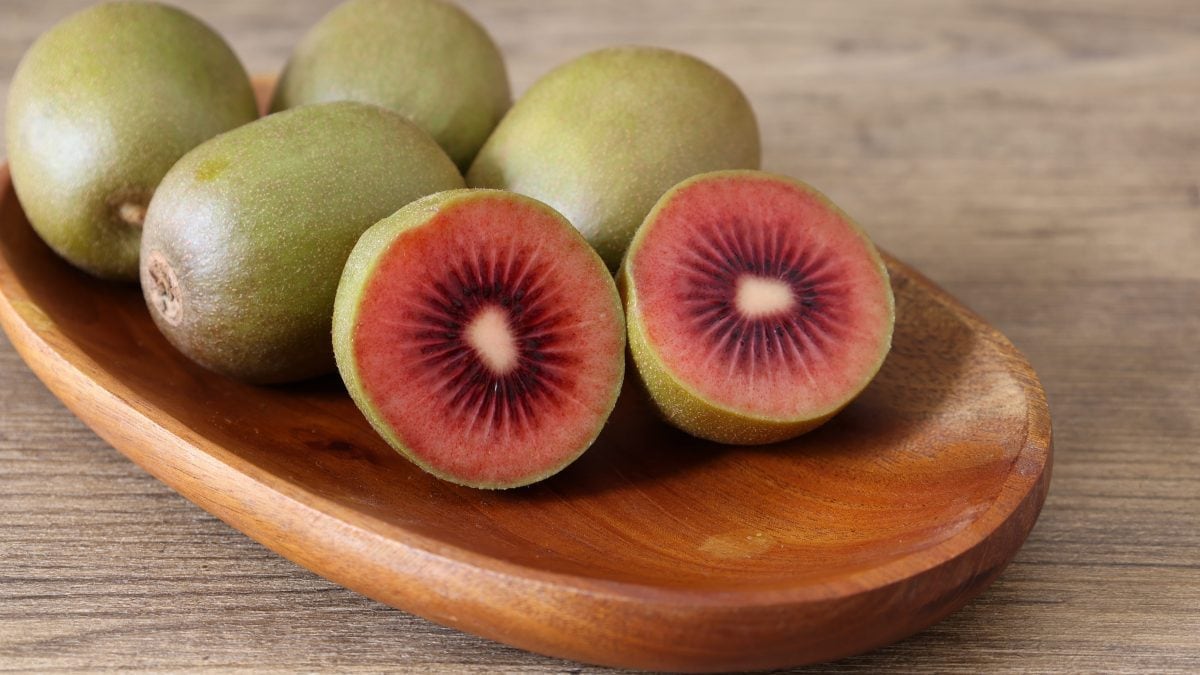
You're probably familiar with the most common kiwi (Hayward), the classic fruit with a rough, smooth, or slightly fuzzy texture, a light brown color, and bright green flesh. You may also have come across the gold variety, which has yellow flesh. But we bet you're still unfamiliar with the red kiwi, a particular variety that has been becoming increasingly popular in recent years, specifically since the early 2000s.
As you might guess from its name, this kiwi's distinctive feature is its bright red streaked flesh, but its unique features aren't limited to its appearance: what does this kiwi taste like, and why is it increasingly popular? We'll tell you everything you need to know about red kiwi.
What Does Red Kiwi Look Like and Where Does It Come From?
Red kiwi, botanically classified as Actinidia chinensis, is a non-natural fruit variety, developed in a laboratory in China in 2007 with the aim of producing a fruit with superior characteristics compared to other kiwi cultivars. For several years, red kiwi remained a Chinese exclusive, but was then introduced in the U.S. market in the early 2000s and attracted considerable attention. What makes red kiwi unique, in addition to the unique color of its flesh, is its long shelf life (it can last up to 5 months in the refrigerator) and, above all, its much sweeter flavor compared to other varieties. Currently, red kiwi remains a niche fruit that is difficult to find on the market, but various consortia that are being formed to promote its growth and consumption aim to achieve year-round production, allowing for the market availability of red kiwi.

Is Red Kiwi Better Than The Classic Kiwi?
The first difference you notice when looking at the red kiwi is aesthetic: the outer skin, hairy like that of the green kiwi, has a slightly lighter shade, while the inside has a golden pulp that is distinguished from the gold variety by the presence of a red heart in the center. The main difference is in the flavor: the red kiwi is much sweeter than other kiwis, with a particular tropical aroma that many also detect a banana-like aftertaste.
Nutritionally, red kiwi is more or less similar to its "cousins," although it has an even higher concentration of vitamins, particularly vitamin C, which is present in double the amount of green kiwi. It also contains minerals (iron, potassium, phosphorus, and calcium) and a good amount of other vitamins, including vitamin A. Furthermore, red kiwis are mostly water and are generally low in calories (100 grams contain just 44 kcal).
So, given all this, is red kiwi better than green kiwi? Actually, their nutritional profiles are quite similar, aside from the vitamin C content: if you're particularly deficient in this, you might prefer red kiwi. Otherwise, there aren't any major differences, other than those purely related to your personal taste.

How to Use Red Kiwi in Cooking
The best way to savor the full sweet flavor of red kiwi is to eat it plain, perhaps in a mixed fruit salad or a tasty smoothie. Alternatively, red kiwi can be an excellent ingredient, especially in desserts, given its very sugary flavor: you can easily use it in place of green kiwi in any recipe featuring it, from cheesecake to ice cream, from jam to popsicles.
;Resize,width=767;)
