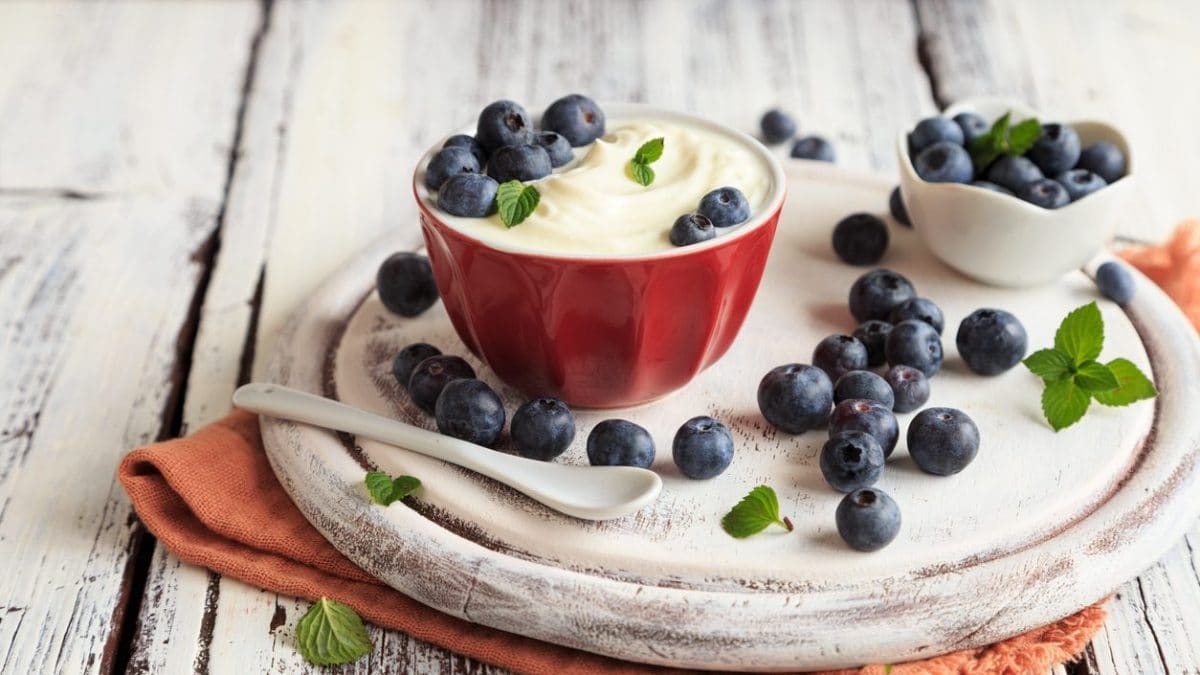
Often found alongside regular yogurt, Greek yogurt, and kefir, skyr, a dairy product of Icelandic origin, has earned a place of honor in recent years not only in the supermarket's refrigerated section, but also in the hearts of athletes, health enthusiasts, and foodies thanks to its excellent nutritional profile. Of ancient origin, it is a dairy product similar to yogurt, but with an even creamier and firmer consistency.
But what exactly is skyr, and how does it differ from Greek yogurt? What are its real benefits, and how can we include it in our daily diet (and in what quantities)? To clarify the many doubts surrounding this food, we asked for help from Dr. Simone Gabrielli, a trusted biologist and nutritionist.
What is Skyr, Exactly?
"Skyr is a dairy product similar to yogurt, but technically it's considered more of a soft, fresh cheese due to its creaminess," Dr. Gabrielli explains. With ancient origins, this dairy product originated in Iceland and has only recently gained popularity in the U.S.. It's made from skimmed cow's milk that's fermented and then filtered, and it's precisely this process that gives it its dense, velvety, and compact consistency. The removal of the liquid whey gives it a structured, almost solid texture, clearly distinguishing it from traditional yogurt.
Analyzing the label of natural white skyr, without added fruit, flavorings, or sweeteners, the excellent nutritional values immediately stand out, making it unique among refrigerated products. "It's a true protein concentrate," the nutritionist emphasizes, "compared to traditional yogurt, it has much more, but almost no fat because it's made with skimmed milk."
Rich in micronutrients, it is characterized by its exceptional calcium content, essential for maintaining strong and healthy bones and teeth, but also potassium, phosphorus and B vitamins, which help transform food into energy, support the synthesis of DNA and proteins, and are essential for the correct functioning of the nervous system.
The different production process compared to Greek yogurt means that there are substantial nutritional differences as well. First of all, the lipid profile. "Skyr is traditionally made from completely skimmed milk, so it has zero fat (about 0.2 grams per 100 grams), while Greek yogurt is available in different versions: from whole (about 9-10 grams of fat) to completely skimmed (0 percent fat)," the expert points out.
Skyr wins the protein density challenge: thanks to its super-concentrated production method, it boasts about 11-12 grams of protein per 100 grams. Zero-fat Greek yogurt holds its own, but typically hovers around 9-10 grams.
Finally, the consistency and flavor: Greek yogurt is creamier and smoother on the palate (even in the 0% version); skyr is firmer, almost "dry," and has a slightly less acidic and more lactic note, reminiscent of a spreadable fresh cheese.

Skyr's Benefits and Contraindications
High in protein and incredibly satisfying, skyr can be a valuable ally for those who want to get back into shape and those who lead a healthy, active lifestyle. Here are its main benefits:
- Extraordinary satiating power; precisely because it's particularly rich in protein, it's able to provide excellent satisfaction and fullness. "After eating it, you don't feel hungry again after half an hour, and this helps a lot if you're trying to watch your weight," Gabrielli specifies;
- An ally of intestinal health: skyr is a fermented product, therefore rich in probiotics, and essential for intestinal health and digestion; furthermore, fermentation can increase the bioavailability of some vitamins and mineral salts, making them more easily assimilated by the body;
- Athlete's friend: For those who participate in physical activity, skyr is an ideal post-workout snack. It helps muscles recover quickly after exertion, without burdening the body with unnecessary sugars or fats.
Are there any contraindications to its consumption? Although it's an exceptional food, there are certain groups of people who should be more careful.
If you have a mild lactose intolerance, it doesn't necessarily have to be ruled out altogether. "Skyr is often well tolerated because the fermentation bacteria consume some of the milk's sugars. Furthermore, filtration removes much of the whey, where the lactose is concentrated," the expert points out.
Although the straining process removes much of the whey (and therefore lactose), skyr is not naturally lactose-free, so extreme caution is needed based on individual sensitivities. "Those with severe intolerances may experience discomfort, unless they purchase the specific versions labeled lactose-free."
Finally, the only real contraindication is a milk protein allergy: in this case, skyr should be absolutely avoided. It should be included with great caution (or eliminated depending on the individual case) if you have serious kidney problems: "Being a concentrated protein bomb, it could overload the kidneys. But in this case, generally, specific protocols developed by the doctor are followed," the nutritionist reassures.
Apart from these specific clinical conditions, skyr is confirmed as an extraordinary, healthy food, suitable for practically everyone.

How to Consume Skyr
Incorporating skyr into your daily routine is incredibly simple, thanks to the great versatility and convenience of the available formats. But how much and when should we consume this dairy product? "As for quantity, a standard 150-gram package per day is perfect," advises Dr. Gabrielli. This standard serving provides an excellent protein boost, without excessive fat and sugar, and provides exceptional satiety.
It can be eaten for breakfast or as a mid-afternoon snack, perhaps complemented with a source of complex carbohydrates, such as natural oat flakes, to start the day with the right energy, and a portion of fresh seasonal fruit, to fill up on precious vitamins and minerals.
"Obviously there's no hard and fast rule," the expert explains. "It always depends on how much other protein you eat during the rest of the day, but generally speaking, it can be easily incorporated into any type of diet."
If you think skyr can only be eaten plain, you're wrong. Its dense consistency and neutral, slightly lactic flavor make it a very versatile ingredient. Besides simply consuming it with fresh fruit, seeds, or whole grains, you can add it directly to pancake batter, muffins, or any other cake to give them extra fluffiness. By replacing some of the fat with skyr, baked goods will be incredibly light and even higher in protein.
You can make delicious, light sauces to dress grilled vegetables, crispy salads, and white meat or fish main courses. Simply combine chopped herbs such as chives, mint, dill, parsley, or basil, and finish with a pinch of salt, pepper, a drizzle of extra virgin olive oil, and a few drops of lemon juice for a delicious, fragrant dressing.
If you prepare a vegetable cream soup or a legume puree, you can add a couple of spoonfuls of it with the heat off: this way you will make the preparation very creamy and enveloping, without the need to add butter, liquid cream or cheese.
;Resize,width=767;)
