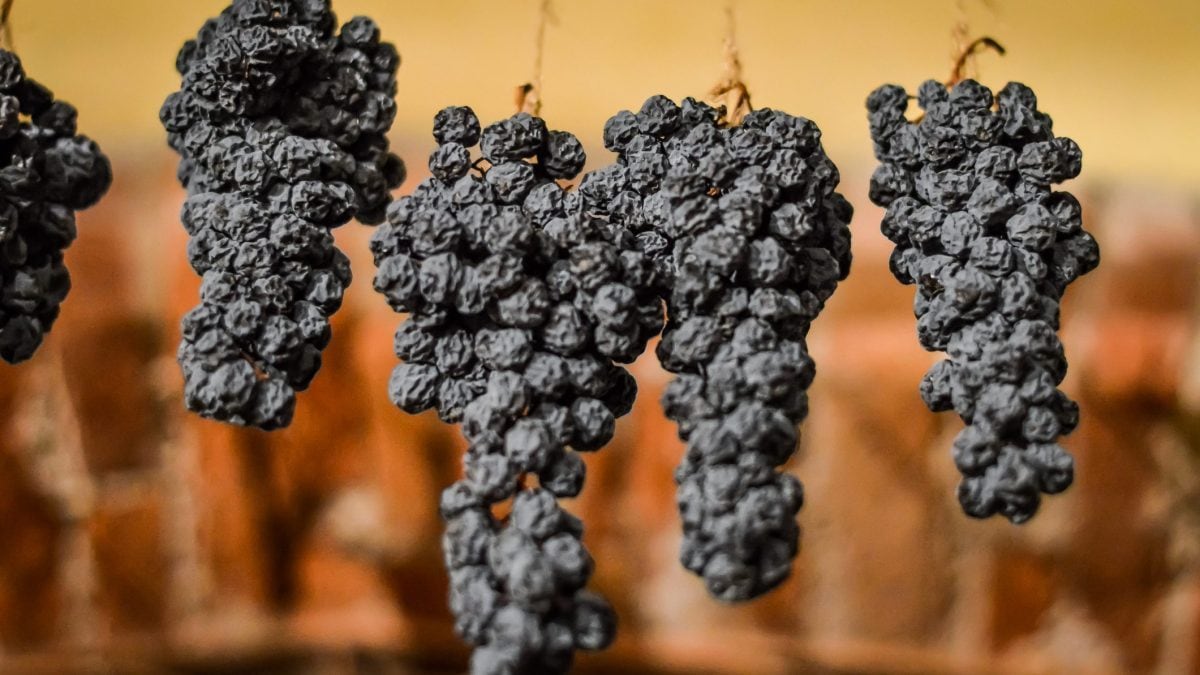
Straw wines are wonderful and are increasingly gaining popularity over time: many sommeliers now pair them with savory dishes, no longer relegating them exclusively to after-dinner drinks. These wines are made from grapes subjected to more or less advanced dehydration processes, whether natural (directly on the vine) or forced (after harvest). They are not "special wines," that is, the category of products obtained through "other" winemaking processes such as autoclaves for sparkling wines, alcohol content for fortified wines, or added flavorings as for aromatized wines. Straw wines are "normal" wines from a regulatory standpoint because after the winemaking process, they are not subjected to further technological processes or the addition of other products. Their origins are lost in the mists of time: Homer already mentioned them, calling them a pearl of antiquity, but many ancient populations, including Egyptians, Romans, and Greeks, left the grapes to dry in the sun, directly on the vine or in dedicated rooms. It's a wine with a truly remarkable historical legacy. Let's take a journey through this multifaceted world of straw wines, where Italy is perhaps the world's leading winemaking nation.
How Is Straw Wine Produced?
The soul of straw lies in the drying process, an ancient art passed down from generation to generation. Carefully selected grapes are left to dry to concentrate sugars, aromas, and fragrances, while losing water. The purpose of this process is to over-ripen the grapes, thus concentrating numerous compounds within the berry, such as sugars, organic acids, mineral salts, and aromas. This process can take place in the vineyard, with a late harvest, or in special rooms called fruttai, where temperature and humidity are precisely controlled. Some producers use innovative techniques, such as drying in crates or on racks, to achieve even more refined results.

Aside from the drying process, straw wines are produced using the same winemaking techniques employed for regular wines. These wines typically have a high alcohol content and a fairly high residual sugar content, which is why they're served at the end of a meal if we follow the "book"—but this rule has now become accepted. Not to mention that there are also dry straw wines, such as Amarone and Sfursat.
We should note that there are also fortified straw wines, which are therefore special wines: they are obtained from dried grapes and added with an alcoholic component. We must also be careful not to confuse late harvest wines with straw wines: there are wines obtained from late harvests, which therefore have over-ripened grapes. In simple terms, we are talking about a "not very" straw wine. In the latter case, however, the grapes lose almost all their water.
Straw Wine's Main Characteristics
Straw wines are a concentration of aromas and sweetness that emerge through this fascinating process of drying the grapes. The main characteristic of these wines is, it goes without saying, their natural sweetness. Unlike sweet wines, there's no added sugar: it all depends on the grape and its processing.

This picture, however, makes us somewhat underestimate straw wines, which possess a unique aromatic complexity in the winemaking world. These wines have aromas of ripe fruit, honey, caramel, spices, and dried fruit, with variations depending on the grape variety used. We must be careful, however: a good straw is never cloying; it must have just the right amount of acidity, leaving the palate fresh and inviting the next sip. The color is equally captivating: white straw wines shine with golden and amber hues, while red wines boast ruby or garnet hues, depending on their aging. The alcohol content is quite high, often between 12% and 15%, contributing to structure and persistence. They are intense wines and for this reason are considered meditation wines, to be enjoyed slowly.
Around the world, straw wines reflect a remarkable diversity of grape varieties and terroirs. In Italy, classics like Passito di Pantelleria and Vin Santo showcase sun-dried grapes and centuries-old traditions. In France, Vin de Paille from the Jura and Rhône regions highlights similar drying techniques on straw mats. Austria and Germany produce Strohwein (or Schilfwein), made from grapes dried after harvest to concentrate sugars and flavors. In Greece, Vinsanto from Santorini offers a historic take using sun-dried Assyrtiko grapes, while in Spain, regions like Málaga produce naturally sweet wines using dried grapes.
How to Pair Straw Wines With Food
The new rules for pairing food and wine don't provide ideal accompaniments to accompany a glass. Traditionally, straw is paired with dessert, so it's usually drunk at the end of a meal, paired with something sweet. Biscuits like cantucci but also tarts, small dry pastries, and chocolate cakes, to name just a few. Roasted chestnuts can also be an excellent accompaniment to a good straw wine.

We also recommend trying it with savory dishes: straw wine pairs beautifully with blue cheeses, mozzarella, or rare red meats, especially pigeon, as it counteracts the bird's iron content. Even sweeter meats, such as duck, pair well with straw wine as a delicate accompaniment, enhancing the main flavors of the two main ingredients.
Straw Wine Vs. Fortified Wine Differences
The difference between straw and fortified wines is substantial and concerns both the production process and the characteristics of the finished product. While both can be sweet and aromatic, they are the result of different techniques and, consequently, have distinctive characteristics.
1. The Production Method
The main difference between a straw wine and a fortified wine lies in the way the sugar and alcohol concentration are achieved. The former is obtained by drying the grapes, while the latter is obtained through a process called fortification, which involves the addition of ethyl alcohol or wine brandy during or after fermentation. This stops the fermentation process (if added before the end of fermentation), leaving a higher quantity of residual sugars in the wine. If alcohol is added later, the wine will be dry. This method allows for wines with a higher alcohol content, generally between 15% and 22%, compared to straw wines, which typically have an alcohol content of between 12% and 15%.
Beyond this, there's the preservation factor: fortified wines were created for long sea voyages between Europe and America and today undergo lengthy aging in wood, developing tertiary aromas such as vanilla, tobacco, leather, and hazelnut. Straw wines, on the other hand, can be either young or aged, but the structure depends on the grape variety and the intensity of the drying process.
2. Different Characteristics
Straw wines are generally sweet, smooth, and characterized by great aromatic complexity; they can be white or red, with colors ranging from bright gold to amber for whites, and from intense ruby to garnet for reds. Dry fortified wines, on the other hand, are much more common: sweet ones are rich and enveloping, while dry ones are more austere and complex, with notes of oxidation, dried fruit, spices, and even saltiness.
;Resize,width=767;)
