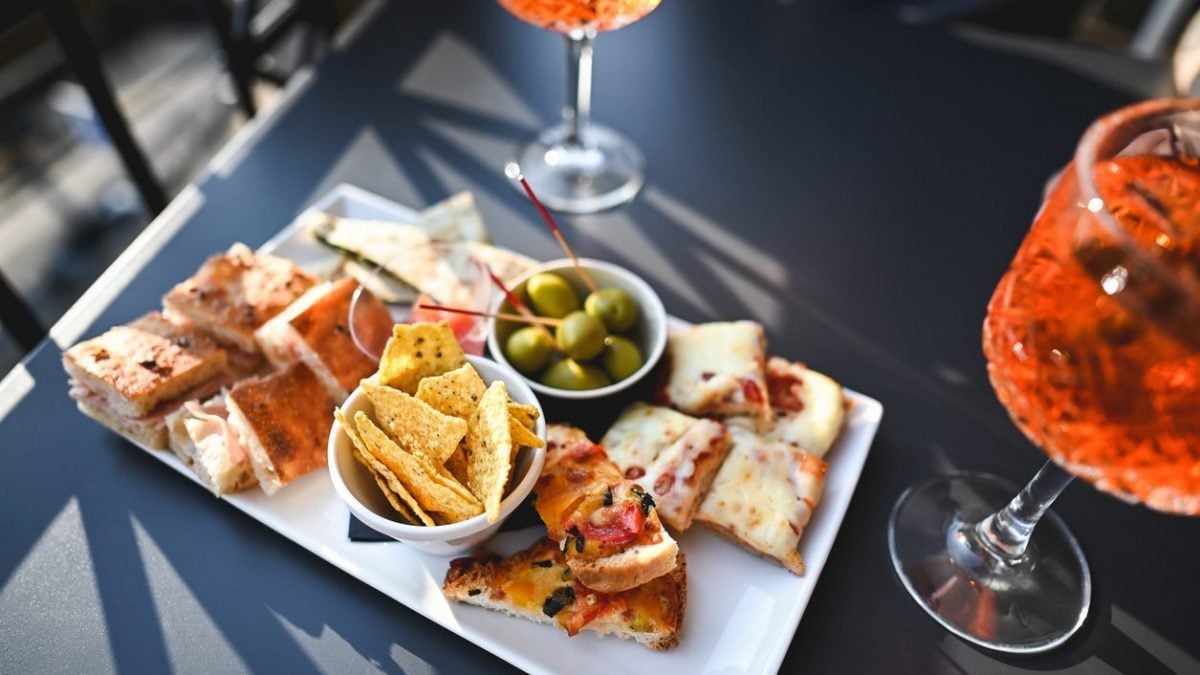
A convivial moment to spend time with friends, a social occasion that kicks off the evening: aperitivo time is a pleasant custom for Italians, who enjoy it at all ages and in any season. It's not just about sipping a good drink or nibbling on tempting savory appetizers, or enjoying a pleasant and welcoming atmosphere: it's about spending a few pleasant and light-hearted hours, a chance to chat and relax, but less demanding than a full dinner.
In short, everyone loves aperitivo. But what about happy hour or apericena? They're equally trendy moments, but be careful: although the three terms are often used synonymously, aperitivo, happy hour, and apericena are not the same thing and have substantial differences. For example, aperitivo is older, born in the late 19th century as a pre-dinner social ritual, therefore light and not abundant, while happy hour, more recent (born in 1920), was designed to offer drinks, and later food, at discounted prices, thus encouraging customers to consume a lot.
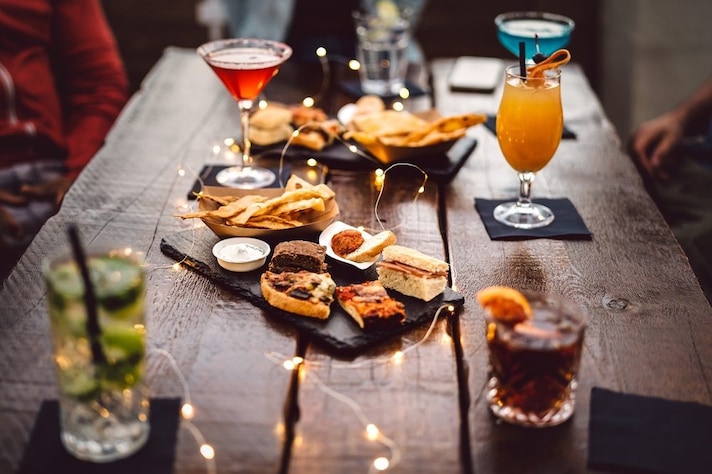
And what about apericena? A cross between the two, but one that replaces a proper dinner. Here are all the historical and gastronomic differences between the three convivial moments that have become a permanent part of our lives.
The Aperitif, a Social Ritual Born in The 19th Century
As we know it today, the ritual of the aperitif originated in 19th-century Turin and is closely linked to the invention of vermouth, a flavored drink created specifically to "stimulate" the appetite. The history of this convivial moment, however, is much older: it's a custom that dates back to ancient Rome, as evidenced by some artifacts showing that the Romans used to drink a mixture of wine and honey before meals to stimulate the appetite. The word "aperitif" actually derives from the Latin "aperire," meaning "to open," meaning to open the stomach to stimulate hunger.
This concept took on a medical connotation, and the aperitif became a drink given to those who were ill and suffered from a loss of appetite until the 1700s, when the aperitif transitioned from "medicine" to "date," reaching its fulfillment in 1786, the year Antonio Benedetto Carpano introduced vermouth to the world, a wine made with absinthe, herbs, and spices. In his Turin bar, Carpano served shots accompanied by pretzels and a few olives, a bit like today, but back then the aperitif was very short, a bit like a coffee break today: a quick stop before returning home or to a restaurant.

The twentieth century was the era of the modern aperitivo, a time when the social gathering spread throughout Italy, from Genoa and Florence, to Padua, Venice, and Milan, where the encounter with Campari further fueled this moment, which became a symbol of the good life in Lombardy's ski resorts. Over the course of the century, it spread throughout Italy, until the 1990s, when a veritable aperitivo mania exploded, bringing us right up to the present day, where the Friday afternoon "ape" is an almost obligatory ritual.
Today, aperitivo takes on dozens of different forms, more or less generous, but it remains a pre-evening moment to whet the appetite before dinner, with moderate alcohol consumption accompanied by a buffet of fresh and delicious, but generally light, foods. Why is it considered a true ritual? At aperitivo, food and even cocktails play almost a secondary role, because the important thing is being together.
Happy Hour, A More Recent Trend Born for Marketing
Happy hour is a decidedly more recent custom, dating back to the early 20th century. It literally means "happy hour" in English, and is a concept that originated in the 1920s in the United States, during Prohibition. The term was used by American sailors to describe the time when they enjoyed physical activities, such as boxing, to relieve stress. On land, this tradition then expanded due to Prohibition: alcohol was banned, so people would go to speakeasies for a drink since many restaurants were out of stock.
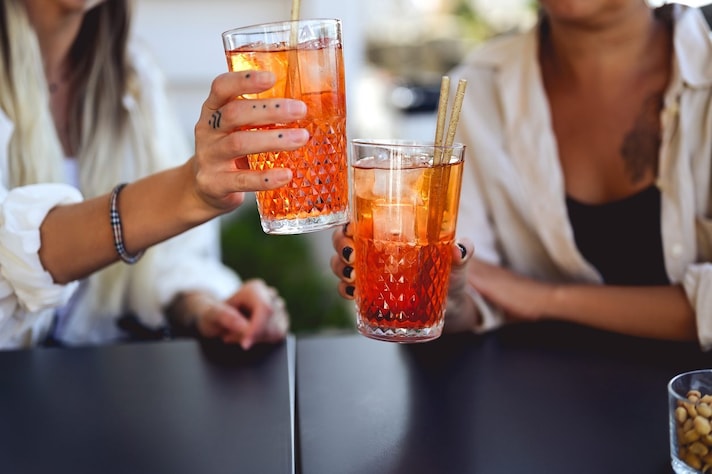
Happy hour as we know it today is an evolution of this moment of levity and was born in the post-war period thanks to some English pubs: in an attempt to attract customers in the hours after work, between 5:00 PM and 7:00 PM, they decided to offer cocktails and alcoholic beverages at a deeply discounted price, sometimes (but not necessarily) accompanied by free or discounted appetizers. This makes the difference with the aperitivo clear: happy hour focuses primarily on drinking and less on eating and was created to attract customers, encouraging patrons to consume something even alone, thus lacking the sense of sharing typical of the aperitivo.
The strategy was nonetheless remarkably successful, and happy hour spread first to Anglo-Saxon countries and then throughout the world, taking on different characteristics depending on the country and local culture. In Italy, for example, happy hour has also greatly involved food, creating veritable free buffets as well as a real confusion with aperitivo, also because the times overlap.
Today, happy hour isn't as popular as it was a few years ago, partly because over time the practice has acquired negative connotations, with increasingly inferior products causing the tradition to significantly shrink. Today, these discounts are increasingly limited and in most Western countries, they're now outdated and obsolete.
And What About the Apericena?
A third pre-dinner habit has become increasingly popular and is now so widespread that we don't even consider it a novelty: the apericena. This is the most recent phenomenon of the three, appearing towards the end of the 1990s and the early 2000s, probably inspired by the "merenda sinoira," a Piedmontese tradition that includes a snack-dinner with generous tastings reminiscent of today's apericena. Bars in Turin began to offer a modern and complete variation of this regional custom, an idea that was soon embraced in Milan as well. Milanese entrepreneur Vinicio Valdo is considered one of the originators, having introduced buffets during aperitifs to encourage consumption in his bar, leading to the "Milanese aperitif."
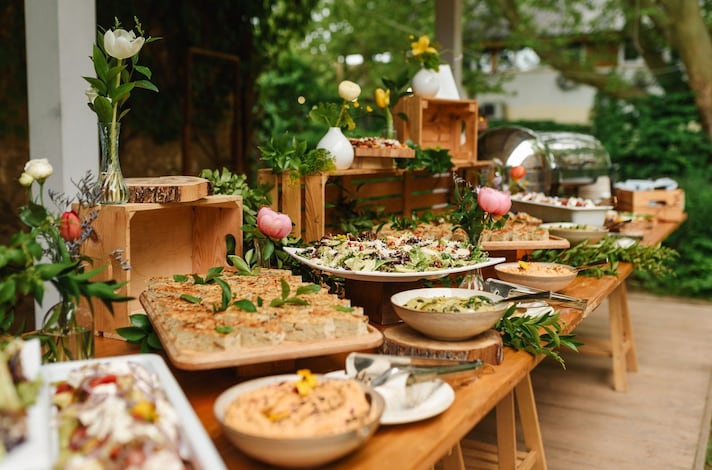
Be careful not to confuse it with either aperitivo or happy hour: apericena is a blend of both, yet distinct from both. As the neologism (which has become decidedly trendy in more social circles) suggests, apericena is a fusion of "aperitivo" and "cena" (dinner), and refers to a convivial evening where an aperitivo turns into a full, informal meal, often served as a lavish buffet with a variety of appetizers, savory and sweet snacks, as well as full-fledged dishes like rice salad or cold pasta.
Indeed, happy hour draws on both the presence of alcoholic and non-alcoholic beverages and the advantageous price, usually a fixed fee, to attract customers. It is therefore an alternative to the traditional dinner or classic restaurant buffet: the apericena is characterized by a dynamic atmosphere, which allows for socializing and eating with less formality, not just nibbling, but rather enjoying a real meal. This concept of an alternative, yet plentiful and tasty, dinner has led the apericena to spread throughout the peninsula, becoming a successful trend in the restaurant industry and a popular habit among young people and beyond.
;Resize,width=767;)
