Even if you've never been to Japan, you've surely tried ramen at least once: it's an iconic and very important dish for the Japanese, despite actually having been imported from China, where, however, it's no longer made today. Now widespread throughout the world and a true icon of popular culture, ramen is a one-dish meal made of wheat noodles in broth (made from pork, chicken, or fish, called dashi), flavored with soy sauce, katsuobushi, miso, pork chashu, seaweed (kombu and nori), narutomaki, and hard-boiled eggs, left to marinate for a long time.
What we Westerners often overlook is that, in reality, there are dozens and dozens of different varieties of ramen, which differ from each other based on the geographical area, the ingredients used, and the way in which that particular specialty is cooked or eaten. For example, a relatively recent variant that hasn't reached the West, but is much loved in Japan, is called tsukemen.
So popular that there are even restaurants dedicated solely to its preparation, tsukemen is a true comfort food and a summer version of ramen, adapted to the high temperatures and sweltering heat. Let's discover all the characteristics of this specialty and how it differs from the ramen we're used to.
What is Tsukemen?
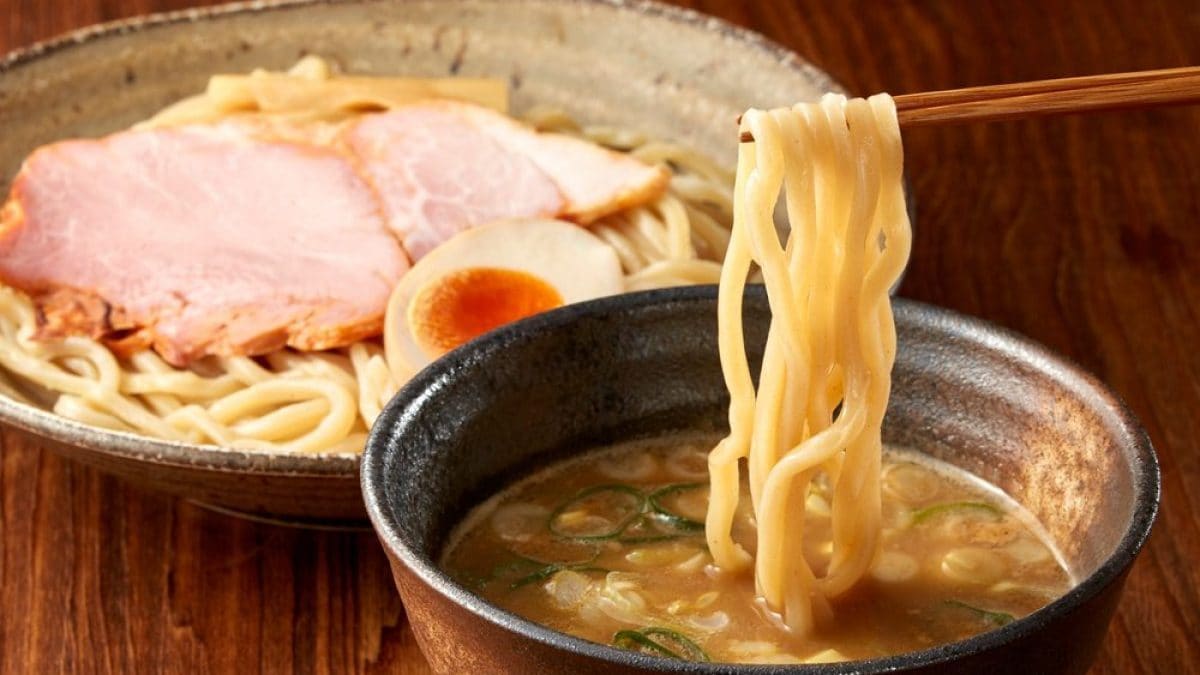
Tsukemen is a special variation of ramen, designed to be enjoyed during the hot Japanese summer days, when the temperatures aren't particularly inviting for classic steaming hot ramen. For this reason, in tsukemen, the noodles are served cold and separate from the soup, which serves only to moisten and flavor the noodles and the garnishing ingredients, usually seaweed, eggs, or bean sprouts.

Tsukemen is a fairly recent invention: it was invented in Tokyo in 1961 by Kazuo Yamagishi, the owner of a famous restaurant in the city. He had the idea of creating a type of ramen for summer, which he initially called special morisoba and consisted of cold soba noodles with soup for dipping.
The idea so enthralled the Japanese that it quickly became popular and was served in all of Kazuo Yamagishi's restaurants. It was in the 2000s that tsukemen broke away from its inventor and began to take on a life of its own, so much so that today it is so popular that it has inspired the creation of restaurants that exclusively serve this dish.
Tsukemen Vs. Ramen
Tsukemen is essentially a variation of classic ramen, in which the noodles and other toppings are served and eaten directly in the broth. The distinctive feature of tsukemen, however, is that the noodles are not served in the soup but in a separate bowl, either completely cold or just lukewarm. The other ingredients, however, can be in the soup or on top of the noodles, or even spread across both.
The broth and noodles also change slightly: in tsukemen the liquid part is less soupy, thicker, almost similar to a sauce and very tasty, while the noodles are thicker and rougher than those of ramen, because in this way they collect the broth better which, being thicker, sticks better to the noodles.

Tsukemen, furthermore, is served in larger noodle portions, usually ranging between 170 grams in the smallest size and 200-220 grams in the largest size, while a ramen portion usually is around 150 grams.
How to Eat Tsukemen
If you are in Japan and order tsukemen you will be presented with two bowls, one containing only the broth, which as explained is much thicker and more pronounced and is hot, and the noodles, which compared to traditional ramen noodles are thicker so as to collect the accompanying soup well.
When you're faced with two bowls of tsukemen, eating it is very simple: using chopsticks, you roll the noodles and then dip them into the bowl of broth, gradually eating the other ingredients between bites. Because of this particular way of eating the dish, or rather, the plates, restaurants often provide customers with large bibs to keep the process clean.
;Resize,width=767;)
