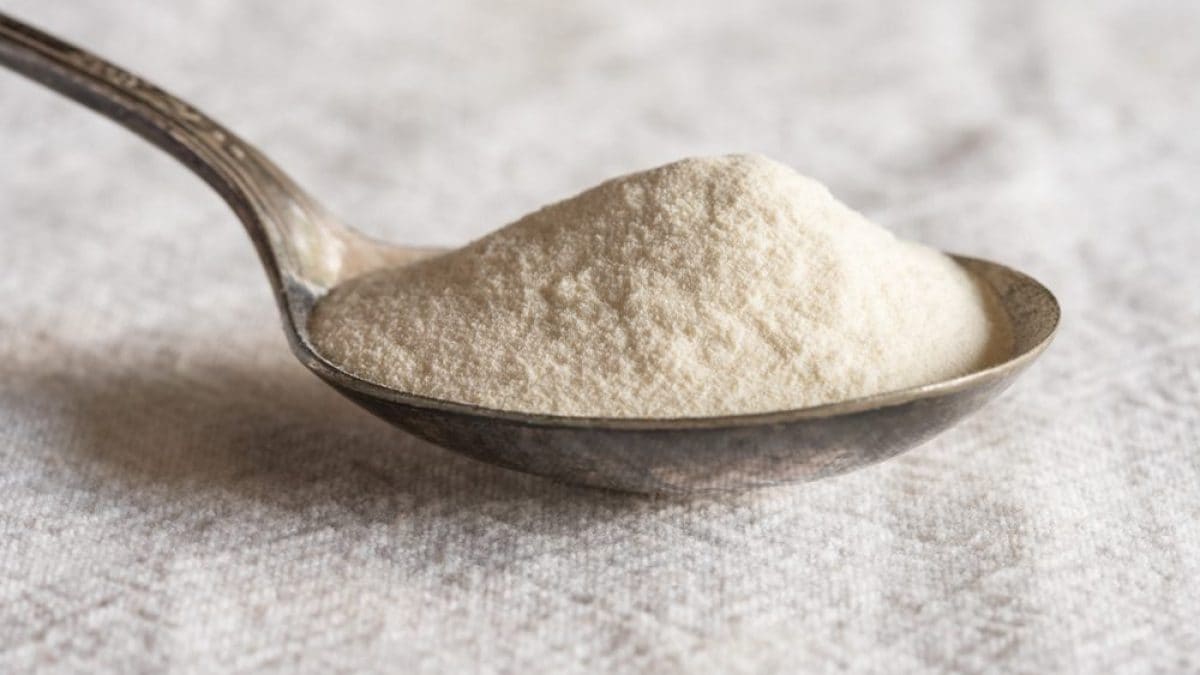
Xanthan gum is one of those ingredients that, despite being almost invisible in the pantry, has the power to revolutionize a recipe. It appears as an impalpable, very light powder and is obtained through a natural fermentation process: sugars such as glucose or sucrose are fermented by the bacterium Xanthomonas campestris, producing a gel. This gel is then purified, dried, and ground into a powder, ready for use in the kitchen.
Although the name may seem technical, xanthan gum is anything but a "chemical" ingredient: it is a natural, safe substance, widely used in the food industry but also in home cooking, particularly gluten-free cooking. Its main function is to thicken and stabilize: for example, it prevents a sauce from separating, a cream from becoming more velvety, or a gluten-free dough from becoming more elastic and soft.
How to Use Xanthan Gum in The Kitchen
Using xanthan gum is surprisingly simple, as long as you follow one basic rule: you only need a little. It's a concentrated ingredient and so effective that too much can make the mixture too thick or even gummy. Here's how to get started:
- To thicken sauces, creams, and soups. A quantity of 1 to 3 grams per liter is often sufficient. Simply add it slowly, stirring vigorously, and in a few seconds the consistency will change before your eyes.
- For gluten-free dough, xanthan gum becomes a valuable ally: just 2–5 grams per 250g of flour is enough to significantly improve the dough's structure, making it more elastic and resistant to baking.
- For ice cream and sorbets. Using 1–2 grams per liter helps create a more stable and velvety cream, reducing the formation of ice crystals. The result? A more "ice cream parlor" consistency.

How to Avoid Mistakes
One of the characteristics that make xanthan gum so popular is its total discretion: it has no flavor. It doesn't affect the aromas or flavors of a dish. This makes it perfect for those who want to adjust the texture without altering the original flavor of the recipe. It's like a good stagehand: it works behind the scenes, but the end result wouldn't be the same without it. The trick is to integrate it gradually. You can mix it into dry ingredients or add it directly to liquids, preferably while blending or stirring vigorously: it activates immediately and doesn't require cooking.
How to Replace Xanthan Gum
If xanthan gum isn't available, other solutions can be used, although none fully replicate its versatility. Depending on the application, here are some effective substitutes:
- Guar gum. This is the closest alternative. It has comparable thickening power and works well in both sauces and doughs, although it may sometimes require slightly higher doses.
- Psyllium (powdered or seeded). Excellent for gluten-free leavened products: it creates a natural gel that helps retain moisture and gives doughs a more elastic consistency. However, it is less effective in emulsions.
- Starches and flours (cornstarch, potato starch, tapioca). They're perfect for thickening creams and sauces, but they don't offer the same elasticity in dough. Therefore, they're excellent for spoon preparations, but less so for gluten-free bread and focaccia.
- Agar agar or gelatin. They work very well for thickening hot mixtures or making jellies, but they lack the flexibility of xanthan gum, especially in cold emulsions.
- Flaxseed flour. When mixed with water, it forms a natural gel useful in some doughs, especially vegan ones. However, it has a more pronounced flavor and is not as neutral as xanthan gum.

;Resize,width=767;)
