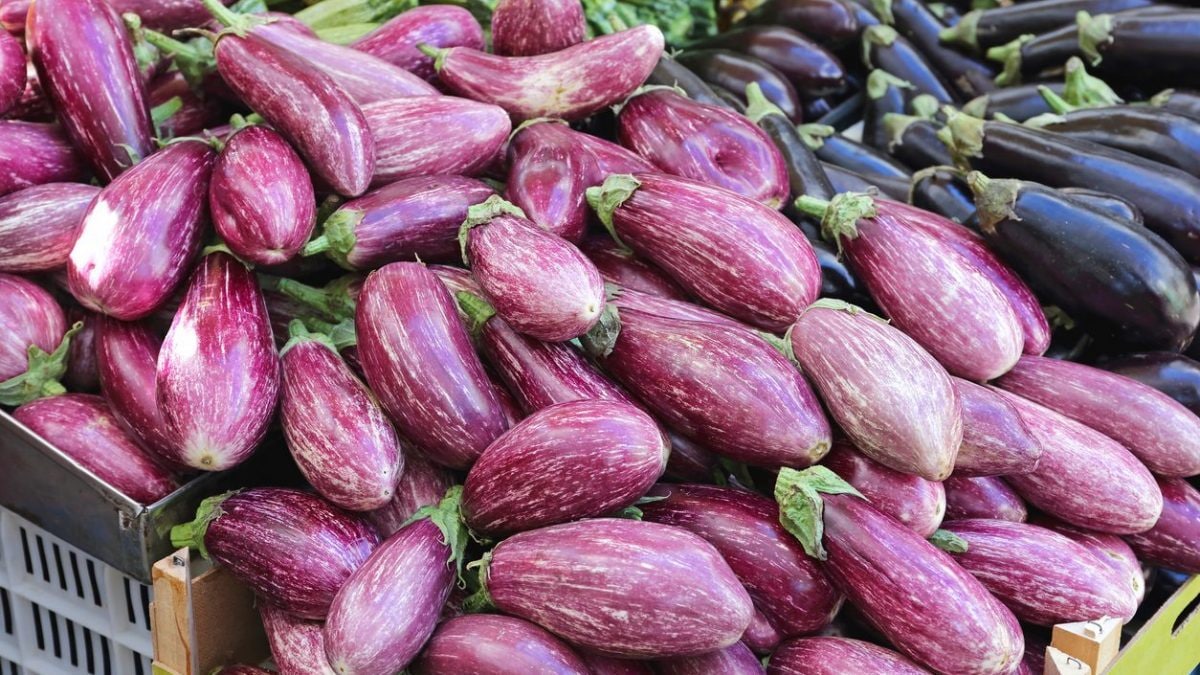
Choosing the right eggplants doesn't just mean bringing home a fresh, high-quality vegetable, it also means getting off to a good start in the kitchen. Eggplants vary greatly in shape, texture, seed count, and ability to absorb seasoning: one variety might be perfect for parmigiana, but less suited to quick pan- frying; another might be great grilled, but too delicate for a long oven bake.
For this reason, when purchasing eggplants, it's important to consider both their external appearance and their intended use: the first step is to recognize a fresh, firm, and not overripe product; the second is to choose the most suitable type for the recipe you have in mind. Here's what to look for when purchasing and which eggplants to choose based on the dish you're preparing.
What to Look For When Choosing Eggplants
When purchasing eggplants, it's important to look beyond their overall appearance: certain factors can help you assess the freshness of the vegetable, its degree of ripeness, and the quality of its internal flesh, characteristics that directly influence the final result in the kitchen. A carefully chosen eggplant will have a more pleasant texture, a more balanced flavor, and will be better suited to various preparations, from grilling to frying to baking. Therefore, before adding one to your cart, it's worth considering a few details that can make all the difference.
- Examine the skin. The skin should be smooth, tight, and shiny, with a uniform color and no wrinkled areas; dark spots, bruises, or soft areas may indicate that the eggplant is old or has been damaged during transportation.
- Check the consistency. A good eggplant should be firm to the touch, but not rock-hard. When pressed lightly with a finger, the flesh should resist and not leave a visible mark: if an imprint remains, the vegetable may be overripe.
- Look at the stem. The stem is one of the most useful indicators of freshness: it should be green, well attached, and not too dry; if it appears brown, soft, or dehydrated, the eggplant was probably harvested several days ago.
- Evaluate the weight. For the same size, it's best to choose eggplants that are fairly heavy: an adequate weight indicates a good amount of water in the flesh, while an eggplant that's too light may be dry, spongy, or less palatable after cooking.
- Choose medium sizes. Very large eggplants aren't always the best: they often contain more seeds and have a more bitter or stringy flesh; medium-sized ones, on the other hand, tend to be more balanced, with a more pleasant texture.
- Avoid overripe specimens. An overly ripe eggplant may have many internal seeds and a more pronounced, sometimes bitter, flavor. For delicate recipes or simple cooking, it's best to choose fresh, firm, and not overly developed vegetables.
How to Choose Eggplants According to The Dish You're Making
Evaluating freshness is the first step in choosing good eggplants, but it's not the only aspect to consider. There are several varieties, which differ in shape, size, flesh texture, and flavor intensity: these characteristics influence the vegetable's behavior during cooking and can make it more or less suitable for a specific recipe. Choosing the right variety therefore allows for better results, maximizing both the flavor and texture of the final dish. Here are the eggplants to choose based on the preparation you intend to make.
1. For Parmigiana

For a well-structured parmigiana, it's best to choose black or elongated purple eggplants: these varieties have firm flesh, few seeds, and a consistency that allows for even slices, ideal for frying and layering. They also tend to absorb less oil than other varieties and hold their shape better during baking. The result is a more balanced, flavorful parmigiana that's easy to portion.
2. For Eggplant Pasta

Pasta alla Norma requires eggplants that can be easily diced or sliced and that maintain a good consistency after cooking. The elongated purple or black varieties are also among the best, as they have tender flesh, few seeds, and a balanced flavor that pairs perfectly with tomato. These eggplants are particularly well-suited to frying, a key step in the traditional Sicilian recipe. Once cooked, they remain soft without falling apart and contribute to a rich and harmonious sauce combined with basil and salted ricotta.
3. For Stuffed Recipes

Round eggplants are the ideal choice for stuffed recipes thanks to their regular shape and abundant pulp. Their generous size allows for easy scooping out, creating a natural container for fillings of meat, fish, cheese, or vegetables. They also maintain their structure well during baking, preventing the shell from cracking or deforming. Alternatively, you can use larger oval eggplants, which offer a good amount of pulp and are ideal for stuffed recipes, despite having a less compact shape than round eggplants.
4. For Grilling

When grilling eggplant, it's important to choose varieties that maintain a good texture after cooking: oval black, purple, and striped eggplants are particularly suitable because they offer a good balance between softness and firmness. Sliced not too thinly, they cook evenly and develop an intense flavor without falling apart. Alternatively, you can also use round purple eggplants, which, thanks to their meaty flesh, guarantee excellent results and a particularly soft texture after cooking.
5. For Caponata

Caponata requires eggplants that can absorb the sauce without completely losing their firmness: elongated and oval varieties are ideal because they're easily cut into even cubes and hold together well during preparation. After frying and tossing in the traditional sweet and sour sauce, the flesh remains soft but not mushy. This allows for a well-balanced caponata, where each ingredient retains its own identity, contributing to the complexity of the dish.
6. For Baked Side Dishes

Oval eggplants are among the most suitable for baked dishes, both as a side dish and as the main ingredient in more elaborate recipes: thanks to their soft flesh and good water content, they tend to remain moist and pleasant even after prolonged cooking. The black, purple, striped, and white varieties can be used to create vegetable trays, aubergine gratins, or sliced dishes. In particular, the white eggplant stands out for its more delicate flavor and the almost total absence of bitter notes.
7. For Creams, Sauces and Soups

White eggplants are particularly prized for their delicate flavor and soft, mildly bitter flesh: these characteristics make them perfect for dishes where the vegetable's flavor must be elegant and not overly intense. Once cooked, they tend to become very creamy and easy to work with, ideal for making soups, spreads, sauces, or bases for dressings. Alternatively, striped eggplants can also be used, whose tender flesh and naturally sweet flavor allow for creamy, well-balanced dishes.
8. For Frying

When frying, it's best to choose varieties with firm flesh and few seeds, such as long black eggplants, long purple eggplants, or round purple eggplants. These varieties tend to maintain a good structure during cooking and don't fall apart easily. When fried properly, they develop a soft interior and a golden, appetizing surface. Furthermore, their structure limits excessive oil absorption, contributing to a more balanced and palatable result.
;Resize,width=767;)
