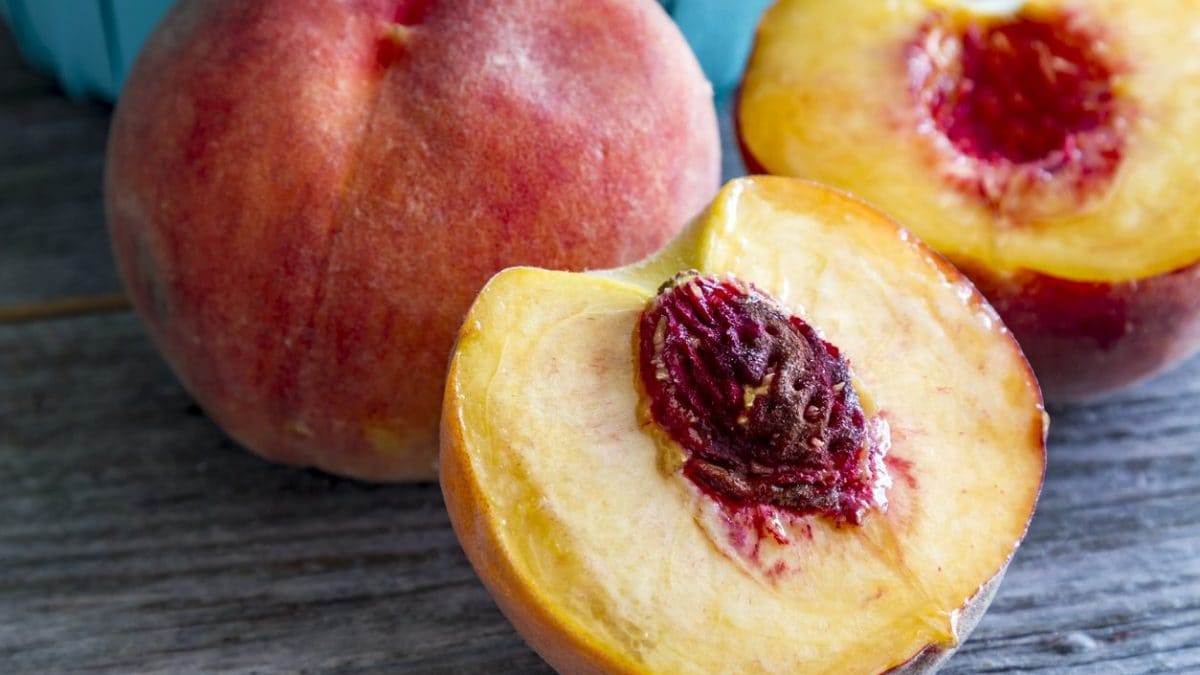
Few fruits evoke summer like the peach: fragrant, juicy, and sweet, it's a delight that accompanies the warmer months. But sometimes, when you cut one open, you notice a strange whitish substance stuck to the stone or lodged in the internal cavity. At first glance, it might seem worrying —mold, parasites, or even insect eggs—but in reality, it's a completely natural phenomenon known as calloused tissue.
What is Callous Tissue?
Callous tissue is composed of undifferentiated cells, that is, cells that have not yet assumed a specific function. The plant produces them in response to small injuries or stresses suffered by the fruit during its growth. In other words, it is a sort of "plant healing": a defense mechanism that allows the fruit to protect the most delicate area, the stone, ensuring its development. This is why this phenomenon is often observed around the seed, where the fruit is most vulnerable.
But why does it form? Some peach varieties tend to develop calloused tissue more easily, and environmental conditions also play a role. Factors such as drought, inconsistent irrigation, or temperature changes can stimulate the formation of these cellular accumulations. The main causes are:
- Microtraumas suffered by the kernel during growth.
- Environmental stress (irregular irrigation, excessive heat or sudden changes in temperature),
- Characteristics specific to some peach varieties, more predisposed than others.
- Normal physiological processes of plant protection.
How to Recognize It
Visually, calloused tissue appears as compact white lumps or patches, sometimes a little hard to the touch. It's important to distinguish it from other defects: mold, for example, appears with cottony gray or green threads and produces unpleasant odors; rot, on the other hand, causes blackening and a soft, acidic pulp. Calloused tissue, on the other hand, is compact, white, and odorless.
Is It Safe to Eat?
Yes, absolutely: the calloused tissue is not mold, it is not bacteria, and it contains no toxins; it is simply part of the peach itself. It does not alter the flavor of the fruit and does not pose any health risk. The only difference you may notice is a slightly tougher texture near the affected area, but this does not compromise the eating experience.
;Resize,width=767;)
