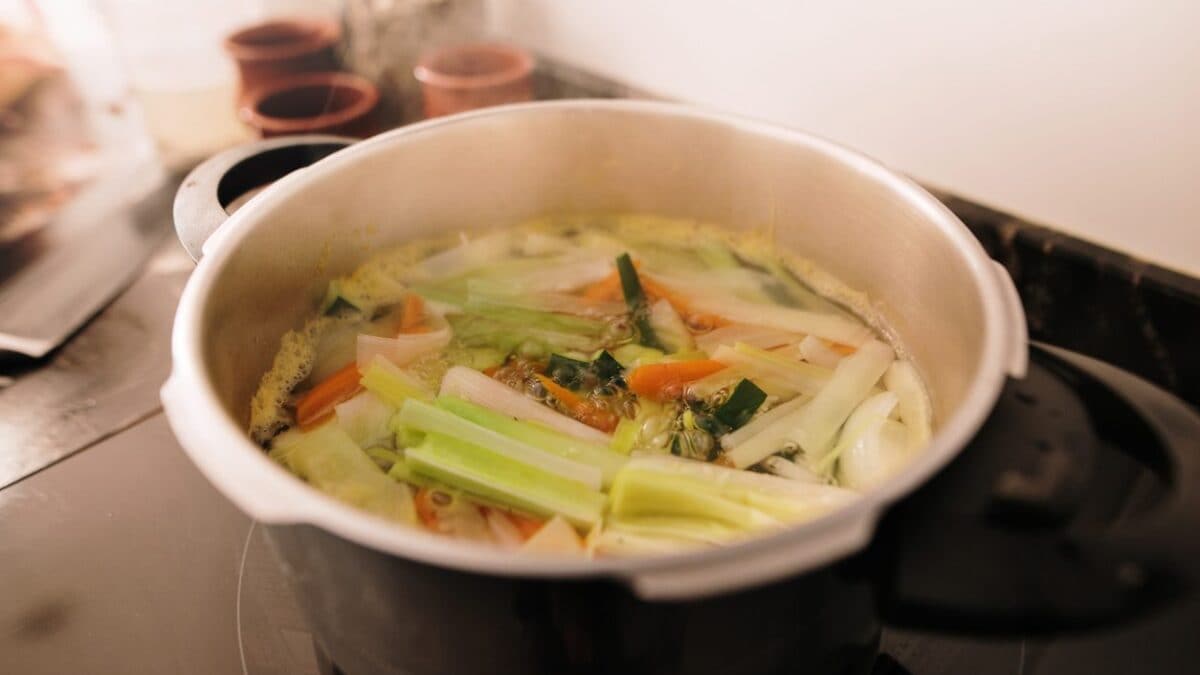
When making broth, one of the most common questions is when to add vegetables. Carrots, celery, and onions are among the most commonly used ingredients, but simply adding them to the pot isn't enough to make a flavorful broth: the water temperature and cooking time also play a role. Typically, you start with cold water and let the ingredients slowly release their flavors, but the process can vary depending on whether you're making vegetable or meat broth. So, here's when to add vegetables, in what order, and what tips can help preserve their flavor.
When to Add Vegetables to Your Broth and Why You Should Start With Cold Water
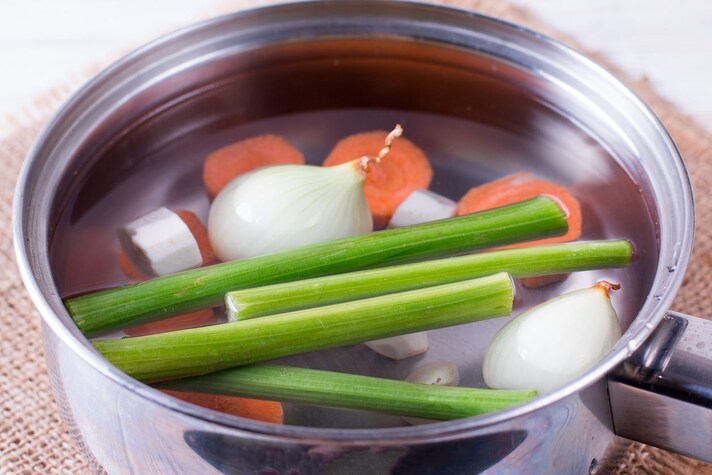
For traditional broth, vegetables are generally added to cold water, along with the other ingredients called for in the recipe. This is related to the desired method of broth preparation: during gradual heating, the flavors, mineral salts, and soluble substances present in the ingredients have time to leach into the water, gradually making it more flavorful and fragrant. Carrots, celery, and onions are usually placed in the pot with cold water; for an even more fragrant result and a deep golden color, culinary tradition calls for first toasting the onion, cut in half, dry-roasting it on a griddle (triggering the Maillard reaction) before placing it in the liquid. Once the liquid reaches a boil, it's best to continue cooking gently, avoiding over-simmering the liquid: this way, the broth remains clearer and the flavors are gradually extracted.
What's The Order in Which to Add the Vegetables?
In a classic vegetable broth, there's no strict order for adding vegetables, especially when using the most common ones: carrots, celery, and onion can be added together from the beginning, usually chopped into fairly large pieces so they can withstand the long cooking process without falling apart completely. Things change when vegetables with very different consistencies end up in the pot. Potatoes, leeks, zucchini, tomatoes, cabbage, or other vegetables can have different cooking times: the tougher, more fibrous ones can be added from the beginning, while the more delicate ones can be added from the beginning, while the more delicate ones can be added later.
For a vegetable broth intended for straining, however, a few minutes more or less doesn't necessarily compromise the result: the most important thing is to avoid overcooking the more delicate vegetables, which can make the flavor less balanced. Cooking times also depend on the quantity and size of the pieces, but generally a vegetable broth requires about 45-60 minutes of gentle cooking. To achieve a more intense flavor, you can extend the cooking time, keeping in mind, however, that more time doesn't always automatically mean a better broth.
Vegetable Broth Vs. Meat Broth Timings
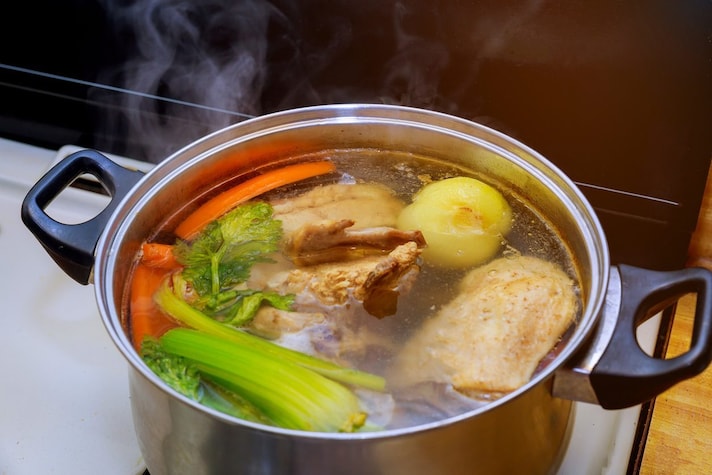
The main difference concerns the desired cooking result. In vegetable broth, vegetables are the main ingredients and are left in the water from the beginning to transfer aromas and flavor to the liquid. In meat broth, however, the vegetables have a primarily aromatic function and accompany the meat and bones during a generally longer cooking process. In this case too, the water usually starts with cold water: the meat, bones, and vegetables are placed in the pot and slowly brought to temperature. When impurities surface, it is important to remove them with a slotted spoon, thus obtaining a cleaner broth. Cooking can last several hours, depending on the type of meat and the desired result: in these cases, to prevent the vegetable flavors from degrading and becoming bitter, the vegetables can be added during the second half of the cooking process or cut into very large pieces and left unpeeled (in the case of onions) to preserve their delicate flavor.
Mistakes to Avoid to Not Ruin The Broth's Flavor
One of the most common mistakes is boiling the broth too vigorously: a violent boil can make the liquid cloudy and overmix the substances in the pot, compromising the cleanliness of the result. Cutting vegetables into pieces that are too small can also be counterproductive, especially during prolonged cooking: they tend to fall apart more easily and can make the broth less clear.
Another mistake is overdoing the amount of a single vegetable, especially onion or celery, which risks overpowering the other flavors. Finally, it's helpful to add a pinch of salt at the beginning of the extraction process to promote the osmotic process that releases the juices into the water. However, be careful not to overdo it, as the subsequent reduction of the liquid will overly concentrate the flavor. The final adjustment should be made after cooking.

