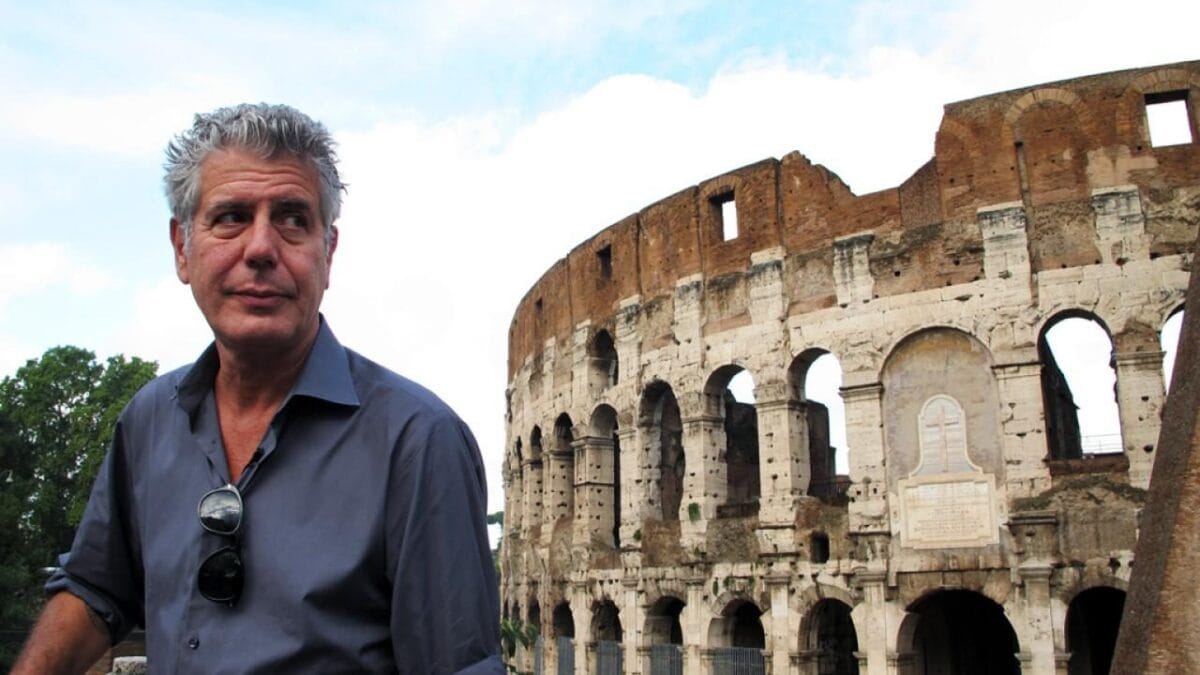
In an industry where everyone jostles to lecture on tradition, Anthony Bourdain was the anomaly. He didn't pose as a sterile reporter or a staid critic: his approach was openly selfish and at times manipulative, but disarming in its sincerity. While the establishment was weighing linen tablecloths and counting Michelin stars, Bourdain was overturning the stone of fine dining to look at what lay beneath, unearthing the true life of food places.
The World Travel guide, edited in 2021 by his longtime assistant Laurie Woolever, ruthlessly crystallizes this attitude. It's a map that ignores entire regions like Tuscany and Emilia-Romagna, completely skipping the shop windows of Milan and heading straight for the suburbs. And the amazing thing is that, years later, those addresses not only stand the test of time, but still represent the perfect antidote to tourist traps.
Naples and The Amalfi Coast
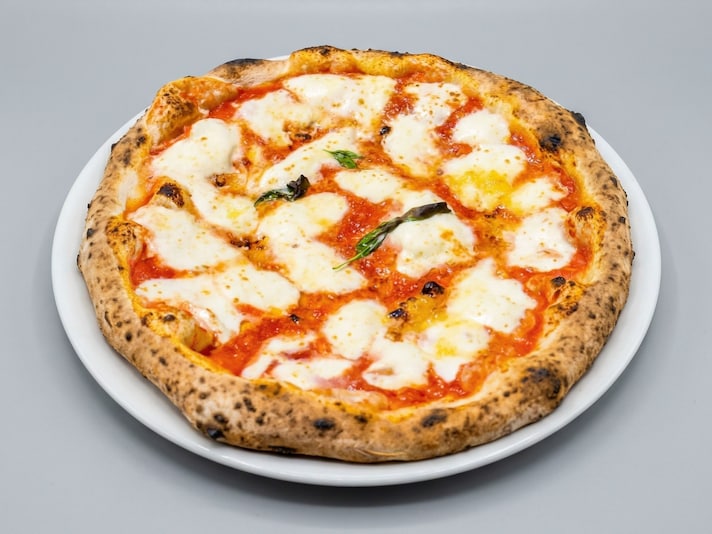
In Naples, Bourdain bypasses the waterfront to head straight for Via Nazionale 93, to Pizzeria Pellone. The dining room offers no modern aesthetic, while the focus is entirely on the signature dishes: a Margherita pizza executed to the letter and, above all, a fried pizza filled with ricotta and cicoli (pork cracklings) capable of reconciling anyone with the world. For Bourdain, that obsessive respect for the Neapolitan pizza regulations isn't sterile bureaucracy, but the proud codification of a popular profession written by those who work in front of the oven.
About sixty kilometers further south, in Cetara (SA), the journey takes on shades of blue, like the fish served there. At Al Convento, Pasquale Torrente's trattoria next to the church of San Francesco, the goal is to clear and promote anchovies outside of the tourist traps. There, Bourdain happily loses himself among a plate of marinated anchovies, the fried version with onions, meatballs with provola cheese, and an unusual parmigiana where bluefish takes the place of eggplant.
The true pillar of the Convent's cuisine remains the colatura di alici, an amber liquid obtained from the maceration of fish in salt and a product of Roman garum, matured in small wooden terzigni and dosed with the rigor of a precious medicine.
Even when a restaurant disappears from the radar, like Rocco Iannone's celebrated Pappacarbone in Cava de' Tirreni (Salerno)—now operating at Tenuta Nannina in Fisciano—the essence remains the same. The greatness of those recommendations lies precisely here: they don't concern passing fads, but human and culinary geographies that are practically eternal.
Rome
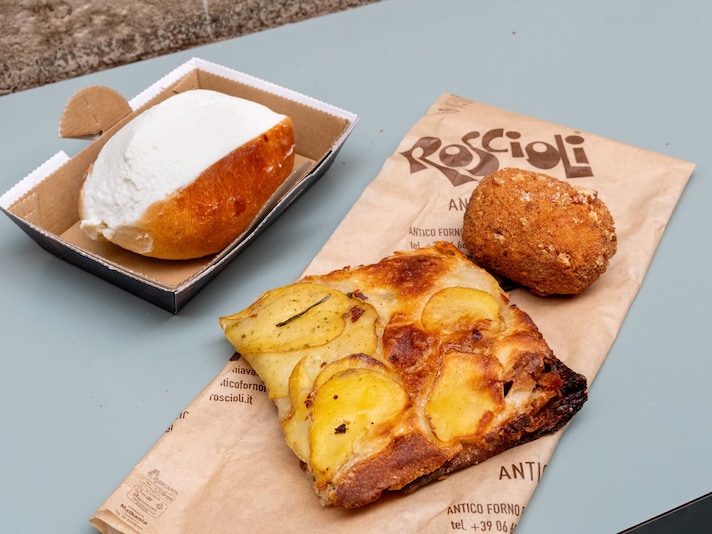
In Rome, the geography changes radically: no city center, but a descent straight into the suburbs and neighborhood trattorias. In San Lorenzo, the must-see is I Porchettoni, a noisy little restaurant where porchetta is sliced on paper-covered tables, washed down with pitchers of beer and plates of tripe, while the rest of the menu consists of cacio e pepe, penne all'arrabbiata, and Thursday's gnocchi. The only permitted detours in the heart of the capital involve the Roscioli empire, between the delicatessen on Via dei Giubbonari and the pizza bianca at Antico Forno.
But the true heart of Bourdain's Roman spirit beats in Torpignattara at Betto e Mary, where he loves to eat nervetti (veal sirloin) and raw horse meat. For pizza by the slice, he chooses Gabriele Bonci‘s Pizzarium, capable of winning him over even with the most surprising pairings, like foie gras with cherries. For a nightcap, he chooses Freni e Frizioni, a former mechanic's workshop in Trastevere, where a Negroni accompanies the buffet included in the price.
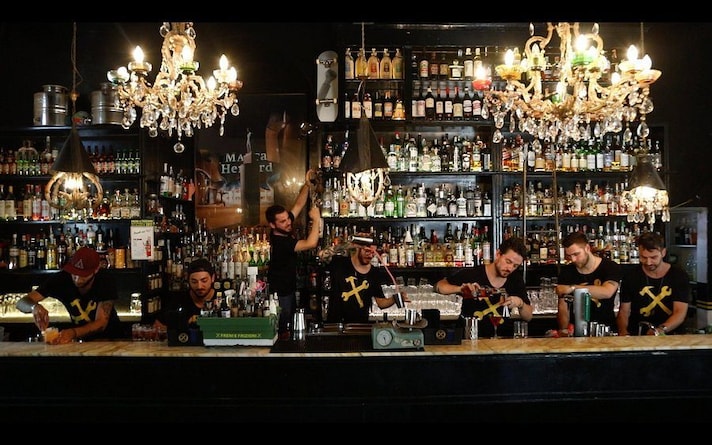
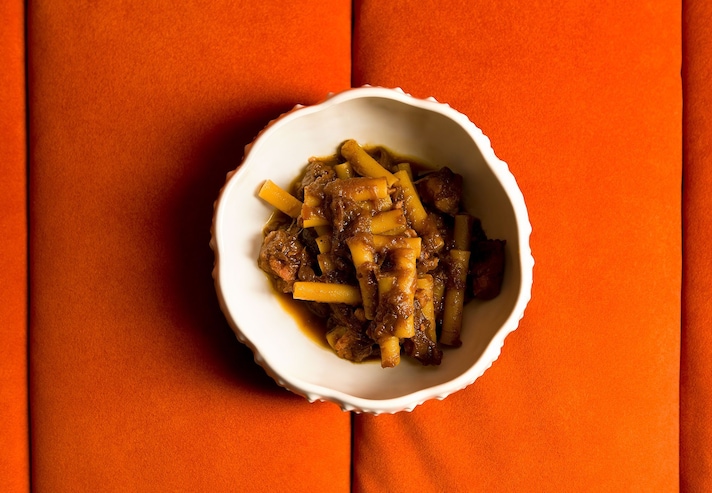
Woolever then added to the list after the chef's death, with addresses perfectly in line with his tastes: the gricia at Dar Moschino in Garbatella, the rigatoni with pajata at Piatto Romano in Testaccio, and the roast suckling pig at Tavernaccia da Bruno in Trastevere.
Sardinia
In Sardinia, the prospect becomes more familiar thanks to his bond with his then-wife, Ottavia Busia. Fascinated by the choral nature of Sardinian dining, Bourdain finds refuge at Su Gologone in Oliena, but reaches his carnivorous climax at the Sa Rocca farmhouse in Nebida, in the Iglesiente area, where he witnesses the ritual spit-roasting of kid goat, basted solely by the burning lard that drips onto the meat.
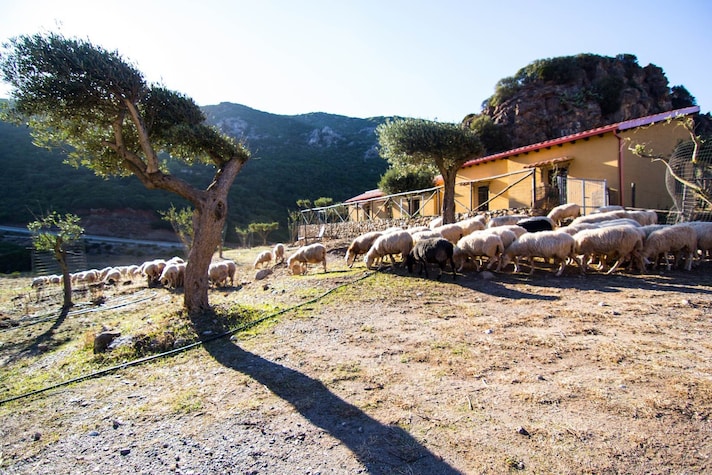
In Sassari, urban exploration includes Zia Forica‘s workers' diner, where she indulges in a plate of snails and cordula (spiked lamb offal braids).
;Resize,width=767;)
