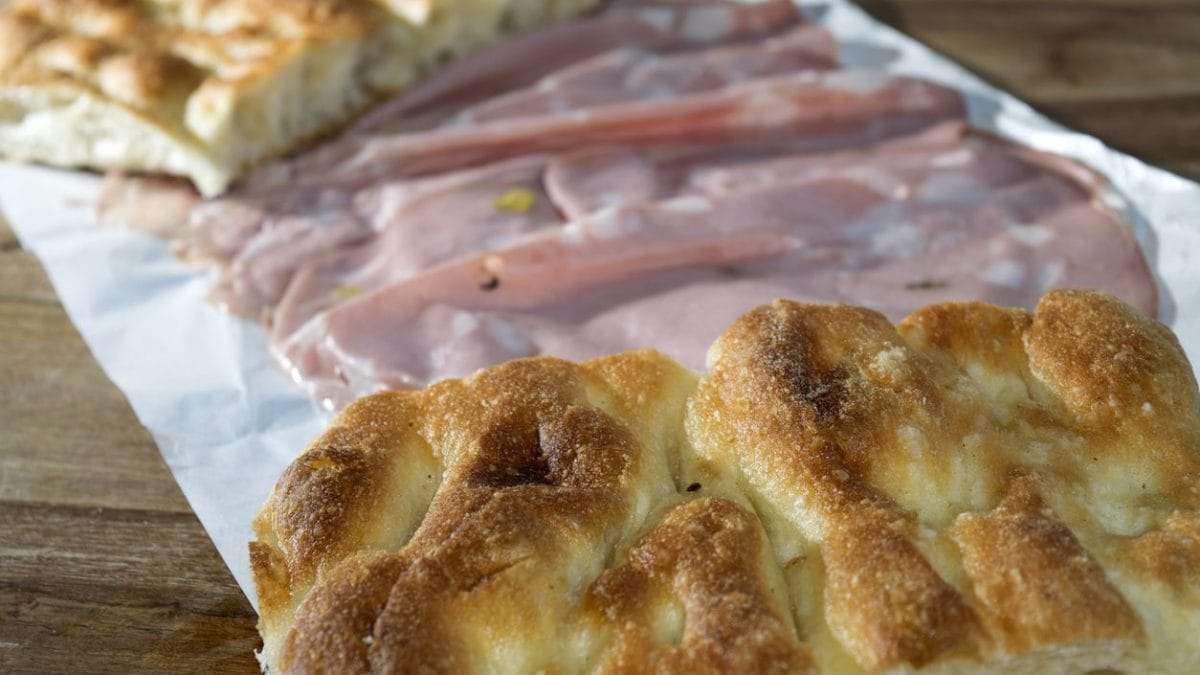
White pizza is one of the symbols of Rome, of that gluttonous capital city, rich in delicacies that we're only recently getting to know so well. For years, we only recognized a few pasta dishes from the Eternal City, but fortunately, thanks to masters with unparalleled technique, the world of pizza has also begun to reckon with Rome. A soft dough made from flour, water, salt, malt, brewer's yeast, and oil, it's usually topped with cured meats: especially mortadella, or, to put it even better, mortazza. Not everyone knows, however, that this pizza is actually very ancient; it may even be the first pizza we invented. Let's explore its history.
Roman White Pizza was "The Slaves' Pizza"
A pizza baked directly on a peel, a simple, quick, and very low-cost product, preferably made with bread scraps. This is the genesis of the Roman white pizza, born on the initiative of some bakers in ancient Rome. It began as a product to be given to slaves, to nourish them. It then became the pizza of farmers and workers, of the lower classes. For about 2,000 years, therefore, we have been eating focaccia on the streets: mainly topped with oil and salt or with some simple ingredient, one above all. All three categories of workers, even centuries apart, topped their white pizza with a fruit: the fig. It is precisely from this combination that the well-known saying "not pizza and figs" was born. Curiously, today the combination of pizza and figs is found in many high-end pizzerias. Over the centuries, this style of pizza has become a top-quality product of Roman bakeries: a very specific identity with preparation, leavening, and baking methods carefully thought out down to the smallest detail. In Rome, there's a 19th-century bakery that has been churning out the same types of white and red pizzas for over a century. For Romans "de Roma," pizza is still only this one, and only from this oven.

We should be very grateful for this method of preparation, because the pan pizzas that are hugely popular throughout Italy today are a direct descendant of the white pizzas. They shouldn't be confused, and today they are two very distinct styles, but the bakers of the 1970s took inspiration from their fellow bakers to create an affordable product that would satisfy everyone's tastes. Initially, we only found white and red pizzas, then we saw the arrival of mozzarella and cheese, giving rise to margheritas and marinating them "in the pan" before all the other toppings. A quick, streamlined service, a product that was always the same and always tasty: some would have called it "fast food."

Evolution has led to what we know today as pizza bianca: a superior quality product, which costs more than the average of a few years ago, because someone (Gabriele Bonci above all) began to think about this style. A longer maturation process, select, high-quality flours, and "cooked" toppings: no longer the ubiquitous mortadella, which remains the must-have for this type of pizza, but real recipes designed for exquisite bases. Roman white pizza is probably one of the first pizzas in history, but it conquered all of Italy only thanks to the open-mindedness of the great pizza masters.
;Resize,width=767;)
