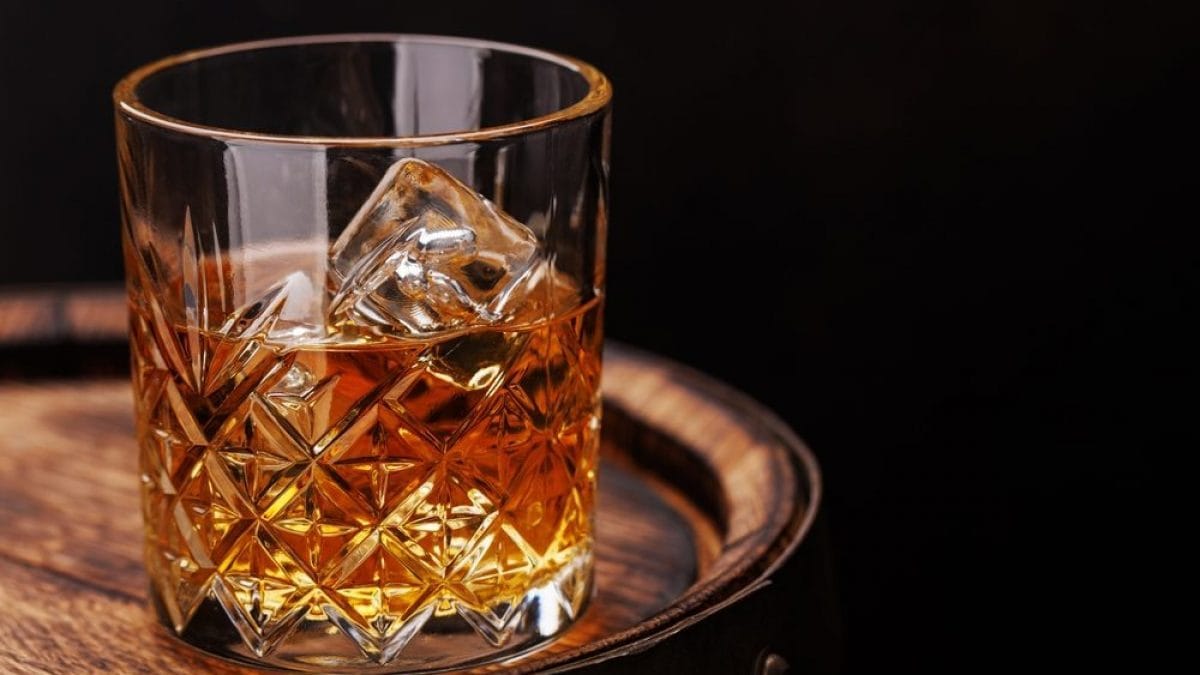
Whiskey has been woven into American life since the country’s earliest days. European settlers brought distilling traditions with them, and by the late 1700s whiskey was more than a drink — it was frontier currency, a practical way to preserve grain, and even the spark behind the Whiskey Rebellion of 1794. George Washington himself operated one of the largest distilleries in the young nation. In other words, long before bourbon became a cocktail staple, whiskey was already part of the American story.
Recently, the spirits world has been experiencing a golden age (partly driven by interest in gin), with spirits requiring quality when drunk, just like wine and beer. So let's discover what whisky is and how it's made, a spirit that's the star of many cocktails, but also an alternative and sophisticated ingredient for cooking.
History and Origins
The history of whisky is ancient and shrouded in mystery, marked by disputes between Scotland and Ireland over its origins. Its roots undoubtedly lie in the Middle Ages (around the 14th century), particularly within monasteries, where monks refined the art of distillation developed by the Arabs and then the Romans (without forgetting the contribution of alchemists). The still was the main instrument used to obtain distilled alcohol, known at the time by the Latin term aqua vitae. It seems that the word whisky, in fact, may derive from the ancient Irish uisce beatha, later also borrowed from the Scottish Gaelic uisge beatha, meaning "water of life," used both as a drink and for medicinal purposes.
To give a couple of significant dates: the Irish cite a document from 1405, the Irish Annals of Clonmacnoise, which recounts the death of a clan chief after abusing aqua vitae, while the Scots refer to a register in which the friar John Cor (a symbolic name for Scotch Whisky), of Lindores Abbey, was authorised to use eight malt bubbles (a reference to a unit of measurement) to produce the spirit intended for King James IV. Henry VIII, then, in the context of the so-called Anglican Schism of the 16th century, had the monasteries closed, so distillation became an activity practiced by farmers and common people: Scotland was the first to inaugurate production for profit.
In the following centuries, various phases followed in which governments taxed spirits, increasing illegal production, and a third and fourth country also entered the scene (to stay), namely the United States (where whisky was involved in the Prohibition period) and Canada. The most recent and significant player is Japan, which began its history of excellence in 1924. Whisky has gone through golden moments (the Golden Eras) and moments of crisis: now, the ever-increasing curiosity towards artisanal spirits (from gin to grappa, including rum) is contributing to its new popularity.

How Is It Produced
We have just seen that whisky is a distillate that boasts centuries of production: although it is a complex universe, which gives rise – as we will see later – to different typologies, the ingredients are limited to three and they are: water, cereals (depending on the origin and the taste result you want to achieve, we find barley, wheat, corn and rye) and yeasts (used in fermentation). Two other characterising elements also answer the call: peat – used as fuel during the drying of the barley malt, and which gives that typical smoky hint to peated whiskies – and wood, specifically oak, which is the material from which the barrels for the refinement are made. That said, the process is divided into five phases: let's look at them briefly.
1. Malting
Malting is the first stage that transforms the raw grain into malt . The barley is first soaked in water for about two or three days and then spread out on a large floor to allow germination to occur: during this time, the grain's starch is converted into simple sugars. Once the optimum temperature is reached, the process proceeds with drying in hot-air ovens. As mentioned previously, this is where peat can appear, which will give the future whisky a very distinctive aromatic note.
2. Infusion
The malt is ground into a flour that is mixed in vats with hot water (mashing). This water influences the final product, so it's no coincidence that distilleries are located in places where it is abundant, preferably from spring water, which is therefore of high quality. The spent grain (draff) is separated, leaving only the dark, sugary liquid part, called wort. The goal, in fact, is to extract as many sugars as possible, which are essential for nourishing the yeasts during the fermentation process, which occurs immediately thereafter.

3. Fermentation
The journey to whisky continues with the wort being cooled and transferred to washbacks, large stainless steel (or wooden) vats where yeast is added to start fermentation, which produces alcohol and carbon dioxide. This is how wash is born, which resembles a beer with an alcohol content of between 6 and 8% ABV.
4. Distillation
This brings us to the heart of the process (distillation), where the wash is traditionally a double distillation (in some cases even three) in copper stills. During this phase, the wash is heated, and the alcohol, which has a lower boiling point than water, evaporates first. The alcoholic vapor is then cooled and condensed into liquid form, thus separating from the water. The alcohol content reaches 70 degrees.
5. Aging
At this point, the distillate is diluted with water to bring the alcohol content down to around 65% vol, considered optimal, and placed in oak barrels for maturation. The basic minimum aging period is 3 years, but producers opt for much longer periods, on average between 12 and 21 years, although it can be extended much further. During this period, the distillate interacts with the wood, developing its typical aromas. A portion of the alcohol evaporates each year (between 1% and 2%), which is known as the angel's share.

What Are the Most Well-Known Types?
Whisky (without the "e") or whiskey (with an "e"): what's the difference? The former is used to indicate Scottish, Japanese, and Canadian production, while the latter is the preferred spelling in Ireland and the United States. The main producing countries are precisely these, Scotland, Ireland, the United States, and Japan, but Canada also has its own tradition, and in continental Europe, quality artisanal distilleries have recently sprung up in France and Italy. Each has developed its own style; let's look at the main ones.
Scotch Whisky (Scotland)
Produced exclusively in Scotland, it can be Single Malt (only malted barley, from a single distillery), Single Grain (with other cereals and unmalted barley), or Blended (from a mixture), and to be defined as such, it must meet very specific characteristics. There are various types (fruity, floral, sweet, smooth, smoky, etc.) that come from areas dedicated to production, such as the wild and pristine Highlands in the north.
Irish Whiskey (Ireland)
Usually distilled three times, it is a whiskey known for its smooth and rounded taste, usually more delicate than the previous one. By law, it also ages for at least three years in oak barrels. Among the most famous historic brands is Jameson, originally from County Cork.
American Whiskey (United States)
In the U.S., the best-known types are Bourbon (made from at least 51% corn) and Tennessee Whiskey, similar to the former, but filtered with maple charcoal after distillation, which gives it a vanilla and spicy profile.

Japanese Whisky (Japan)
Japanese whiskies are historically inspired by the Scottish model, most often blended and single malt, and are distinguished by their aromatic balance and attention to detail: for example, the use of barrels made of Mizunara oak, considered among the best in the world. The most classic names are Yamazaki, Nikka, and Hibiki.
Canadian Whisky (Canada)
Canadian whisky, finally, is made from a blend of grains such as corn and rye, and is commonly referred to as a rye whisky. The profile is elegant, usually with hints of vanilla, caramel, and dried fruit. Worth mentioning are Crown Royal and Canadian Club: by customary note, the latter is a favorite of Don Draper, the famous character from the TV series Mad Men, who used it extensively, neat, on the rocks, and in the iconic Old Fashioned cocktail.
;Resize,width=767;)
