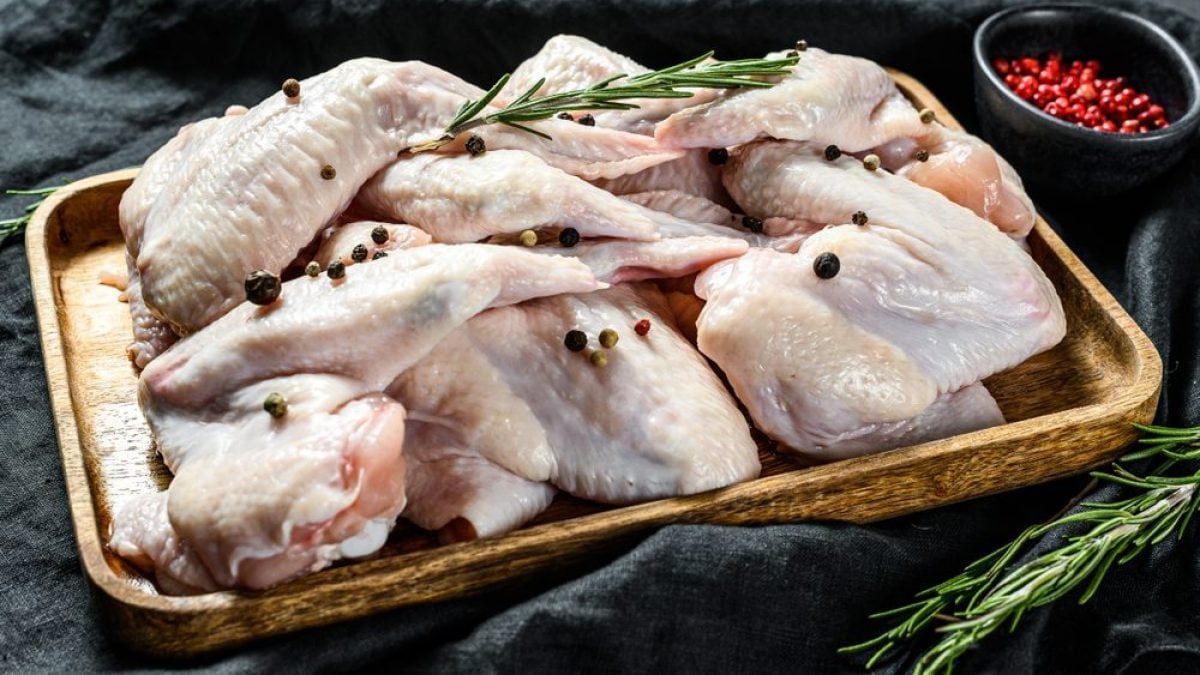
More underrated than they deserve, turkey wings are a flavorful cut with great culinary potential. Less meaty than thighs and drumsticks, but decidedly more structured than chicken wings, they offer an interesting balance of meat, skin, and connective tissue. When properly prepared, they are perfect for flavorful, rustic, and very satisfying dishes.
Taken from the anterior portion of the bird, wings are composed of three segments: the tip (thinner and more bony), the central portion (called the "plate"), and the meatier section near the body. The meat tends to be darker than the breast, with a good amount of collagen, especially in the joints. This characteristic makes them particularly attractive for cooking methods that enhance the juices and gelatin.
This isn't an "easy" cut in the immediate sense of the word: the meat yield is lower than other cuts, but the aromatic content is high. When handled correctly, the wings develop an intense flavor and a juicy texture, especially when cooked slowly or carefully.
How Turkey Wings Are Made
Turkey wings thrive when cooked in ways that allow the connective tissue to gradually dissolve: oven-baked, stewed, in broths, and slow, low-temperature cooking. The presence of bones and cartilage contributes to a rich, flavorful base, with a natural gelatinous component.
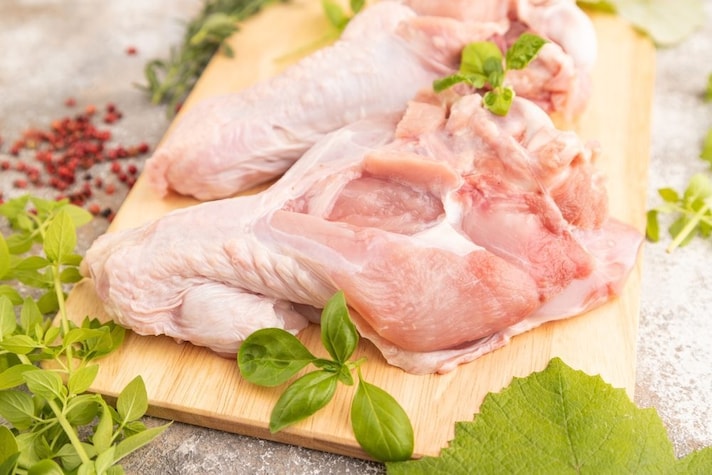
Visually, they have a complex structure, less uniform than other cuts, and a significant proportion of bone compared to meat. They can be sold whole or separated into three main sections. The tip is often used for broths and stocks, while the other parts lend themselves to more direct cooking.
Here too, time plays a fundamental role: proper cooking allows you to obtain tender meat, which comes away easily from the bones, with a skin that can become crispy or gelatinous depending on the technique.
Turkey Wings Nutritional Profile
Turkey wings have a variable fat content, generally higher than breast but lower than the richer thighs (about 5-9 grams per 100 grams). Protein remains at a good level, around 18-20 grams per 100 grams.
They are a good source of minerals such as iron and zinc, as well as B vitamins. The average calorie intake is between 140 and 170 kcal per 100 grams, with a good satiating effect, also thanks to the presence of skin and connective tissue.
How to Best Use Turkey Wings in Cooking
First of all, it's important to clarify one fundamental aspect: turkey wings shouldn't be treated like chicken wings. Larger, richer in bone and connective tissue, they require different cooking times and techniques. While chicken wings lend themselves to quick, direct cooking, turkey wings thrive with slower, more controlled cooking, enhancing their structure and flavor. The secret to turkey wings is working on their structure: a lot of bone, skin, and connective tissue require adequate cooking time, but they deliver depth and juiciness that are difficult to achieve with other cuts.
1. Stewed
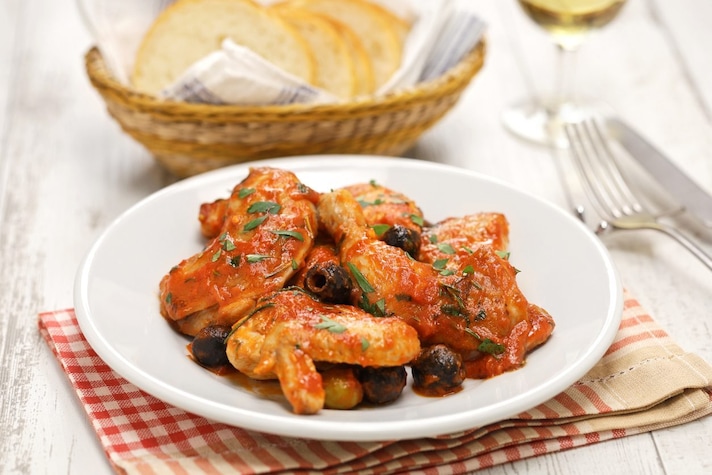
One of the most suitable preparations: here the wings are cooked slowly in liquids such as broth, wine, or tomato, allowing the collagen to gradually dissolve. The result is tender meat that falls easily from the bone, accompanied by a thick, naturally thick sauce. Ideal for rustic, structured dishes.
2. For Broths and Stocks
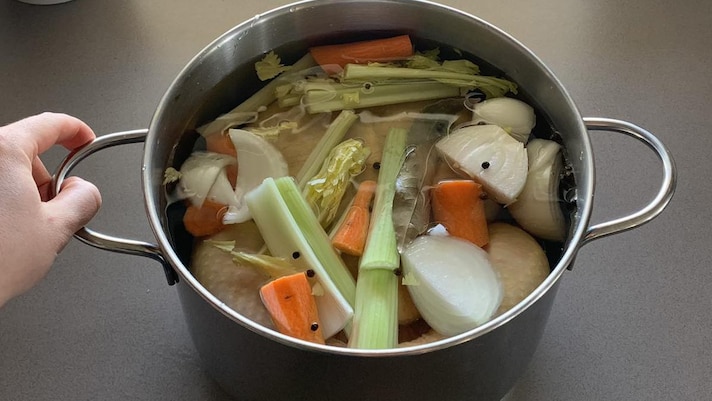
From a technical standpoint, it's one of the best uses: the presence of bones, joints, and cartilage allows for highly aromatic, gelatinous broths. A long, gentle cooking process allows for complete extraction, making the wings perfect as a base for soups, risottos, and complex sauces.
3. Baked (Two-Stage Cooking)
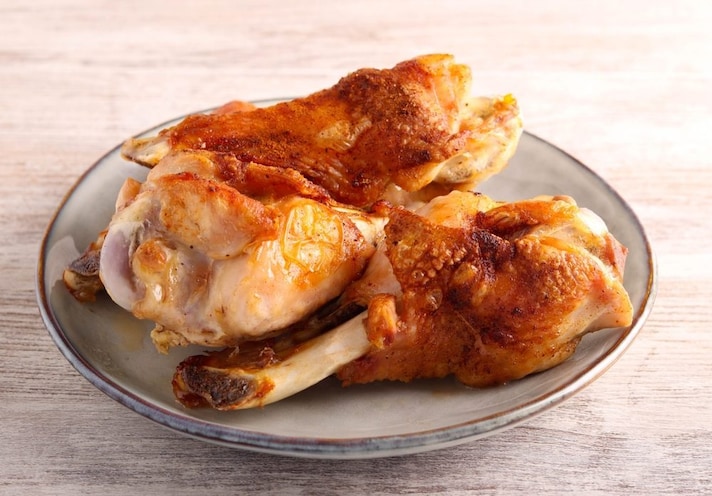
They work well in the oven, but with careful management: it's advisable to first bake them at a moderate temperature, even covered, to cook them thoroughly and loosen the connective tissue, followed by a more intense final phase to dry and crisp the skin. This way, you avoid the risk of having an overcooked exterior and a still-tender interior.
4. Stewed Then Glazed
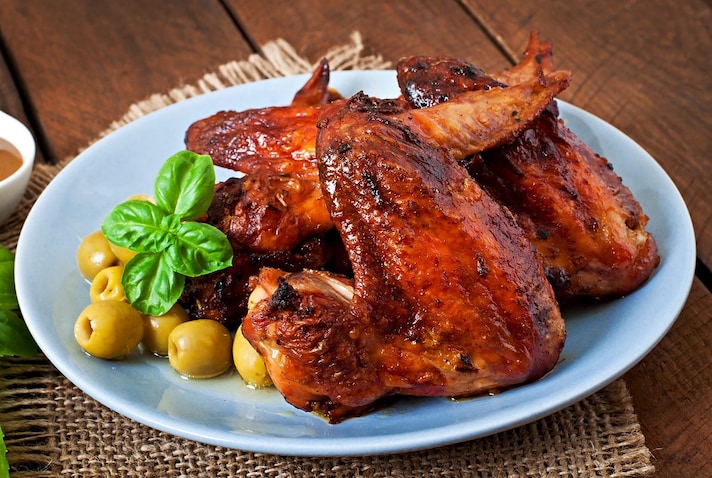
A particularly effective technique: the wings are first braised until tender, then finished in the oven or pan with a glaze (made with cooking juices, honey, spices, or sauces). This approach allows for a combination of tender interior and a flavorful, slightly caramelized surface.
Differences From The Chest and Thighs
If the breast represents the leanest, most uniform, and most delicate part of the turkey, and the legs and drumsticks the richest, meatiest, and most forgiving, the wings fall somewhere in between, but with a completely different logic. They're neither as "easy" as the breast nor as generous in yield as the legs: they're a more technical cut, in which bone, skin, and connective tissue play a dominant role.
Compared to breasts, wings offer less meat and require longer cooking times: they don't lend themselves to quick or dry cooking, but they develop a much deeper flavor profile thanks to their gelatinous component. Compared to legs and thighs, however, they have a lower yield and a more complex structure: less meat, more bones, but also a greater ability to enrich stocks and sauces.
They're therefore not the ideal cut when you're looking for immediacy or an abundance of meat on the plate. On the contrary, they excel in preparations that emphasize extraction and transformation: broths, stews, slow cooking. The result is less "linear" than breast and less direct than thigh, but decidedly more complex and structured from a gastronomic standpoint.
How to Choose Quality Turkey Wings
Before purchasing, carefully observe some key elements: color, texture, and overall freshness.
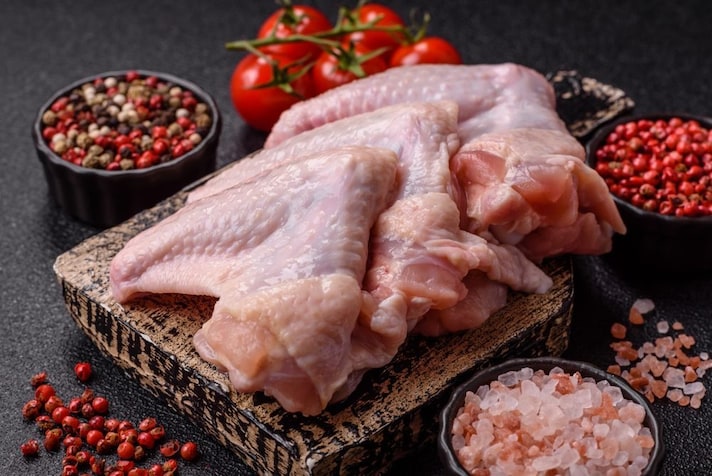
- The color should be pink with slight darker undertones, uniform and bright; the skin must be intact, well-adherent and free of unpleasant odors.
- The fat must appear light and compact, never yellowish or excessively soft.
- The meat should be firm and elastic to the touch: avoid packages with excess liquid.
- Joints should be clean, with no signs of broken or chipped bones.
- In separate cuts, the sections must be clean, without tears or rough work.
Here too, provenance is crucial: it's best to choose traceable, certified-quality products. Good supply chain management directly impacts flavor and cooking performance.
;Resize,width=767;)
