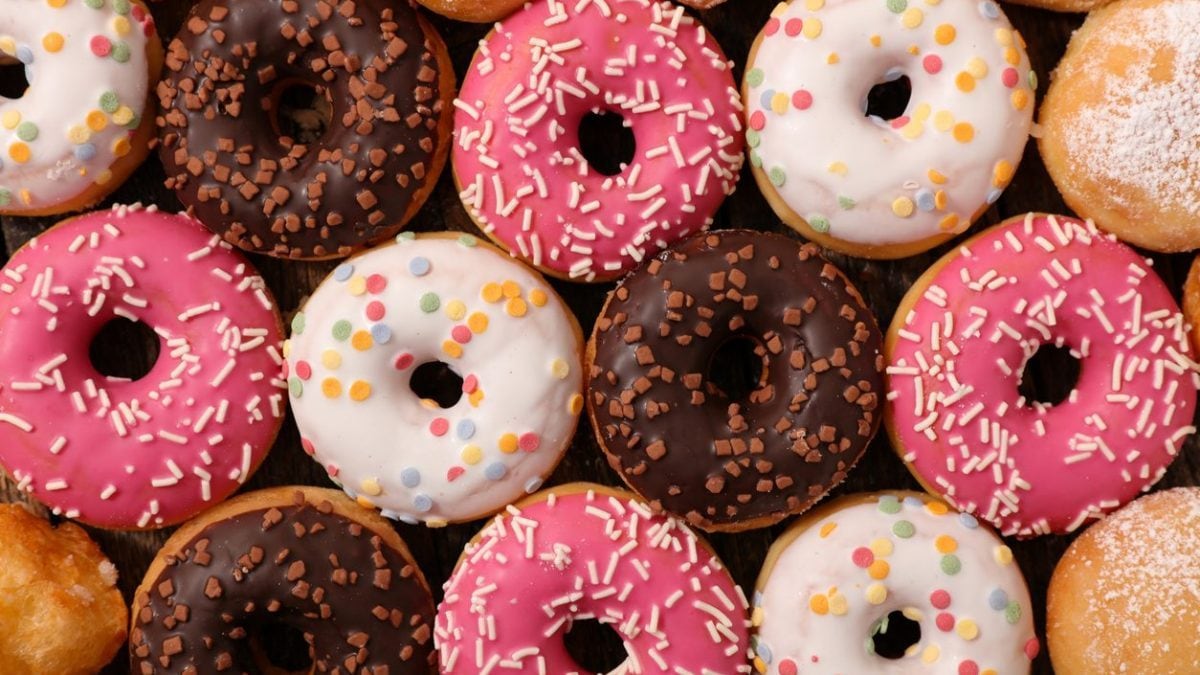
"Not all donuts have a hole." A typical proverb we use to describe something that didn't go as planned or that not everything can be perfect. But why specifically refer to donuts? Technically, if this dessert doesn't come out with a hole in the center, it hasn't been cooked as expected, and therefore should be discarded. If you've ever thought about this proverb while eating a donut, or why they have that famous hole, we're here to resolve this existential doubt. You should know that it's not just an aesthetic detail, but a story rooted in the past and intertwined with legends and curiosities that will make you look at this dessert with new eyes.
Who Invented Doughnuts With a Hole?
To understand the history of the donut and why it was created with a hole in the center, we need to take a step back in time. There are actually two stories, both plausible, and we'll start with the less likely one. The story concerns Native Americans who, during the colonial period, prepared a fried sweet that, in some ways, resembled a donut. Tradition holds that they were prepared this way to facilitate cooking. Making a hole in the center of the donut ensured more even frying, with the oil penetrating more effectively, making the sweet crispier on the outside and softer on the inside. There is, however, another version, which is believed to be the most reliable and truthful.

Specifically, the story takes us back to 1847. We're in the town of Rockport, Maine. This story is the most reliable: in town, there's even a commemorative plaque dedicated to a certain Captain Hanson Gregory for having invented the doughnut with a hole. Gregory, in his variation, had thought of making a hole in the dough because after baking, the sweets were always a little raw in the center. The doughnuts became popular because he taught this new way of making them by telling countless people about it. Furthermore, he was a sailor, and so, as he traveled around the world, the recipe quickly spread.
We hadn't mentioned a third possibility, however: according to other sources, the birth of donuts is placed in Denmark, where they were called oliekoek, meaning oil cakes. It's thought that Hanson Gregory most likely simply contributed to the popularity of a dessert already available in other countries. In Maine, however, they still consider him the true inventor of donuts, and really, who are we to say otherwise?
It's The Hole That Makes The Difference
After all, who hasn't seen Homer Simpson sink his teeth into that pink donut? Thanks to The Simpsons, this dessert has achieved further popularity, marking the collective imagination of a generation of enthusiasts.

If we add the myths described above to pop culture, the donut becomes a symbol of gluttony. And now, the next time you eat a donut, remember: the hole you so admire is not just an aesthetic choice, but a tribute to centuries of tradition and an invention that has made history.
;Resize,width=767;)
