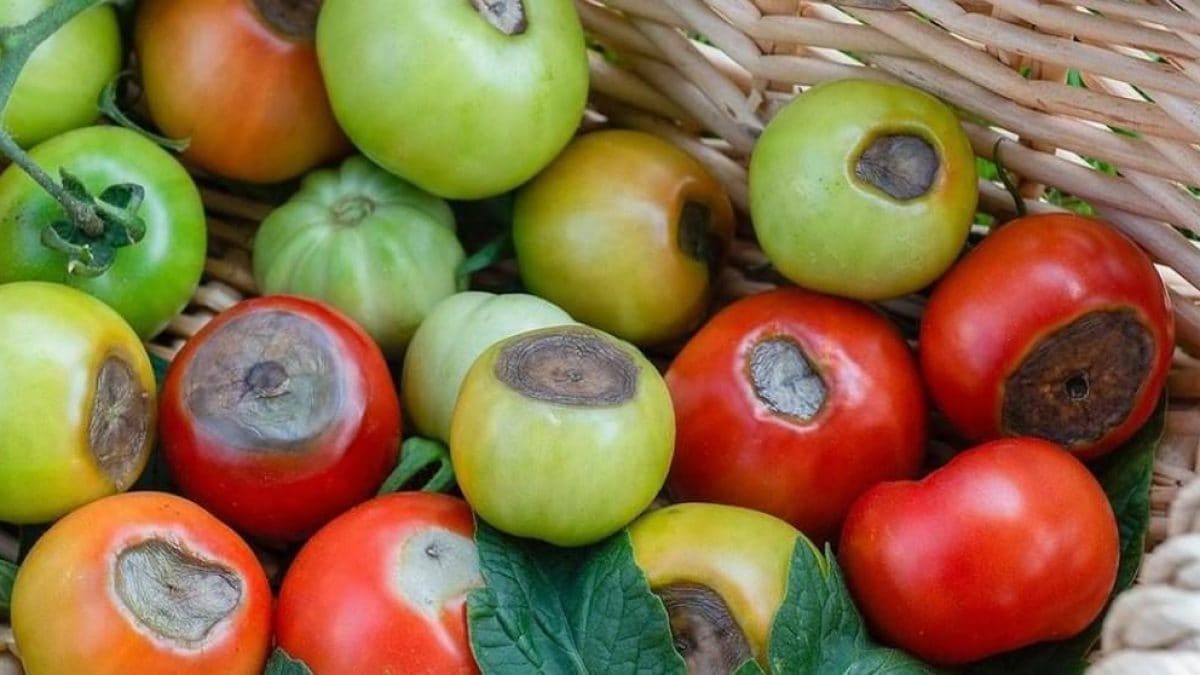
If you grow vegetables, you'll probably already know: blossom-end rot is a major problem when growing tomatoes, and can quickly ruin your entire crop. These are those dark, almost black spots that sometimes form on the bottom of the tomato, near the calyx, and are nothing more than rot, a very early stage of the fruit's development (yes, from a botanical standpoint, tomatoes are actually a fruit!)
In colloquial parlance, tomato blossom-end rot is often referred to as "black butt," a joke so widespread that it's become almost as common as a technical term. Contrary to what you might think, it's neither a bacterial nor a fungal disease: blossom-end rot is a physiological condition caused by specific factors that contribute to its development and cause stress to the plant and its fruit.
It's called "apical" because the condition manifests itself only at the apex of the fruit, as it's the part that receives the least nourishment and therefore, under certain conditions, is the first to deteriorate with these black spots. It's a problem that peppers often suffer from, but it doesn't affect all tomato varieties: San Marzano and beefsteak tomatoes are particularly susceptible, while Sarno, cherry, and Bern rose tomatoes are generally more resistant to blossom end rot.
Once affected by blossom-end rot, a tomato is no longer edible, which is why it's important to learn how to prevent the problem. Here's why tomatoes develop black spots and how to prevent blossom-end rot.
1. Lack of Calcium
One of the main causes of blossom-end rot in tomatoes is a lack of calcium or the plant's difficulty absorbing it. Calcium is a very important substance for healthy tomato growth, and when it's completely missing or deficient, it causes actual malformations in the fruit. Tomatoes absorb calcium from the soil, so it's essential to prepare the soil where the plants are planted with an organic fertilizer that contains a good amount of calcium. If the plants are already cultivated, one solution is to place eggshells, which are naturally rich in calcium, at the base of the plant, or substances like lithothamnium, a natural calcareous powder obtained from red algae.
2. Water Imbalance
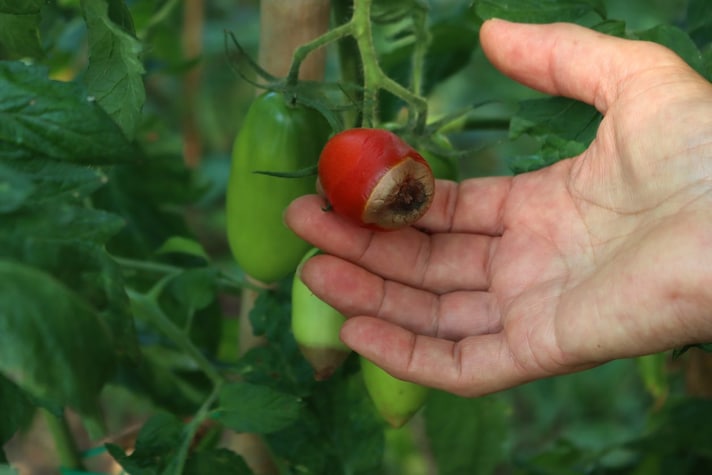
Another major factor that affects the appearance of blossom-end rot is water imbalance: if the tomato plant receives too much or too little water, it goes through a shock that leads to the development of the condition. It's no coincidence that blossom-end rot often appears following heavy, continuous rains or in midsummer, when rain is scarce and the plant isn't getting enough hydration. Both excess and insufficient water can lead to the formation of black spots. In the former case, moisture remains in the tomato's cavities, causing the fruit to necrose. In the latter, water dehydration hinders the circulation of vital nutrients, which are thus depleted. Precisely because of their delicate nature, tomatoes must be watered carefully, only at specific times and during the day, and with micro-irrigation that doesn't stress the plant. Ideally, avoid watering during the hottest hours of the day, but always before dawn (between 5 and 6 a.m.) and install a drip irrigation system that releases small amounts of water gradually. Waterlogging is also dangerous for tomatoes, which is why it's important to ensure the soil is well-drained before planting. Waterlogging can cause the roots to deteriorate and rot, and consequently, the fruit.
3. Excess Nitrogen in Ammonia Form
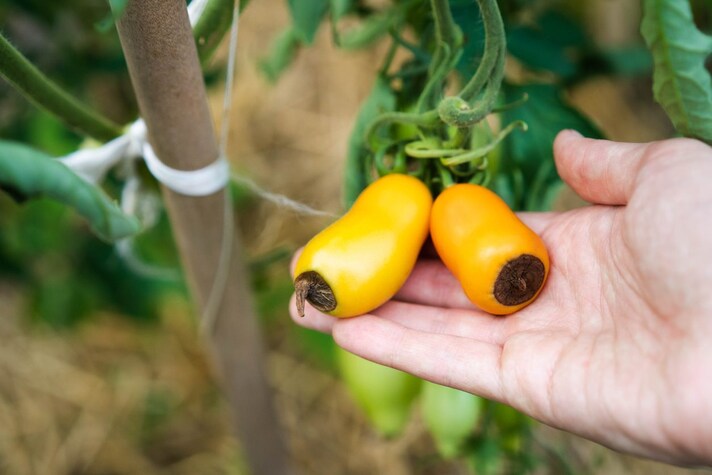
The third cause of blossom-end rot is an excessive presence of ammoniacal nitrogen in the soil where the plant grows. Ammoniacal nitrogen, or ammonium sulfate, is an industrially produced salt used post-sowing, when the plant has sprouted but not yet produced fruit. It serves to fertilize the soil, but is also useful as an insecticide, fungicide, and herbicide, which is why it is often found in fertilizer mixes sold for growing crops. Excessive amounts of this element can increase vulnerability to blossom-end rot in tomatoes, because the excess nitrogen prevents the fruit from absorbing other important nutrients, such as calcium. Therefore, it is very important to pay attention to fertilizing the soil where you plant your tomatoes, ensuring it has all the nutrients they need for growth, but in the right amounts.
;Resize,width=767;)
