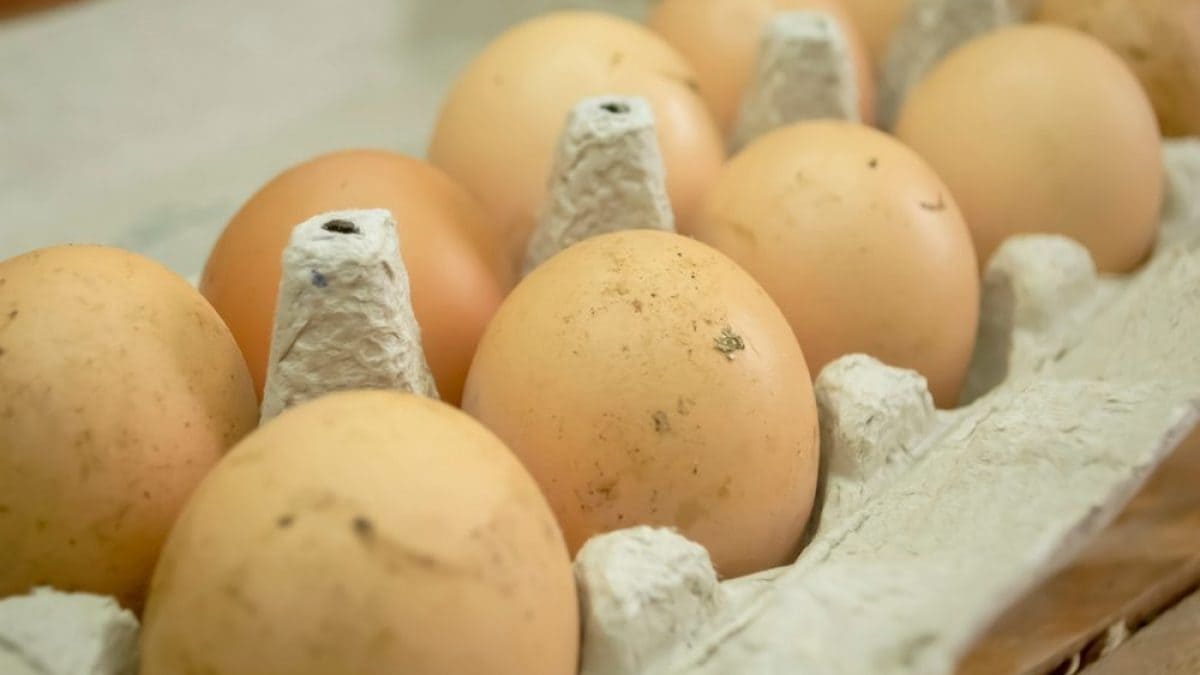
Many people open a carton of eggs fresh from the grocery store and find some residue on the shell: feathers, dark marks, various residues. Is this dangerous or a sign of poor quality? In reality, the presence of traces on the shell is not that uncommon and does not automatically mean the egg is contaminated or unsafe. To understand what really happens between the henhouse and the supermarket shelf, we need to start with a simple fact: eggs are not born in a sterile room, but are laid by hen in a natural environment. And this is where the difference between surface dirt and a real health risk comes into play. An expert, nutrition biologist Simone Gabrielli, clarifies doubts and false myths by explaining what is normal, what is not, and how to behave at home to avoid problems.
Is It Normal to Find Dirty Eggs at The Grocery Store?
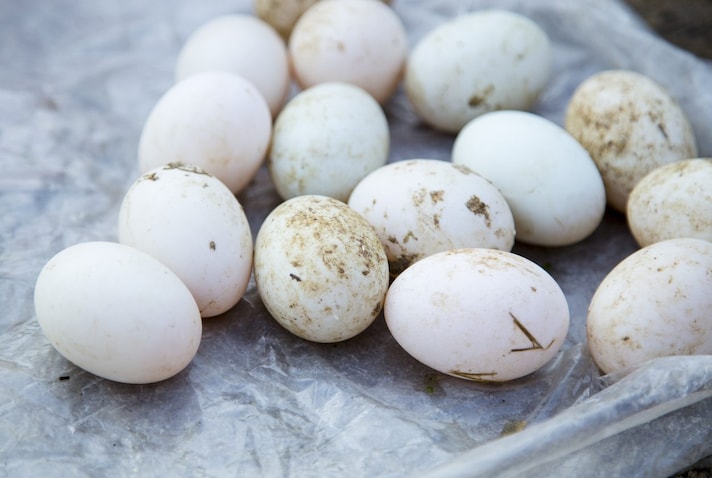
The answer is yes. "Yes, it can happen, and it's normal to find eggs with some traces of dirt on the shell, such as litter, feathers, or fecal matter," explains Gabrielli. "The egg is laid directly by the hen and is not a ‘sterile' product at source. But surface dirt doesn't automatically mean the egg is contaminated inside; the important thing is that it's intact and free of cracks."
The shell, in fact, is a natural protective barrier: if it is intact, the inside of the egg remains separated from the outside environment. The real warning sign is not a stain, but a crack or break, which can facilitate the entry of microorganisms.
Why aren't eggs washed before sale? Many consumers wonder why eggs aren't simply washed before hitting the shelves. The answer lies in a delicate biological balance. "Ideally, eggs shouldn't be washed before sale. The reason is very specific: the shell is covered with a natural protective cuticle, a sort of invisible film that reduces the penetration of bacteria and protects the inside of the egg." Washing eggs industrially "can remove this natural barrier and, paradoxically, increase the risk of contamination if they aren't stored perfectly." In essence, that invisible film is a natural shield. Removing it through washing could make the egg more vulnerable.
Gabrielli also points out that it doesn't work the same way everywhere: "The situation is different in some non-EU countries (like here, in the United States), where eggs are washed and then must be refrigerated throughout the entire supply chain." In Europe, therefore, the preference is to preserve the natural protection of the shell and rely on proper storage and handling practices.
What Are The Risks of Dirty Eggs?
When it comes to eggs and food safety, the name that comes up most often is Salmonella. "The main risk associated with eggs is Salmonella, because chickens are natural reservoirs of this bacterium (i.e., the bacterium lives happily in them, often without causing symptoms). Salmonella, however, is more often found on the shell than inside."
The presence of the bacteria is therefore more likely on the surface than in the contents: and this is where human behavior comes into play. "The contamination problem can especially arise when you touch the shell and then handle other foods without washing your hands. Also be careful when breaking the egg and spilling the contents onto the dirty shell." The risk, therefore, is not so much the "dirty egg" itself, but cross-contamination: hands, utensils, or surfaces that transfer any bacteria to other foods, perhaps eaten raw. It should also be remembered that proper cooking eliminates Salmonella, making the egg safe in most cooked preparations.
How to Behave at Home
Good kitchen habits make all the difference. Gabrielli suggests simple but fundamental rules: "Don't wash eggs right after you buy them: water can encourage bacteria to penetrate the shell. If an egg is very dirty, it's best to wipe it gently just before use, with dry paper." In general, remember to:
- Always wash your hands after touching the shell with soap and water.
- Avoid letting the surface of the shell come into contact with the inside of the egg.
- Store eggs in the refrigerator, preferably in their container.
Particular attention should be paid to raw preparations: "If the egg is intended for raw preparations (tiramisu, mayonnaise, zabaglione), it's best to use very fresh eggs or pasteurized eggs (especially for certain groups of people, such as pregnant women, very young children, and people with medical conditions)." In these cases, caution is a smart choice, especially for the most vulnerable.
;Resize,width=767;)
