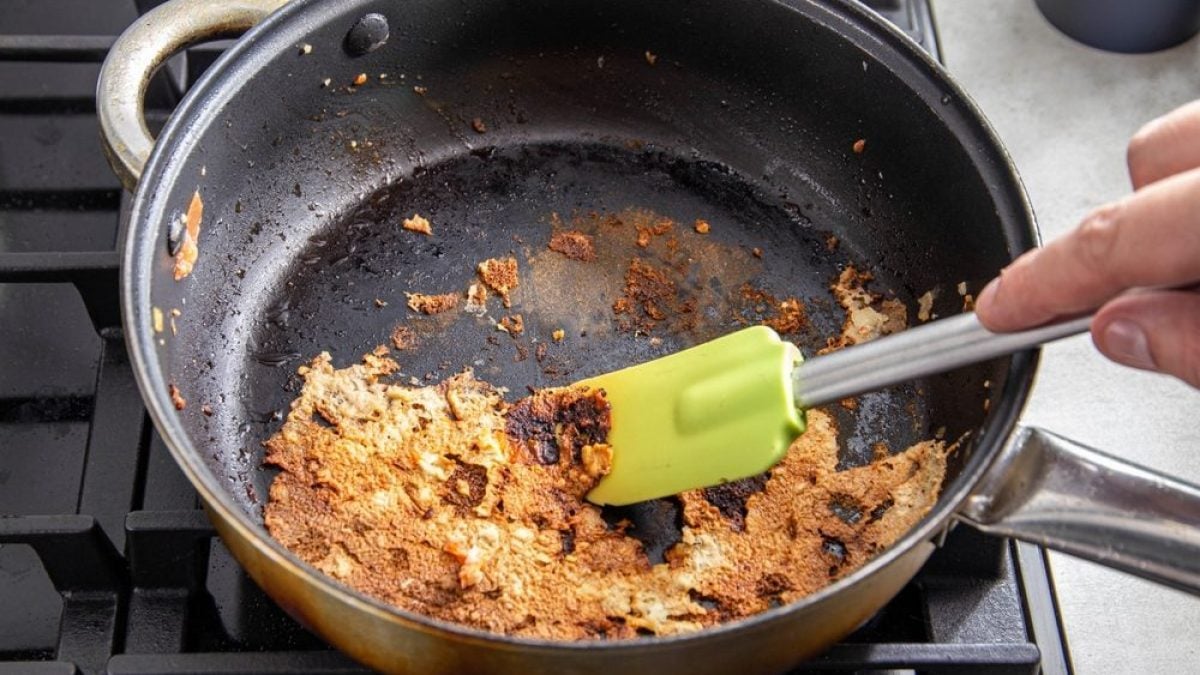
You replaced your pans because food was sticking while cooking, but now you have nonstick pans, the problem hasn't gone away. What's the cause? Science has the answer: it's a real physical phenomenon. According to scientists Alexander Fedorchenko and Jan Hruby in their research, published in the journal Physics of Fluids, the reason food sticks even to nonstick pans is a phenomenon called thermocapillary convection, or the Marangoni effect.
It is precisely this particular reaction of oil heated to high temperatures that causes food to stick to the pan: here's what this phenomenon is and how to fix it.
What is The Thermocapillary Effect
The problem, as mentioned, is all in the oil. Research explains that when a pan is heated from below, the film of liquid—in our case, oil—reaches a physical quantity known as a temperature gradient. This means that the higher the temperature, the less the tension holding the oil molecules together. And a separation of the molecules leads to the breakdown of the film of liquid, which is then moved away from the center of the pan toward the outside, thus creating those dry spots where food sticks, whether it's a regular pan or a nonstick one made of Teflon or ceramic.
This reaction, in fact, isn't related to the type or quality of the utensil you use, but simply to this physical reaction called thermocapillary convection. But don't worry, that doesn't mean there aren't ways to prevent food from sticking: you just need to know the right tricks.

How to Prevent Food From Sticking to Pans
Given that food sticking can happen with any tool, it's clear that buying a nonstick pan reduces the risk: there are many types on the market, and if you store them properly and avoid the most common mistakes that ruin them, they can last a long time. Regardless of the pan, however, you can take some precautions to reduce the risk of thermocapillary convection.
- First of all, make sure to fill the pan with a generous layer of oil, making sure that no part remains dry, then adding liquid during cooking if you see that the bottom is no longer moist.
- It is also very useful to reduce the cooking temperature to slow down thermocapillary convection, and to use a pan with a thicker bottom, which therefore allows less heat to pass through and does not immediately cause the physical reaction that dries out the bottom of the pan.
- Finally, one of the classic and foolproof "grandmother's remedies": stir the food you're cooking regularly and often, a method that not only helps prevent the food from burning but also causes the liquid to move, preventing it from breaking up in the pan.
;Resize,width=767;)
