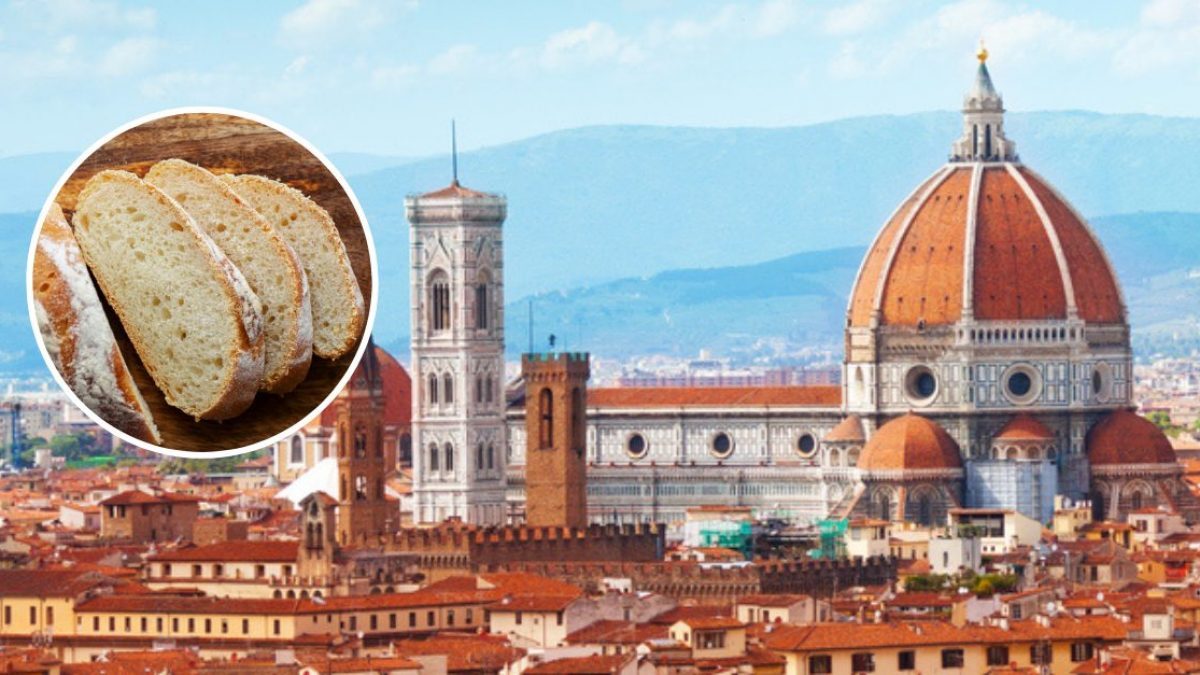
Among the most curious and debated gastronomic traditions of Central Italy, and Tuscany in particular, is that of unsalted bread, also known as "pane sciocco" or "pane sciapo." A simple product eaten throughout the world, in Florence they make it without adding salt. In reality, this characteristic embraces the entire Tuscan-Emilian Apennines: in most cases, people are negatively surprised, but there are reasons behind the Tuscans' choice to produce unsalted bread. Among the most fascinating reasons is one in particular that makes Florentines proud because it is part of the centuries-old rivalry with the Pisans: let's look in detail at why bread is made without salt in Tuscany.
"You Will Experience How Salty Other People's Bread Tastes"
Unsalted bread is the perfect match for Tuscan cuisine, traditionally flavorful. The absence of salt in bread pairs perfectly with cured meats and Tuscan dishes, creating a perfect balance of flavors. However, let's be clear: there was a time when even in Florence, bread was cooked with salt. Everything changed in the Middle Ages for a whole series of reasons, probably interconnected. There are three plausible hypotheses:
- The most popular theory in Florence, the one that makes Florentines' hearts beat faster, is closely tied to history: it seems, in fact, that the use of unsalted bread dates back to the 12th century, when Pisa was a leading Maritime Republic. During the war with Florence, it decided to "involve" salt. The Pisans considered imposing extremely high taxes on salt, targeting only the Florentines, who responded by starting to produce unsalted bread. A true act of rebellion, like the Boston Tea Party of the American Revolution. Dante Alighieri himself, in Canto XVIII of Paradise, writes of life in exile outside the walls of Florence, including salted bread among the harshness of the experience: "You will experience how salty the bread of others tastes."
- The second hypothesis exonerates the Pisans and, indeed, accuses the Florentine rulers of greed: taxes on everything, for every occasion, in an effort to enrich themselves as much as possible. Even more "salty" taxes, precisely, on salt. We "savored" this greed in the 1990s with Massimo Troisi and Roberto Benigni‘s masterpiece, "Non ci resta che piangere": "Who are you? Where do you come from? What are you bringing? Where are you going? A florin!", with the scene repeated over and over again. We don't know whether the historical reference was intentional or just a pleasant coincidence, but the two cinematic geniuses perfectly captured the tax situation in Tuscany during that period. According to this theory, salt disappeared from bakeries' recipes because, if it did, the price of bread would have risen too high;
- The last thesis is exquisitely gastronomic: meats, soups, typical dishes such as cured meats, lampredotto, ribollita, Tuscan ham, are all extremely tasty products that need a neutral contrast to fully enjoy the Tuscan flavor.
The true motivations that drove the Tuscans to this "innovation" are still unknown. We don't know if these choices are truly attributable to the stories we've told because there is no written evidence.

It's possible that all three hypotheses are correct, somewhat interchangeable, and that, taken together, they paint the most accurate picture of the situation. On the other hand, in Lucca, Massa, Carrara, and Pisa, bread was made with salt, and, coincidentally, these cities were not part of the Grand Duchy of Tuscany. Extremely heavy taxation is also an undeniable feature of 16th-century Florence, as is the contrast between salty and unsalted food on the table. Unlike many other stories you may have read, in this case we have three different versions, all of which could, however, be correct.
Unsalted Bread in The Rest of Italy
Tuscans have a bad reputation, but they're not the only ones who make tasteless bread. On the border lies Umbria, which has been making salt-free leavened products for centuries. In this case, however, we have a clear date, with reasons that have ended up in the history books. It's all down to the pontiff, Pope Paul III, one of the most influential people in history: he founded the Society of Jesus at the suggestion of Ignatius of Loyola and convened the crucial Council of Trent. To raise new funds at a delicate moment in ecclesiastical affairs, he raised taxes throughout the Papal States, imposing a tax on salt that the Umbrians simply couldn't stomach. In 1540, Perugia rebelled and sparked the "Salt War": the Umbrian capital would lose the war badly, but the people of Perugia still refused to bow to the papal demands and began making leavened products without salt, a tradition that is still alive today.
Here, too, gastronomic considerations must be added to the purely economic ones: Umbria shares some culinary traditions with Tuscany, especially those of flavorful cured meats. A combination of events likely led to this unique choice by the Apennine bakers.
;Resize,width=767;)
