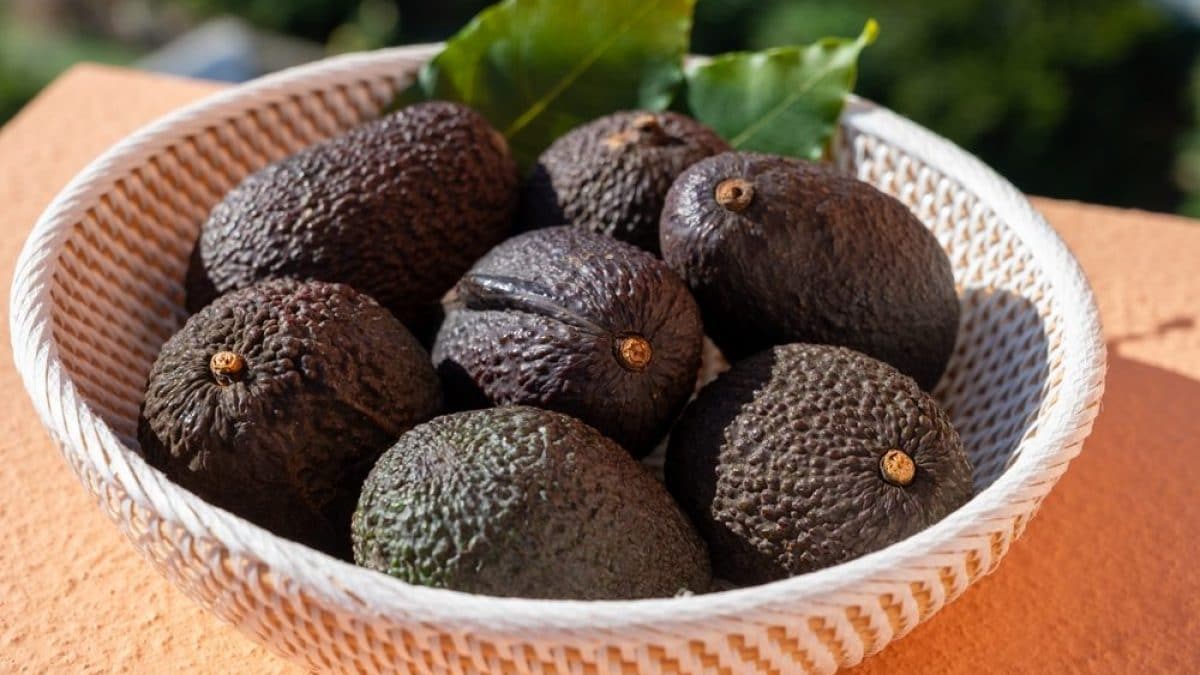
The Canary Islands avocado has received European PGI recognition under the name "Aguacate de Canarias": it's a product that has been cultivated for a very long time, and it expresses special characteristics here thanks to the microclimate and volcanic soil of the Spanish islands, which are located just north of the Tropic of Cancer (at the 28th parallel). But what makes the Canary Islands avocado so special that it deserves this prestigious label?
The Canarian Avocado And Its Unique Characteristics
Avocados grown in the Canary Islands boast a series of factors that contribute to their unique organoleptic and quality profile. First of all, the archipelago enjoys an exceptionally stable subtropical climate, with mild temperatures year-round, limited frost, and a good number of hours of sunshine. This climatic consistency favors optimal growth of avocado trees and a gradual and uniform ripening of the fruit, contributing to a balanced flavor and ideal texture.
The Canary Islands are of volcanic origin and their soils are rich in essential minerals such as potassium, magnesium and calcium: this particular soil composition provides specific nutrients to avocado trees, positively influencing the flavour of the fruit, which often has more intense and complex notes than avocados grown in other regions.
Another factor is the influence of the "Calima" : a unique atmospheric phenomenon, namely hot, dry winds from the Sahara Desert that carry fine sand. While it can present challenges for agriculture, some studies suggest that the Calima, at certain stages of the fruit's growth, can influence its physiology and the concentration of certain aromatic compounds, contributing to a unique flavor profile.
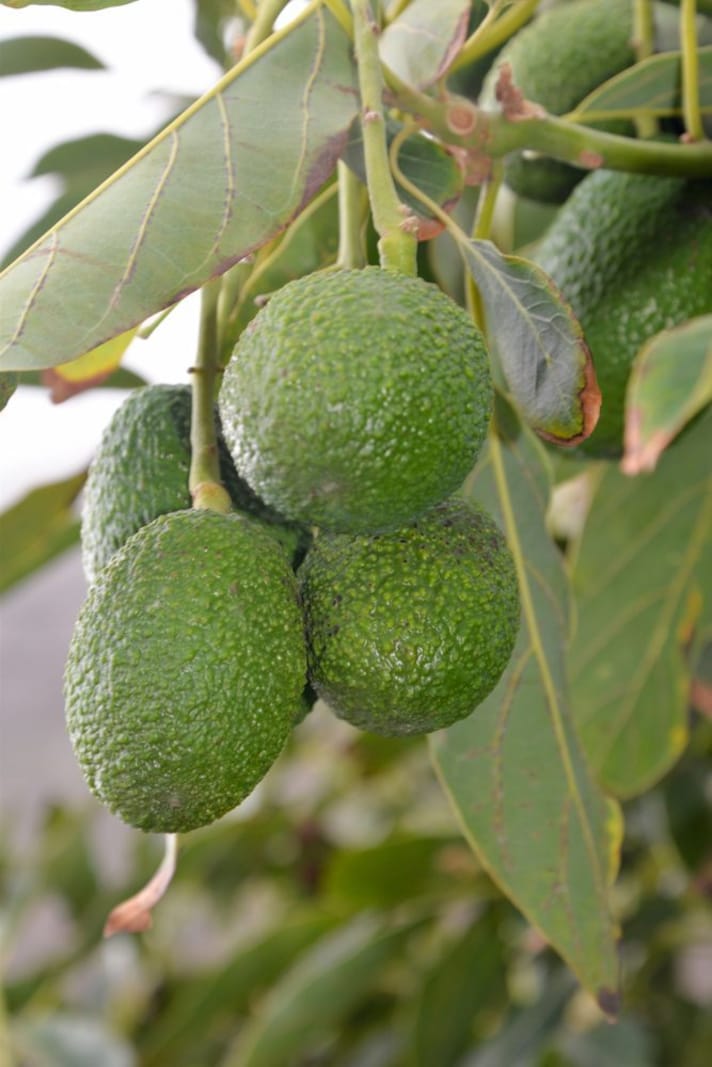
Over time, Canarian farmers have developed specific cultivation techniques, often adapted to the islands' unique topography and scarcity of water resources. These practices, passed down from generation to generation, aim to preserve the fruit's quality and respect the unique environment of the Canary Islands.
The Canary Islands' geographical location, compared to traditional avocado-producing areas, ensures relative proximity to European markets, often allowing for harvesting at optimal ripeness and shorter transportation times. This translates into fresher avocados that better preserve their organoleptic qualities when consumed.
What Are the Varieties of Canarian Avocado?
The PGI "Avocado de Canarias" protects specific varieties such as Hass, Fuerte, Orotava, Pinkerton, Reed, and Carmen, which have particularly adapted to the Canarian terroir, developing distinctive characteristics in terms of flavor, texture, and ripening period. In general, Canarian avocados are often described as slightly sweeter and more aromatic than avocados grown in other regions, regardless of the specific variety. The flesh tends to be particularly velvety and pleasant on the palate, and in general, each variety, while maintaining its own characteristics, can exhibit slightly different nuances of flavor and texture depending on the specific island and growing area, reflecting the diversity of Canarian microclimates.
;Resize,width=767;)
