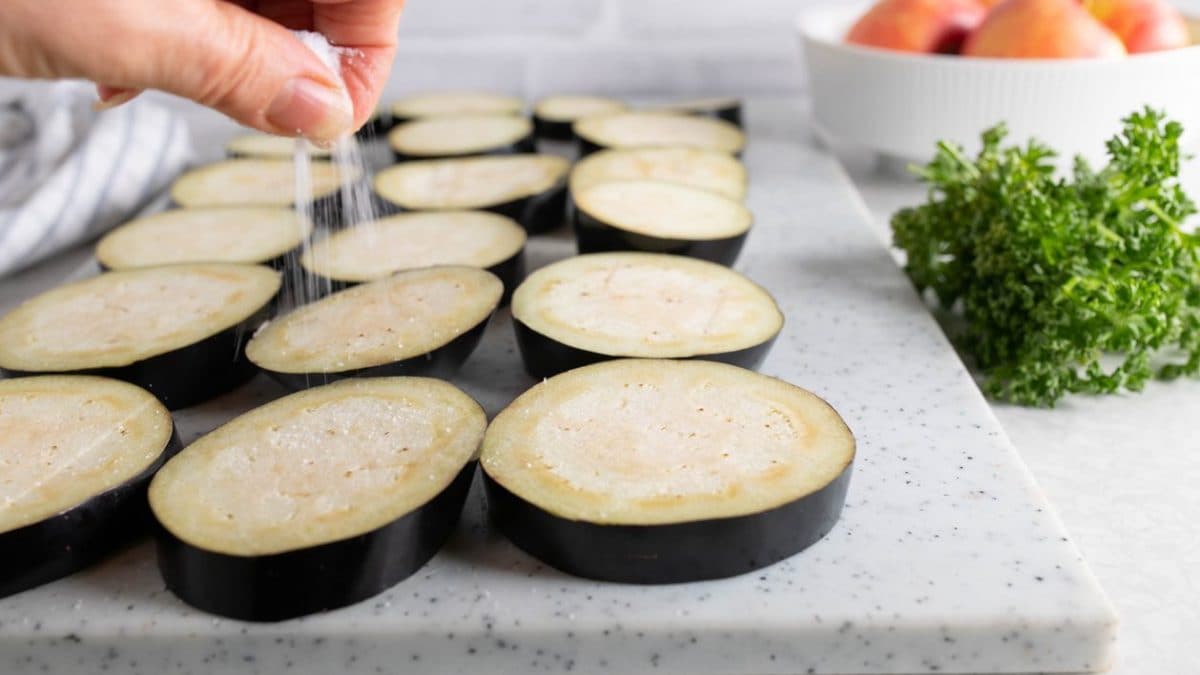
Purging eggplants means dehydrating them by covering them in coarse salt: a process that is sometimes necessary for several reasons. The first is to eliminate their bitter aftertaste, caused by solanine, but at the same time, salting eggplants also ensures an improvement in their texture, allowing for more even cooking. It's not always necessary: it depends on personal preference, but also on the size and ripeness of the eggplants. Let's look at when it's necessary and the methods for purging eggplants effectively and relatively quickly.
Why You Should Purge Eggplants
Solanine is a glycoalkaloid found in various plants of the Solanaceae family, including eggplants, potatoes, peppers, and, to a very limited extent, tomatoes. It is a natural chemical that, in high doses, can be toxic to humans. For this reason, vegetables containing the highest levels of it, such as eggplants, should never be eaten raw.
But how do you eliminate solanine? The solanine content tends to be higher in mature eggplants, with thick, dark skin, while it is lower in young eggplants, with smooth, light purple skin. It is easily eliminated by cooking, especially since very high levels are not involved. In addition to cooking, draining the eggplants helps partially eliminate the solanine and, consequently, the bitter flavor it brings. Coarse salt, in fact, extracts the liquids from the eggplant through osmosis, helping to reduce the concentration of solanine; draining also helps improve the eggplant's texture, making it less spongy. This step is particularly useful for fried eggplants, because it helps reduce the absorption of oil during cooking, but also for grilled or stuffed eggplants, dishes for which a soft, firm texture is preferable.
When Should You Purge Eggplants
It's not always necessary to purge eggplants: as mentioned, solanine increases in larger, riper eggplants. Young, smaller eggplants tend to have a lower solanine content and a more delicate flavor, so they can be cooked directly without this step. We suggest you consider this step when:
- Large, ripe eggplants with thick, dark skin or seeds inside are more likely to be bitter due to a higher solanine content.
- Recipes in which the eggplants will be cooked for a long time, to maintain a soft consistency.
- Recipes where they will be fried, to reduce the amount of oil they will absorb during cooking.
The Most Effective Methods for Purging Eggplants
To purge eggplants, you can try several methods: the most classic is using coarse salt, but you can also use vinegar. The choice depends on the time, the recipe you're cooking, and the ingredients you have available.
1. Dry, Under Coarse Salt
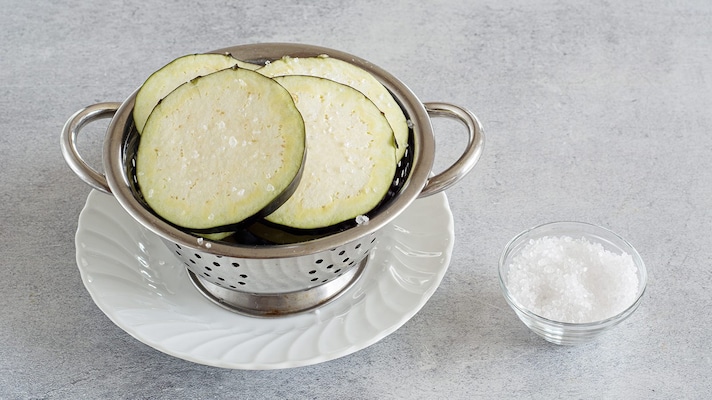
One of the most popular methods allows you to purge eggplant using only coarse salt. Slice the eggplant and place it in a colander: as you layer, sprinkle generously with coarse salt. Place a plate on top of the eggplant and a weight on top, such as a cup or coffee pot, to create pressure. Let it purge in this way for at least an hour. Once the necessary time has passed, rinse the eggplant to remove any residual salt, dry it, and proceed as per the recipe.
2. Soak in Water and Salt
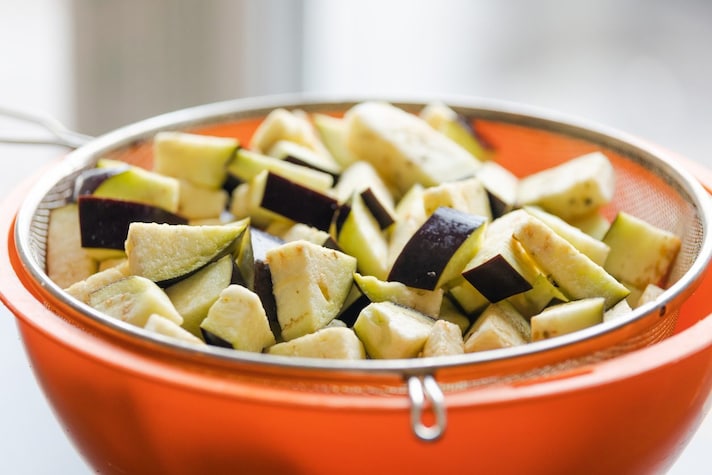
This method is best suited for dishes that call for diced eggplant, but can also be used in other ways. Fill a large bowl with cold water and add coarse salt, using about 2 tablespoons per liter of water. Stir well to completely dissolve the salt; completely immerse the eggplant in the water and salt solution, making sure they are all well covered, then cover the bowl with a cloth or lid. Let the eggplant soak in the water and salt for at least 30 minutes, preferably an hour. To speed up the process, you can also place a small weight on top of the eggplant, but don't crush it too much. Once done, drain and pat dry.
3. Soak in Water and Vinegar
An alternative method to the traditional purging method with coarse salt is soaking in water and vinegar: it's especially useful when you want to reduce the liquid loss from the eggplants, keeping them particularly juicy. Cut the eggplants and prepare a water and vinegar solution, using a ratio of two tablespoons of vinegar for every liter of water; immerse the eggplants in the solution and let them sit for at least 30 minutes, or preferably up to 1 hour. Rinse the eggplants under running water to remove the vinegar and dry them with a clean cloth before proceeding.
;Resize,width=767;)
