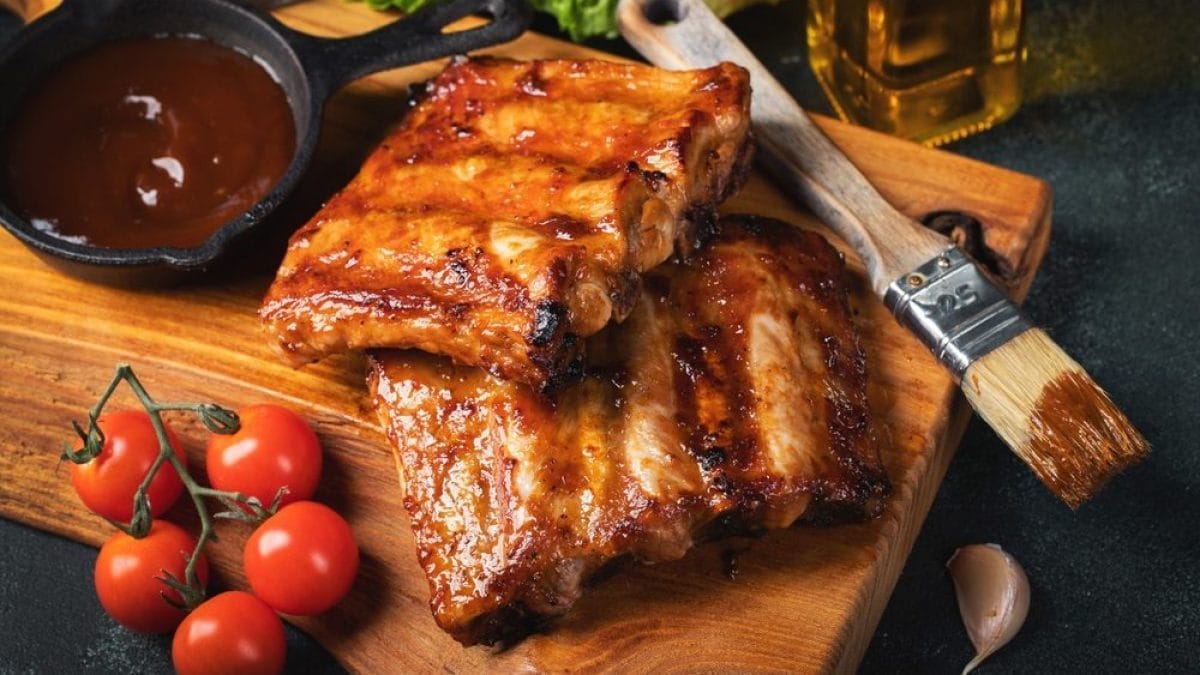
Among the bottles and jars of sauces found on supermarket shelves, it's easy to spot barbecue sauce, with its sweet and sour, often slightly smoky flavor that immediately evokes the world of American grillers. It's a typical American sauce that reflects one of the most popular techniques for bringing juicy, flavorful meats to the table, from pork ribs to chicken thighs. Unlike grilling, it's important to remember that traditional barbecue cooking is slow, low-temperature, and often involves the use of smoke. This varies from state to state: for this reason, barbecue sauces aren't all the same whether you're in the Carolinas, Texas, or Alabama.
BBQ Sauce's History and Main Variations
Barbecue sauce—or BBQ sauce —is the quintessential condiment used to marinate, brush, or accompany long-cooked grilled and/or smoked meats, especially pork, beef, and chicken. Its composition is not static, but generally revolves around an acidic base (vinegar or tomato), a sweet component (sugar or molasses), and a blend of spices that can add a slightly spicy touch.
Its origins date back to the first American colonies, between the 17th and 18th centuries, when preparations were extremely simple and borrowed from culinary techniques used both by ancient civilizations pre-existing in the area (such as the Maya in Mexico) and by slaves who came from Africa, where meat was treated with a solution of vinegar, salt, and pepper to tenderize and preserve it. Over time, between European influences and the spread of new ingredients, the recipes evolved, with the addition of sugar, tomatoes, and mustard. In the 20th century, with the arrival of Heinz tomato ketchup, barbecue sauce became increasingly thick, concentrated, and sweet, produced on a large scale and exported worldwide in the most popular variant based on garlic, onion, ketchup, brown sugar, spices, Worcestershire sauce, apple cider vinegar, salt, and mustard.
In the United States, in fact, rather than barbecue sauce, we tend to speak of it in the plural, as there are several variations on the theme that start from four main types: the oldest one that only uses vinegar and pepper, which was mainly used for degreasing; mustard, yellow, typical of South Carolina; the so-called "light tomato" one, which instead reflects the gastronomic culture of North Carolina and, finally, the "heavy tomato" one, more full-bodied and known commercially throughout the world. Here are the most famous specialties born in the USA.
1. Kansas City BBQ Sauce

This is the most popular barbecue sauce and the one easily found in supermarkets. It's made with a tomato base (ketchup or tomato paste), to which sugar or molasses, vinegar, and spices are added, often with a touch of Worcestershire sauce. Its main characteristic is its thick consistency, ideal for glazing.
2. Carolina Gold BBQ Sauce

This version is easily recognizable by its golden yellow color (hence the term gold), given by the mustard replacing the tomato. You can also find it under the name Carolina Mustard BBQ Sauce and its origins are linked to migration from Germany in the mid-18th century, with the Germans customizing their barbecue sauce with mustard, especially for use on raw pork, during cooking, or as a side dish.
3. Piedmont BBQ Sauce

We're still in the Carolinas, but this time we're heading to the North, where the star is this tomato sauce (with ketchup or puree), with a lighter, more liquid texture and made with fewer ingredients than the others: apple cider vinegar, pepper, salt, and sugar. It's especially used to season cooked and pulled meats, such as pulled pork. You can also find it called Lexington dip, a reference to its hometown.
4. St. Louis Style BBQ Sauce

St. Louis-style barbecue sauce is always made with tomato, sugar, vinegar, and mustard, and is thinner and more pungent than its Kansas City cousin. There are different interpretations of it, but the most popular is the one created by grocer Louis Maull, who developed it in 1926 (initially with anchovy paste), and which is still one of the most iconic brands for flavoring pork ribs after cooking.
5. Memphis Style BBQ Sauce

In Elvis's homeland, barbecue is a veritable institution, with smokehouses serving dishes primarily based on ribs and smoked pork shoulder. Traditionally, the meat is treated with a dry rub and the sauce is served as a finishing touch. The Memphis version is characterized by its mix of tomato (paste or puree), spices (paprika, pepper, cumin), brown sugar, Worcestershire sauce, and salt: the secret is to masterfully balance the acidic, sweet, and spicy components.
6. Texas Style BBQ Sauce

In Texas, there's no single barbecue sauce: the variations are diverse and vary depending on the region and local traditions. Generally, however, they're less sweet than other American styles and more spicy. The most common version is tomato-based, with ketchup or tomato paste, vinegar, black pepper, and chili pepper, to which cumin and garlic can also be added. How is it used? Texan barbecue loves the smokiness, and the sauce tends to be added only when serving the meat, for example, on pre-sliced brisket.
7. Alabama White BBQ Sauce

Alabama sauce can be defined as a white BBQ sauce: fresh, rather runny and spicy, the recipe starts with mayonnaise, apple cider vinegar and pepper, often combined with ingredients like horseradish and ginger, which give it its particular flavor. It is not a condiment like ketchup and is not even suitable for marinating: it was born in 1925 from an intuition of Big Bob Gibson, historic owner of the eponymous barbecue in Decatur specifically to moisten freshly cooked chicken by immersing it in the emulsion, as being a meat tended to become dry and stringy.
;Resize,width=767;)
