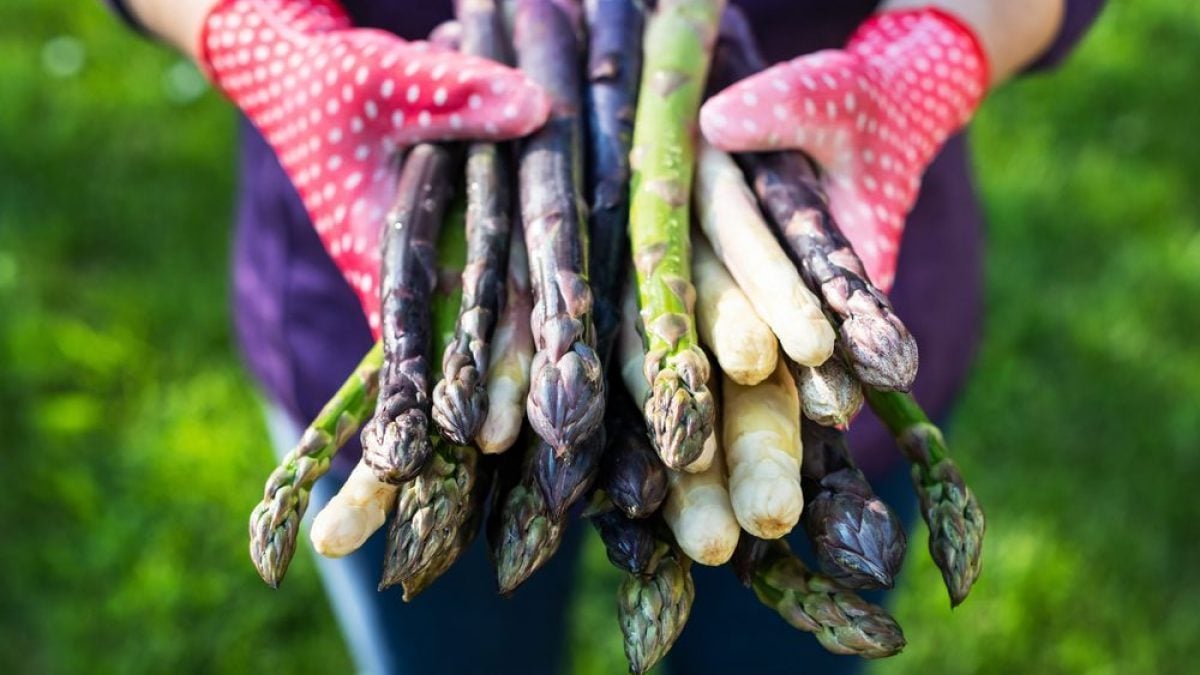
Crispy, bitter, fragrant: asparagus has an unmistakable personality. Whether it's the classic green, wild, white, or bitter purple asparagus, it's a vegetable rich in flavor and important benefits, like all bitter foods. But there are many things we don't know about asparagus: for example, that it has always been considered an aphrodisiac. And why, when we eat it, does it give off a foul odor in our urine? Today we'll tell you 10 interesting facts about asparagus that will leave you speechless.
1. Three Colors, Three Flavors

There are many varieties of asparagus we know and eat today: from wild to purple, from pink to white, including the classic green. But did you know that each has a specific flavor? Among cultivated asparagus, white asparagus is the most delicate, green asparagus has a medium level of bitterness, and purple asparagus, considered the most prized, is the most bitter: this depends both on the cultivation method and on the compounds the asparagus itself develops. Then there are wild asparagus, which are not cultivated but grow wild on hillsides, particularly near beech stands: these too have an intense flavor and a distinctive aroma.
2. Albino Asparagus

How does white asparagus get its white color? This particular variety, owes its color to its lack of exposure to the sun: it is grown underground and harvested as soon as it emerges from the ground. Unlike green asparagus, white asparagus develops very little chlorophyll, which is responsible for this vegetable's bitter flavor.
3. They're The "Love Vegetable"

Not many people know that asparagus has always been considered an aphrodisiac vegetable. The reason lies in its properties: it's a natural diuretic, lowers blood glucose levels, and is rich in antioxidants and vitamin E. Furthermore, it has a stimulating effect, making it unsuitable for evening consumption. The downside is that it has always been considered useful for romantic encounters, both as a propitiatory product given its shape and for these poisonous effects: legend has it that even Napoleon III requested it before a passionate tête-à-tête.
4. They Put You in a Good Mood

Another virtue of asparagus is that it literally puts us in a good mood: this happens thanks to the high amounts it contains of tryptophan, an amino acid essential for mood, a precursor to serotonin, the so-called happiness hormone. And this is especially true for wild asparagus, the variety with the highest tryptophan levels.
5. They Have Their Own "Ring"

What to look for when buying? Besides their bright green color, moist ends, and firm tips, fresh asparagus can also be recognized by their "sound": when rubbed together, they produce a very distinctive squeaking sound.
6. They Make Urine Stink

One of the most peculiar characteristics of asparagus is the odor it imparts to our urine: after eating asparagus, it's normal to smell bad in your urine. Why? The culprit is asparagusic acid, which, through metabolic processes, converts into a sulfuric acid bond. In some cases, however, this doesn't happen: some people don't experience this very slight side effect precisely because their metabolism doesn't convert asparagusic acid.
7. They Were Used as Currency by Manet

In 1880, Édouard Manet, the famous Impressionist painter, painted a painting he called "A Bunch of Asparagus," which he later purchased from the banker Ephrussi. But the painter had been paid—strangely enough—more than he asked for: instead of 800 francs, the banker wanted to give him 1,000. To repay his debt, Manet painted another painting with a single asparagus and gave it to the banker with a note that read, "One asparagus was missing from your bunch." The canvas is housed in the Musée d'Orsay in Paris.
8. Some People Are Afraid of Them

Among the myriad phobias humans have developed, there's one that involves asparagus. It's called spargarophobia, a condition for which science has yet to provide an answer: some people are afraid of asparagus and everything related to it. Despite all the advances in modern medicine, why it develops and how it can be "cured" remain unanswered questions.
9. They Have Their Own Museum

Asparagus is much loved in German-speaking countries, where it is widely used in local recipes. In Schrobenhausen, a Bavarian town of 16,000 inhabitants, a museum dedicated to asparagus was inaugurated in 1985. To give an idea of its importance to this community, let's just say that here it is called the "royal vegetable." But it is not just an economic asset: it seems that asparagus was among the favorite foods of Ludwig II, King of Bavaria from 1864 to 1886.
10. They End on a Specific Day

Of course, it's not a matter of mathematics, but of tradition: in Germany, and elsewhere, asparagus usually begins to grow in the first weeks of April and traditionally ends on St. John's Day, June 24th. There's actually a very technical explanation: it's a specific period that allows the plant to regenerate. If it's harvested beyond this period, the plant won't produce its best fruit. In fact, an old farmer used to say, "Red cherries, dead asparagus": that is, as soon as the first cherries are ripe, asparagus season is over.
;Resize,width=767;)
