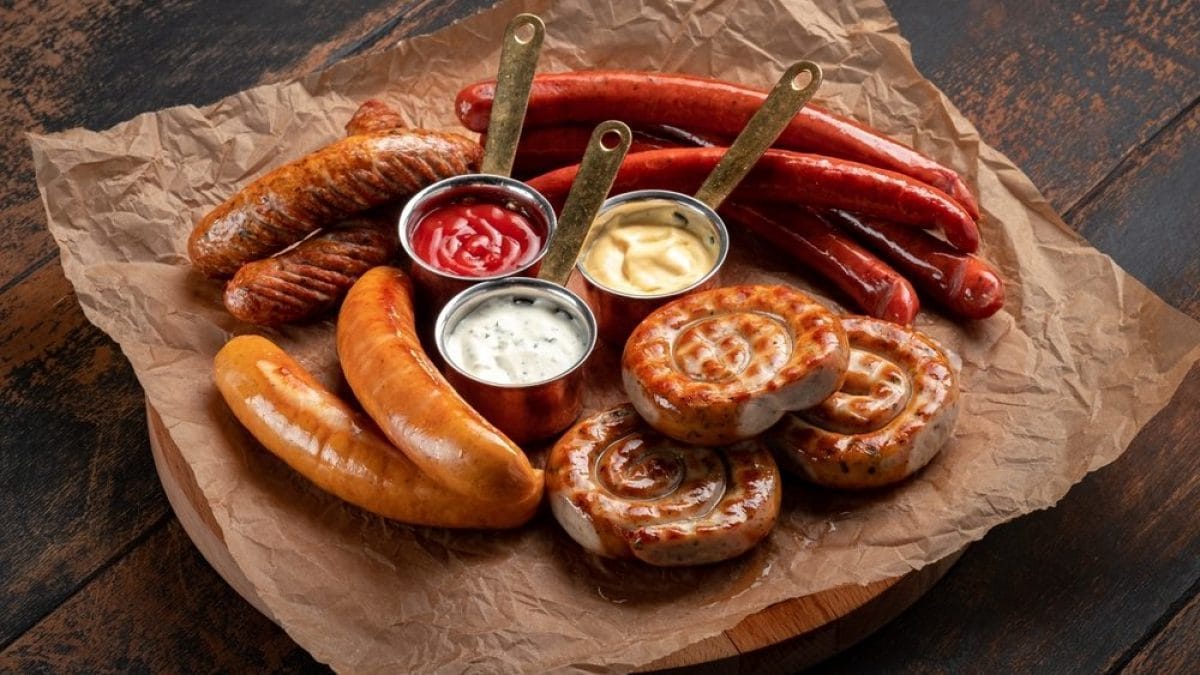
In the U.S., the term würstel is improperly used to refer to a sausage packaged in plastic bags that isn't usually held in high esteem. Yet, anyone who's crossed the Alps, perhaps to go to Oktoberfest, knows that in Germany and Austria, the word würstel (almost) doesn't even exist, because the correct term is würst, used to define the typical German and Austrian sausages. Not all are the same: they have an infinite local and regional variety, which often cross national borders. It's not uncommon, in fact, to find German bratwürsts in Vienna, or, conversely, Wieners in Berlin. Here, we've briefly explored the main würstels you can enjoy in both countries, including both new and old favorites.
Germany
A German national treasure, sausages are one of the foods that best represent this nation's gastronomic tradition, so much so that they are exported worldwide. They are served with sauerkraut, ketchup, mayonnaise, curry, and pretzels, as a main course in Bavarian taverns or as street food.
1. Bratwürst

Bratwürst is one of the most typical and widespread German sausages, and its preparation varies according to local traditions. It's essentially a sausage made primarily from finely minced pork (originally scraps, now mixed cuts such as pork loin and shoulder) and veal or beef, although it can also be made exclusively from pork or veal. The mixture is flavored with various spices and herbs such as pepper, ginger, nutmeg, marjoram, cumin, and garlic. Its origins lie in Switzerland, Germany, and the Celtic populations, around the 14th and 15th centuries. What is certain is that over the centuries, bratwürst has become a symbol of street food, grilled or pan-fried and accompanied with onions, sauerkraut, and sauces, such as the Berliner currywürst, or bratwürst with ketchup and curry powder.
2. Weisswürst

The pride of Bavarian cuisine, this classic white sausage is made with veal and pork belly, to which parsley, lemon, and onion are added, and then stuffed into pork intestines. They are served boiled and accompanied by pretzels, as they are considered a breakfast dish or a mid-morning snack. Munich, however, is not the only city to offer this sausage: a variant cooked by frying it in butter can be found in Silesia, where it is part of the Christmas Eve and New Year's Eve menu; another, even further north, in Hamburg, was brought by the French during the Napoleonic era, between 1806 and 1814. The recipe of the time also included marinated herring alongside the meat and was served with salmon caviar on holidays.
3. Bockwürst

Another sausage that can't be missed at Oktoberfest is the bockwurst, best enjoyed with a mug of Bock beer, a traditional artisanal brew from Southern Germany. It's a sausage very similar to the bratwürst, developed by a Berlin restaurateur in the late 19th century: it's made with a mix of pork and veal, with the former generally predominating over the latter. These sausages are often smoked, bringing out the best in the paprika (or nutmeg), white pepper, and lemon flavors they're seasoned with.
4. Knackwürst

Originating in Northern Germany, they first appeared in the mid-16th century. There are many regional variations of knackwürst, but they all have one characteristic in common: they are crispy to the bite, as the term "knack" suggests. This happens because during cooking, the skin separates from the meat (usually very finely minced pork), creating a layer of air that bursts when cut or tasted, causing the würst to release its juices. They therefore have a taut exterior and are very soft and moist on the inside.
5. Nürnberger and Thüringer Rostbratwurst

Both of these sausages belong to the large bratwürst family, but are particularly prized as holders of the European PGI mark. Both are sausages that are best roasted, with a long tradition, but with different ingredients. Nuremberg sausage is made exclusively with pork, tendons removed, and bacon without rind: the minced meat is flavored primarily with marjoram, to which salt, pepper, ginger, cardamom, and lemon are added. It appears in historical documents as early as 1462 and is said to have been much appreciated by Goethe. Thuringian sausage, on the other hand, is made from pork without fat (cheek without rind) mixed with veal or beef and then seasoned with cumin, marjoram, and garlic, although the mixtures can vary. Its origins are documented as far back as 1404: it is said to have been loved not only by Goethe, but also by Martin Luther.
Austria
Würstelstands are the picturesque and historic kiosks that sell typical Viennese sausages to be enjoyed while walking. Perhaps less famous than the German ones, Austrian würst are also a true specialty, worth a try alongside Wiener Schnitzel and Sachertorte.
1. Wiener or Frankfurter

Long and thin, the Wiener is the type of sausage that represents the iconic hot dog sausage, boiled or grilled. In English, this sausage is known as Vienna sausage or Viennese würstel, but in the Austrian city and throughout the country it is called Frankfurter, because it seems to have been invented in Vienna, but by a Frankfurt butcher. It is made with tender pork, beef, or a combination of meats, seasoned with spices and stuffed into natural sheep casings before being smoked at low temperatures. A basic, low-cost version, it also has a more sophisticated counterpart: the Sacherwürstel, with a more elongated and thinner shape, dark color, and a more aromatic, almost spicy flavor.
2. Debrecziner

This Hungarian specialty seems to come straight from the Austrian imperial past, when in the 19th century the city of Debrecen was part of the Habsburg territories. Also called debreziner, it is a pork sausage lightly smoked with sweet paprika, which explains its reddish color. It is used as an ingredient in a variation of goulash due to its spicy flavor, especially in home-made recipes, but it is also popular as a sandwich filling: given its thinness, two are usually used, seasoned with ketchup and mustard.
3. Käsekrainer

Melted cheese that drips or "squirts" out of the würst: this is the distinctive feature of these very fatty sausages, which, in addition to pork, also contain small pieces of stringy cheese (käse), hence the name. Because the cheese inside must melt and form a crust —very inviting to connoisseurs—when it comes out, the best way to eat it is to grill it or griddle it, piercing the casing with pricks.
4. Burenwürst

Burenwürst , also called koblasse, can be made with beef or pork and bacon, seasoned with various spices, such as black pepper, cumin, or paprika, and only lightly smoked. They have been available at takeaway kiosks since the 19th century, and their etymology is uncertain: it may derive from the Germanic "farmer's sausage." These sausages are usually served boiled with bread and mustard, and maintain a more or less vibrant red color depending on the spices used to flavor them.
5. Bosna

Special mention goes to the bosna, which isn't really a sausage, but rather the most famous sandwich in Salzburg, even though it can also be found in Vienna. The original, however, is prepared by the Balkan Grill, a restaurant that made this sandwich iconic. It was created in 1949 by the Bulgarian Zanco Todoroff, who used a secret recipe to create a kind of grilled pork bratwürst that is served between two slices of white bread with onions, parsley and a mix of hot spices that has never been revealed.
;Resize,width=767;)
