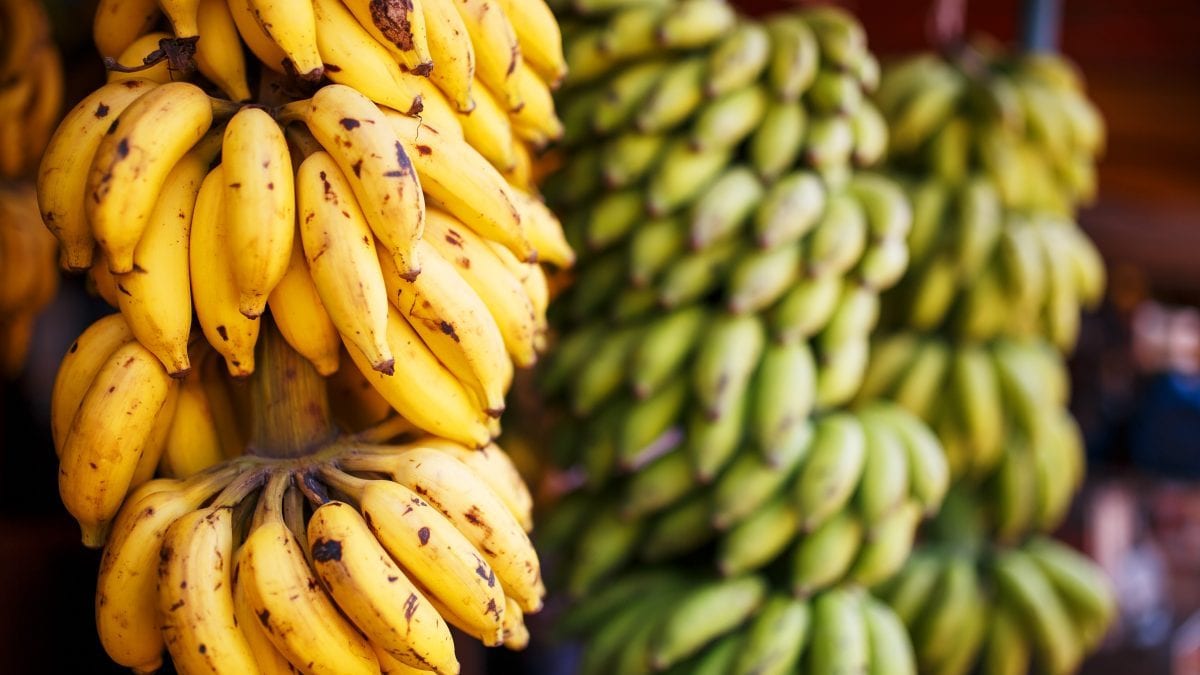
It's the most consumed fruit in the world, the inseparable companion of athletes and a favorite snack for children: we're talking about bananas, a delicious food native to Southeast Asia (particularly Malaysia, Indonesia, the Philippines and Papua New Guinea), which has become typical of all tropical countries and is now widespread practically worldwide. Yet, despite bananas being so loved and consumed for the benefits they bring to our body and for their great versatility as an ingredient, you'll be surprised to discover how little we know about this fruit.
In fact, practically only one type of banana reaches our tables: the Cavendish, the cultivated variety we all know. It is the product of centuries of crossbreeding that has deprived the fruit of its seeds and made its fleshy. It is grown throughout the tropical areas of Central America, Africa, and the Philippines and is characterized by a thin, intense yellow skin and sweet, creamy flesh that satisfies the most discerning palates. In reality, the Cavendish is just one of hundreds of banana varieties in the world, most of which are unknown and impossible to find in the U.S. and Europe.
To get an idea of the vast array of banana varieties, consider Lumajang, an Indonesian town known as "Banana City." In this tiny corner of the world alone, dozens of different cultivars exist, each with its own uses, flavors, and markets. This wealth stems from a combination of diverse factors, including the soil, made particularly fertile by the Semeru volcano, which has been erupting almost continuously for decades. The result is a place where bananas are not a byproduct but a vital component, supporting families, micro-economies, and small-scale commercial networks.
The case of Lumajang is very unique, but it gives a good idea of how many varieties of bananas populate our world, a wealth we can't even imagine. Legend has it that there are over 1,000 different ones: perhaps that's an excessive number, but this fruit is certainly a true example of biological diversity. From the most common to the most unique and exotic, let's discover together the most common and the strangest types of this exquisite and precious fruit.
1. Banana Cavendish
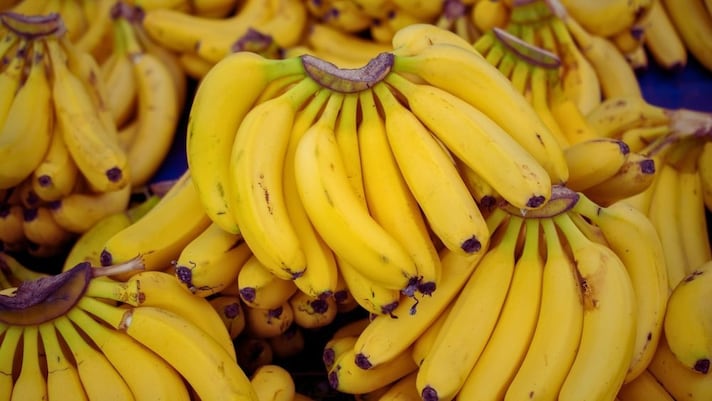
Let's start with the best-known and most widespread banana variety, the Cavendish: it's the cultivated type we all consume, the product of centuries of crossbreeding that deprived the fruit of its seeds and made its pulp fleshy. Typical of all the tropical areas of Central America, Africa, and the Philippines, but now widespread globally, this banana is characterized by a thin, intense yellow rind, a sweet, creamy flavor, and a more or less soft texture, depending on the fruit's degree of ripeness. Its journey through the history of bananas is fascinating: after supplanting the popular Gros Michel variety due to a devastating disease in the 20th century, the Cavendish became the favorite in large-scale production thanks to its flavor, but also its resistance to disease and its attractive appearance. From a culinary standpoint, the Cavendish banana is a versatile companion in the kitchen: from a simple snack to an elaborate dessert, its balanced sweetness pairs well with a wide variety of preparations.
2. Bananito
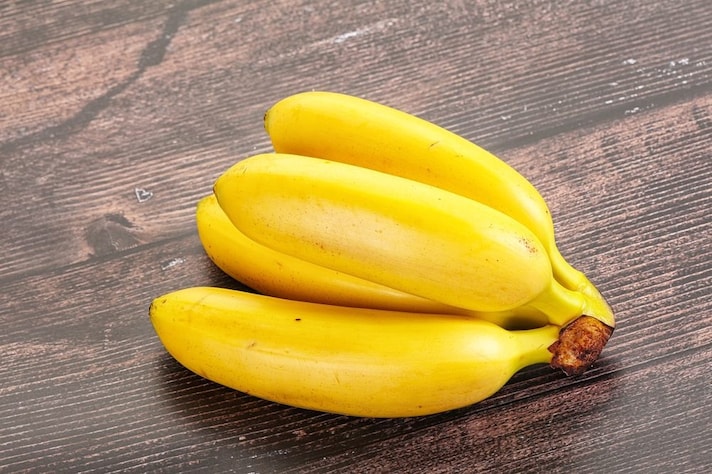
Once found only in tropical countries, today it's a bit more common to see it on our supermarket shelves: the bananito, often called baby banana or Lady finger, is a tiny banana, no taller than 10 cm, a true miniature fruit. It's not just its size that sets it apart from other bananas: the bananito, native to Central and South America, is characterized by a thin, yellow skin and a creamier, sweeter pulp, with an intense fruity aroma reminiscent of apple. Thanks to its small size, the bananito is used as a quick snack at any time of day, but is also used to garnish cakes, ice cream, or elegant desserts, adding a visually appealing touch and a distinctive flavor.
3. Red Banana
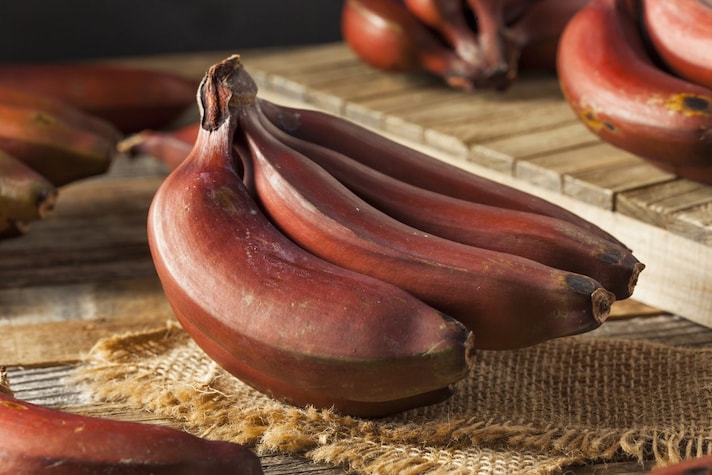
Also known Cuban banana, the red banana is a fruit with ancient origins: a lesser-known variety than the yellow ones, but equally rich in beneficial properties and a unique flavor. You can immediately recognize it by its peel, which features curious points of color that, depending on the degree of ripeness, range from purple to brown, passing through deep red. The inside, however, is characterized by tender, cream-colored flesh with a sweet and pleasant flavor, with a delightful raspberry aftertaste. Native to Southeast Asia, the red banana has spread to various tropical regions, including Central America, Africa, and Australia: today it is mainly produced in Thailand, the Ivory Coast, Colombia, and Ecuador. It is particularly loved for its very sweet flavor and creamy texture, characteristics that make it perfect for being eaten fresh but also for blending and using in the preparation of milkshakes and smoothies, or for making cakes, muffins, ice cream, sorbets, and any type of dessert. In some cuisines, such as Thai and Indian, red bananas are also used in savory dishes.
4. Blue Java Bananas
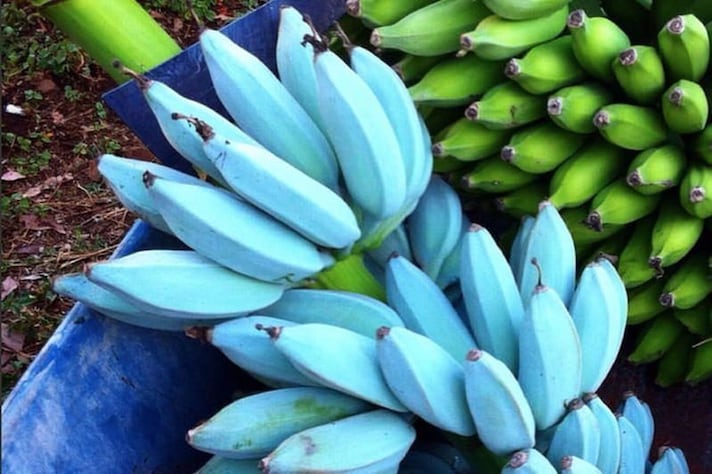
The Blue Java is a hybrid obtained from the cross between Musa acuminata and Musa balbisiana, two species of banana that gave rise to hundreds of other varieties, including the Cavendish. What makes it special? Two characteristics that characterize the various names by which it is known: its peel, which has blue-green hues when unripe, and its flesh, with a soft consistency and a sweet, vanilla-like flavor that almost resembles custard. It is typical of some tropical areas of Central America, the Philippines, Fiji, Hawaii, and even Australia. It is not only known as the Blue Java Banana, despite that being the most popular: it is also called the Hawaiian banana, Ney Nannar, Krie, Cenizo, or Ice Cream Banana, probably the name that most effectively emphasizes its deliciousness.
5. Lakatan Banana
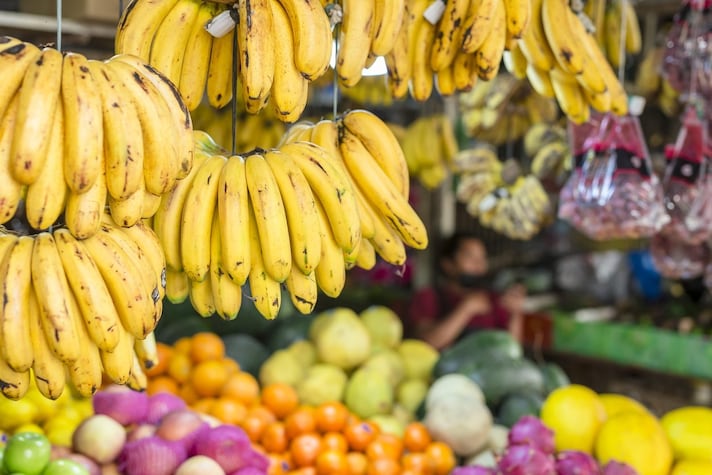
The Lakatan banana, native to the Philippines, is a tropical treasure that enchants with its vibrant combination of flavor and versatility. Characterized by a golden yellow, pulpy skin, this variety offers a unique taste experience, a blend of sweetness and acidity that gives this fruit a distinctive culinary personality: it is no coincidence that it is one of the main dessert bananas in the Philippines. Furthermore, its creamy, juicy flesh is imbued with fruity notes that make it irresistible to anyone seeking a tropical delight. In addition to being enjoyed fresh, the Lakatan is often used in various local recipes, enriching traditional sweet and savory dishes with its unique flavor and contributing to the diversity of Filipino cuisine.
6. Gros Michel Banana
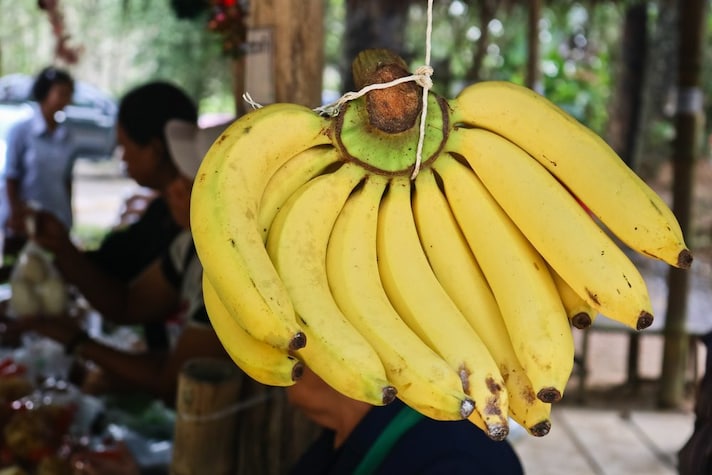
The Gros Michel banana is a particular variety that, until the 1950s, was the benchmark banana on the world market. Native to South Asia, it is characterized by a thick skin and a more robust shape than many modern varieties, and by a very creamy flesh that combines notes of intense sweetness and a slight acidity, creating a flavor profile that made this variety famous among tropical fruit enthusiasts. Unfortunately, a particular fungal disease known as Panama disease (Fusarium wilt) affected the variety in the 1950s, leading to the introduction of more resistant varieties, such as the Cavendish banana. Today, the Gros Michel banana still exists but has become more of a niche product, enjoyed both fresh and cooked mainly in Southeast Asia, Africa, and on small plantations in Latin America (Honduras, Ecuador) and Hawaii.
7. Butter Banana (Musa Orinoco or Pisang Abu Keling)
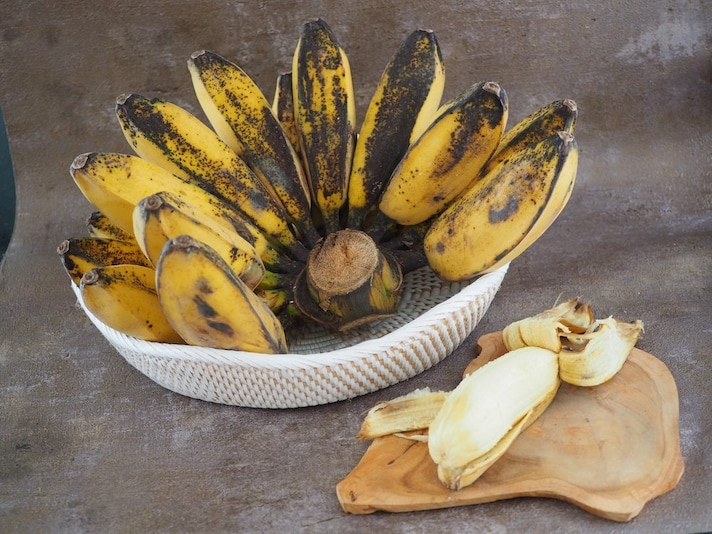
The so-called "butter banana" is often associated with varieties like the Orinoco or the Bluggoe, which are widespread in the Caribbean and Latin America. These bananas have dense, slightly watery flesh, less sweet than the Cavendish and are therefore suitable for both fresh consumption and, above all, cooking. In countries like Cuba, these varieties are an integral part of everyday cuisine, where they are used in savory dishes and traditional preparations.
8. Manzano Banana (or "Apple Banana")
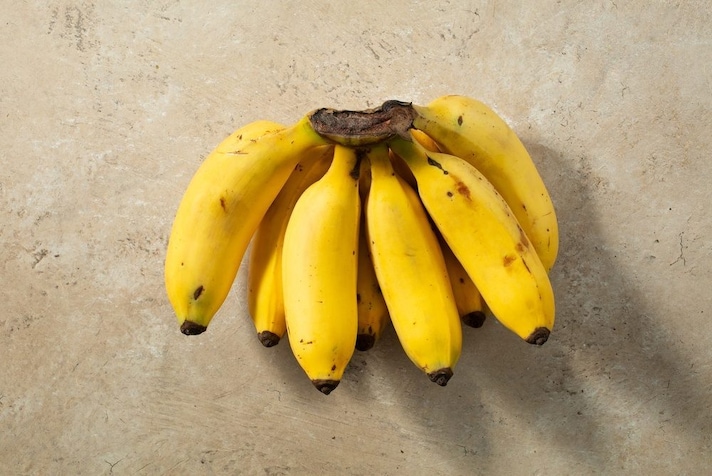
A small, squat banana, the Manzano is native to Central America and is easily recognizable for its distinctive flavor: sweet yet with a tart note clearly reminiscent of apples and strawberries. The skin is thick and tends to darken rapidly as it ripens, while the flesh remains firm and fragrant. It's a popular variety among those seeking a more complex and aromatic flavor than the classic Cavendish, ideal for eating fresh or in sweet dishes.
9. Barangan Banana
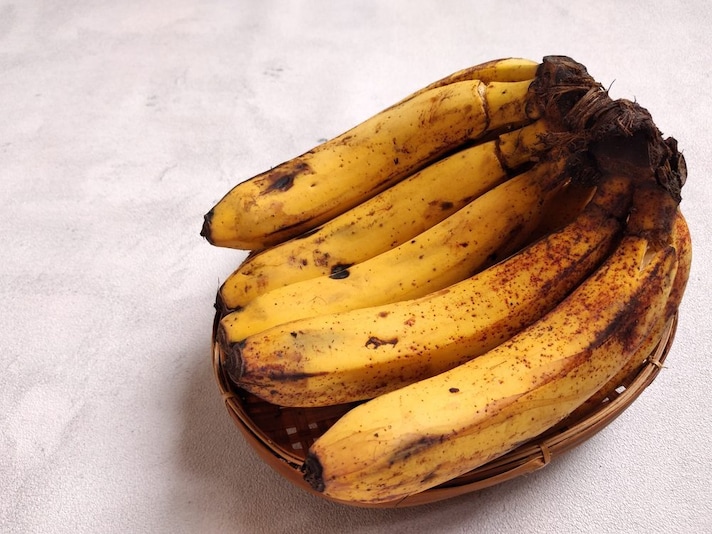
Widely popular in Indonesia, the Barangan is an elegant and aromatic banana, characterized by a yellow skin dotted with small dark spots and a soft, fragrant flesh. Its flavor is sweet but balanced, with light floral notes that make it particularly pleasant on the palate. It is mainly eaten fresh, but is also used in the preparation of traditional Southeast Asian desserts.
10. Goldfinger Banana
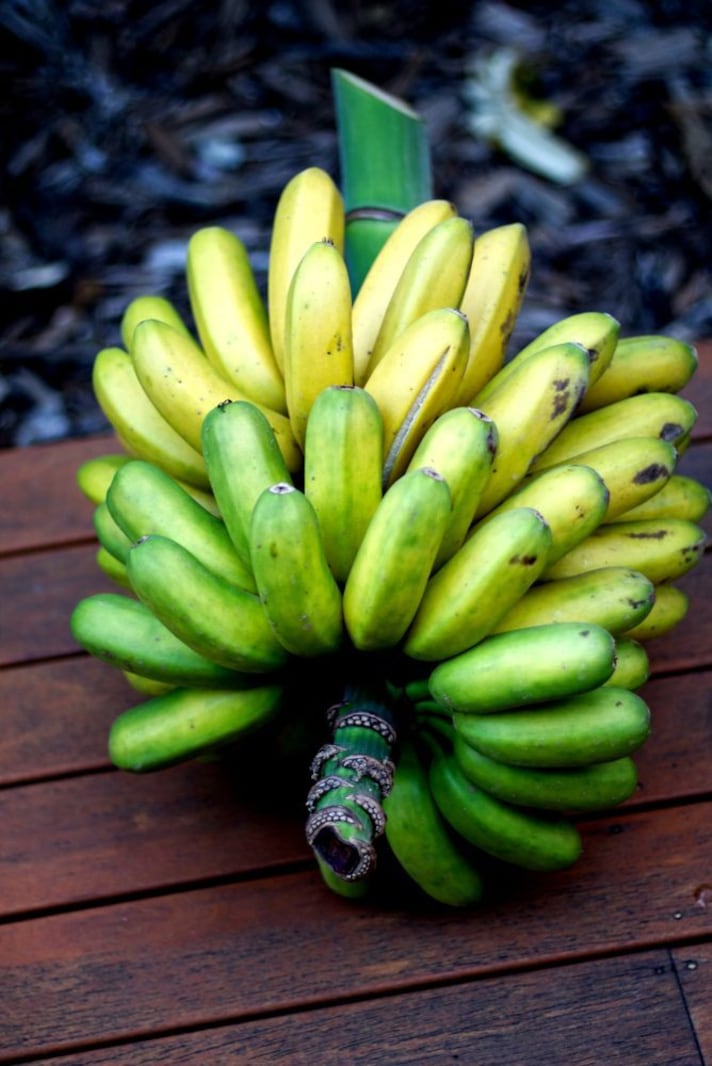
Goldfinger is a relatively new variety, developed to be more resistant to diseases that threaten large-scale banana cultivation. It has a similar shape to the Cavendish but a more complex flavor, with less pronounced sweetness and a slight tartness. Prized for its versatility, it also represents an interesting example of agricultural innovation responding to global production challenges.
11. Fe'i Bananas
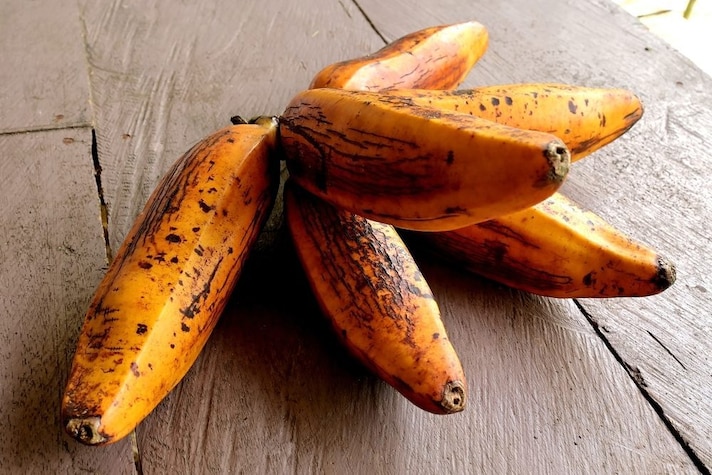
Among the world's most unique varieties, the Fe'i banana (also known as Fehi) does not refer to a single cultivar, but rather to an entire group of bananas native to the Pacific Islands, including local varieties such as the Indonesian Tongkat Langit. It is immediately recognizable by the bright color of its flesh, which ranges from deep yellow to bright orange, and by a unique characteristic: the bunches grow upward rather than hanging downward. Unlike more common bananas, these varieties are primarily eaten cooked and have a stronger, less sugary flavor and a firm texture. They are also particularly rich in carotenoids, which are responsible for their intense color and nutritional properties.
12. Praying Hands Banana
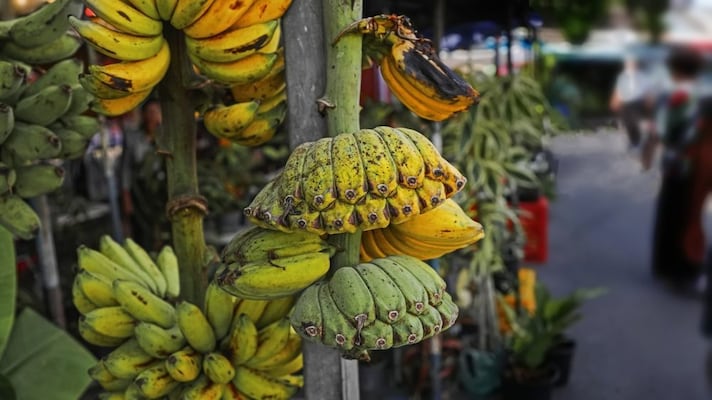
One of the most visually curious varieties: the fruits grow closely together, forming a structure reminiscent of two hands clasped in prayer. Native to Indonesia, this banana has sweet flesh with a slight tartness and is eaten both raw and cooked. Beyond its flavor, it is highly prized for its unique appearance, which makes it almost an object of botanical curiosity.
13. Señorita Banana
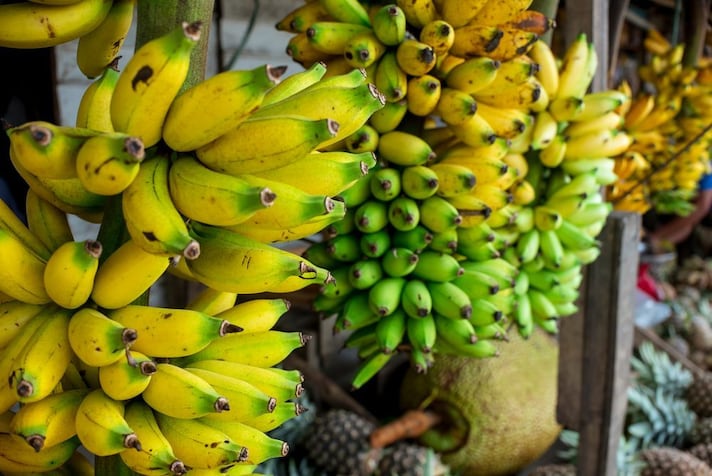
Among the smallest and sweetest bananas, the Señorita banana is native to the Philippines and is highly prized in Southeast Asia for its intense aroma and soft texture. Small in size and with a thin, bright yellow skin, this banana is distinguished by its pronounced sweetness and particularly rich aroma, making it ideal as a snack or dessert ingredient. Similar in appearance to the bananito, it differs in its even more aromatic flavor and its widespread use in local Asian cuisines.
14. Pink Velvet Banana
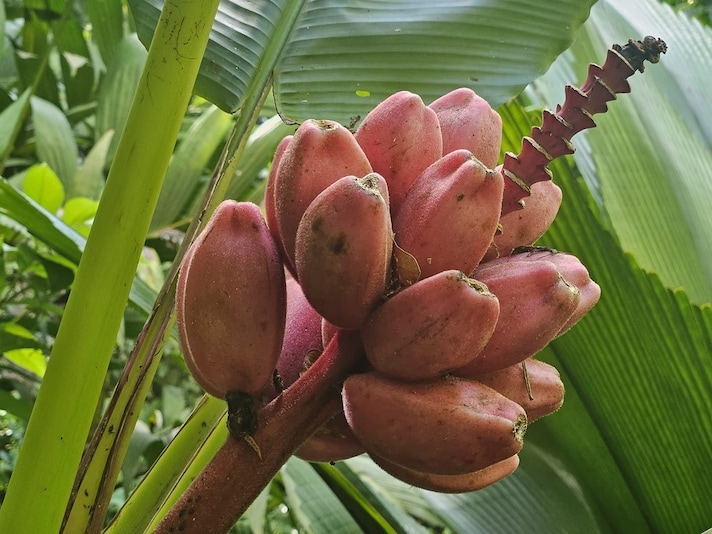
Among the most curious and decorative varieties, the pink velvet banana, scientifically known as Musa velutina, stands out for its unique appearance: the small fruits, covered with a bright pink, slightly hairy peel, open spontaneously when ripe, revealing a white pulp dotted with numerous black seeds. Native to northeastern India and southeast Asia, this banana is grown primarily as an ornamental plant, thanks to its exotic appearance and showy flowers. Unlike commercial varieties, the abundant presence of seeds makes it unsuitable for consumption, even though the pulp is technically edible and has a sweet but delicate flavor. Therefore, more than for its taste, it is prized as a botanical curiosity and for its aesthetic value.
Bonus: The Plantain, The "Cooking Banana"
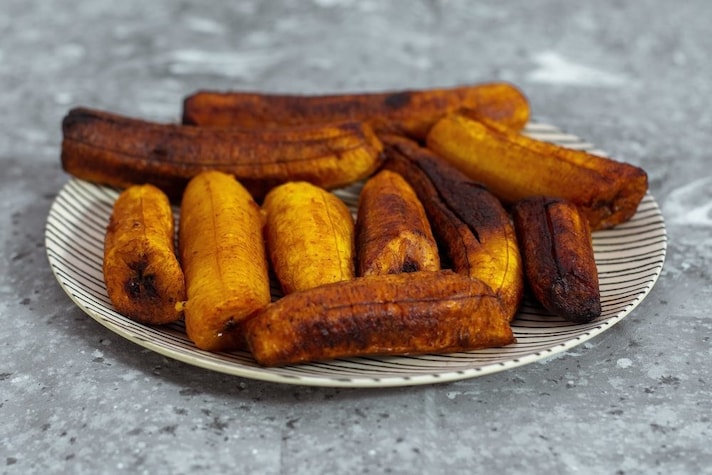
More than just a variant, plantains represent a whole category in themselves. Widespread in Africa, the Caribbean, and much of Latin America, they are much starchier than dessert bananas and are therefore almost exclusively eaten cooked. Their versatility is closely linked to their degree of ripeness: when unripe, they have a firm texture and a neutral flavor, ideal for frying, boiling, or turning into crunchy chips; as they ripen, however, the flesh softens and develops a more pronounced sweetness, making them perfect for caramelizing or baking.
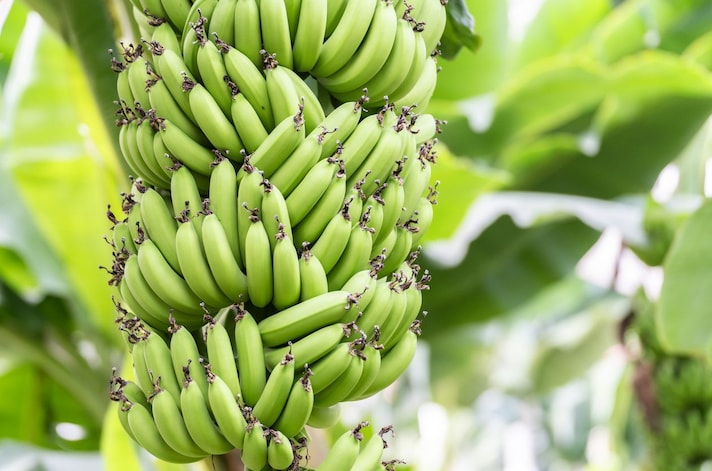
It's a fundamental ingredient in many traditional cuisines, where it plays different roles depending on the context: it can be a side dish, a starchy alternative to rice or potatoes, or the main ingredient in iconic dishes like tostones in the Caribbean or fufu in West Africa. More than just a fruit, the plantain is a true everyday staple, capable of sustaining entire gastronomic cultures and demonstrating, once again, how the world of "bananas" is actually much broader, more complex, and more surprising than we imagine.