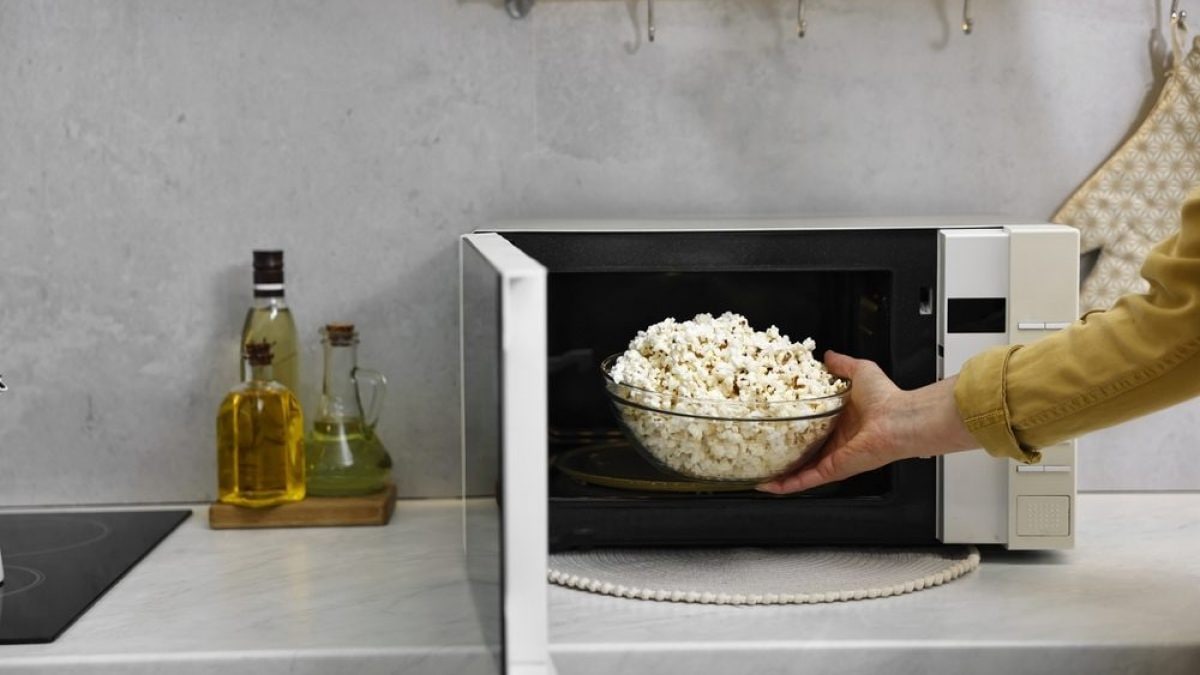
In just a few years, the microwave has become a household appliance that has earned a place in many kitchens and daily habits. Practical, compact, and multifunctional, this small oven is a versatile ally, primarily used for reheating pre-cooked foods, including lunchboxes, but it can also be used for thawing and cooking. And yet, for a long time, the microwave was the object of prejudice: it was considered dangerous to use and was often demonized. Perhaps this is also why, even today, despite many false myths about it having been debunked, its functions are still not fully exploited. Besides reheating and defrosting, do you really know all the things you can do with the microwave? Here are 15 alternative uses you probably didn't know about and that you won't be able to do without.
1. Steam Cooking

Steaming isn't a method often associated with the microwave, but a small oven is perfect for this cooking technique. How do you do it? Simply place the food in a suitable container or dish, cover it with plastic wrap, and cook for a few minutes. You won't need to add fat or seasoning, and you won't even need water: the steam generated inside the oven will do all the work and cook the food faster than traditional cooking. Steaming in the microwave is perfect for vegetables, fish, and poultry, as it preserves the flavor and texture of the food.
2. Dissolving Solidified Honey, Salt and Sugar

How many times have you opened a jar of honey and found it crystallized? Reheating it in the microwave is one of the quickest and easiest ways to soften its consistency, returning it to its classic liquid state. All you have to do is place the jar of honey in the microwave for a few seconds on low power: the heat generated will dissolve the crystals and make the honey softer and more fluid. Remember, just a few seconds are enough, as excessive heating could compromise its nutritional properties and flavor. The same procedure applies to salt and sugar that have compacted and solidified: pour everything onto a plate and then heat for a few seconds.
3. Drying Herbs and Fruit

If you've collected or purchased fresh herbs, you need to dry them so you can preserve them without losing their flavor and reuse them later. The microwave is very useful in this case because it greatly speeds up the process: simply place them between two layers of absorbent paper and heat them on full power for 2 or 3 minutes. The microwave can also be used to dehydrate small quantities of fruit. In this case, cut them into thin slices, arrange them directly on the turntable, and leave them in the microwave for about 30 minutes. Remember to set the defrost function, which is the only one gentle enough to prevent the fruit from burning.
4. Making Popcorn

Don't have a pot big enough for popcorn? The microwave is the perfect solution. Making popcorn in the microwave is very convenient and quick. Simply place the kernels in a microwave-safe paper bag, cook for 2-3 minutes, and you're done!
5. Making Froth for Cappuccino

If you don't have one of those ultra-modern machines that make cappuccino like at the bar, don't worry: you can also froth your own milk in the microwave. In this case, you'll need a glass jar and skimmed or very low-fat milk (2%). Pour the milk into the jar, close it, and shake vigorously until it becomes frothy, usually for 30 seconds to a minute. Once this is done, put the jar in the microwave for 30 seconds, then remove the lid, cook for another 30 seconds, and your milk will be ready.
6. Cooking Single-Serving Mug Desserts

If your craving for cake is dampened by the thought of having to make a whole one for just one person, mug cakes are the perfect solution for you. It's called "mug cake" and is a quick and easy recipe that involves mixing all the cake ingredients directly in a large mug: in our recipe, flour, eggs, sugar, yogurt, baking powder, seed oil for the white version and hazelnut spread for the cocoa version. Then, simply place the mug in the microwave and cook on high for 2-3 minutes. In no time, you'll have a super-delicious single-serving dessert, with a soft and slightly spongy texture, which you can further enhance by drizzling the surface with hazelnut spread and topping it with chopped hazelnuts.
7. Removing Adhesive Labels

Removing a label from a jar or bottle can often be a challenge, but few people know that it's much easier using the microwave. This trick only works for containers without metal parts, or at least made of materials suitable for the appliance: if compatible, simply place the empty jar in the microwave with a cup of water for 30 seconds. The steam generated by the water heated by the microwave will soften the label's adhesive, making it easier to remove.
8. Ripening Avocados

Craving avocado toast, but your avocados aren't ripe enough yet? Use the microwave! Yes, you read that right, it's a super quick way to avoid waiting for them to ripen naturally: just cut them in half, remove the pit, wrap them in microwave-safe plastic wrap, and cook them in 30-second increments until they're just right. The texture will be slightly different than that of a naturally ripe avocado, but it's still a valid solution.
9. Extracting More Juice From Citrus Fruits

Want to make sure you extract every drop of juice from a citrus fruit? With the help of a microwave, you can easily obtain fresh, abundant lemon or orange juice in no time. Simply heat the citrus fruit in the microwave on high power for about 20 seconds and the pulp will easily separate from the peel, allowing the fruit to release more juice.
10. Softening (And Cooking) Garlic

Using fresh garlic in your recipes will no longer be a problem: the microwave can simplify your life, starting with peeling, which is very easy after passing the cloves through it for about ten seconds, without losing any flavor. If, however, you want to use it in your salads but tone down its strong flavor, chop it, place it in a microwave-safe container, add 2 tablespoons of water, a drizzle of oil, and a pinch of salt, and cook everything together over medium heat for about 8 minutes.
11. Stop Crying When Cutting Onions

Among the many home remedies and urban legends about how to stop yourself from crying when cutting onions, there are some that are scientifically proven and truly effective. One of these involves microwaving them before cutting them: this way, the heat will act on the sulfur-based compounds in onions, the substances that cause tearing, dampening them enough to stop you from crying.
12. Speeding Up Leavening (Depends on The Microwave)

Anyone who tries their hand at bread making knows the challenges of making bread at home, especially the leavening phase: you may not have enough time, or the weather may be cold and unfavorable. A really effective trick is to microwave the dough if you have a model with a leavening program: it's designed to maintain a constant temperature and create the ideal environment for accelerating leavening. Simply select this function to obtain well-leavened dough in no time.
13. Making Bacon Crispy

Alternatively, you can use the microwave to cook and crisp bacon. Take a microwave-safe plate and cover it with paper towels. Arrange a layer of bacon strips on top, then cover with more paper towels to absorb the fat that will melt during cooking. Then, microwave everything for 4 minutes or so, making sure to check that the bacon doesn't burn.
14. Toasting Dried Fruit

Toasting nuts in the microwave is a super-fast alternative that takes just a few minutes compared to oven or pan toasting. Spread the nuts in a single layer on a suitable plate, cook on high power for 1-minute intervals, stirring each time to ensure even toasting. In short, you'll have perfectly crunchy, toasted nuts.
15. Sanitizing Sponges

Yes, not many people know this, but it's possible to sanitize sponges in the microwave in a few simple steps, keeping them perfectly clean. This only applies to sponges that have no metal parts. First, run the sponges you want to sanitize under cold water to remove any food residue. Squeeze out excess water and fill a microwave-safe bowl with water and lemon juice; you can also use a small glass of vinegar instead of lemon juice. Submerge the sponge in the bowl and then microwave it for 5 minutes at full power. The heat and steam will eliminate most of the bacteria present in the sponge, leaving it perfectly clean and sanitized.
;Resize,width=767;)
