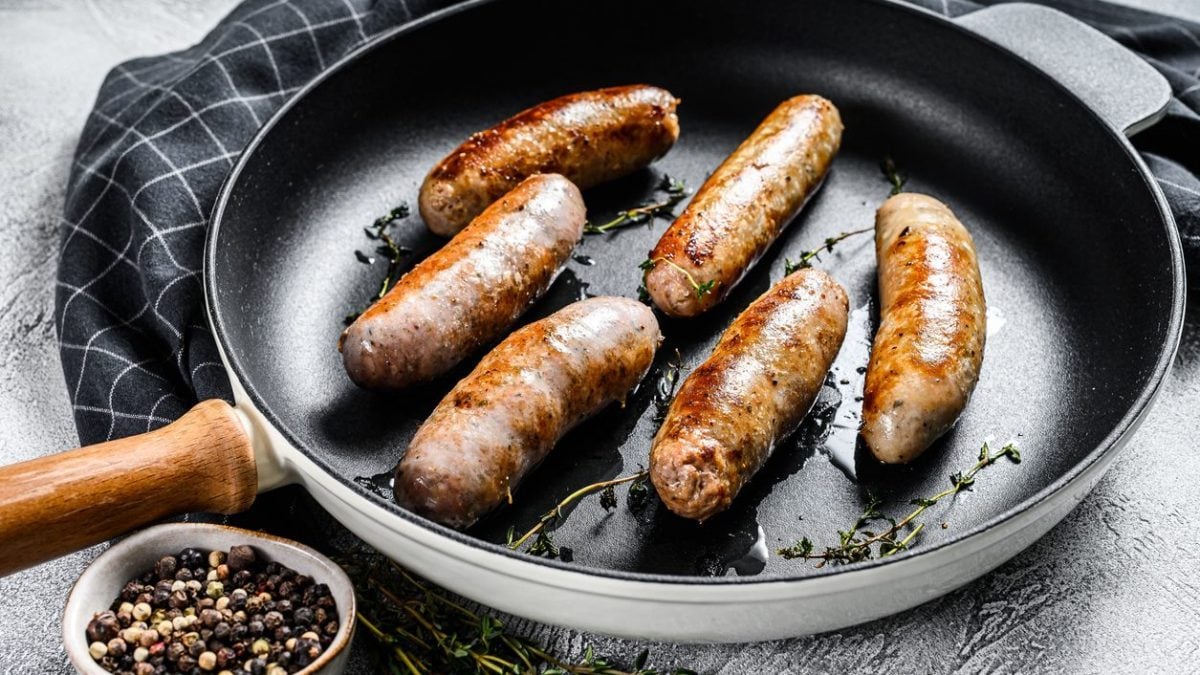
Cheap, convenient, and tasty: sausage is one of the most popular cured meats, easy to find at grocery stores and butchers. It's traditionally a pork product made from lean and fatty parts (lard or pancetta) of the pig, minced to a medium-coarse grain and enriched with spices and herbs, such as fennel. Unlike salami, once the minced meat is transferred into the casing, there is no curing process: sausage is a fresh cured meat, which spoils quickly and should be consumed within a couple of days after purchase. Fortunately, it's the star of many recipes originating from the rural world, such as biscuits and sausage gravy, smoked sausage with beans, or andouille sausage. But that's not all: sausages are also excellent on their own, pan-fried, grilled, or on the griddle —cooking methods that enhance their juiciness and crispiness if done properly, otherwise the risk is that the meat will be dry and flavorless. Let's see what the most common mistakes are, so we don't make them again.
1. Cooking Cold Sausage

Let's start with a tip that's always recommended with meat and also applies to sausage: avoid cooking it cold, straight from the refrigerator, but let it acclimatize. This way, it will cook more evenly inside and out, without triggering thermal shock when exposed to heat.
2. Getting The Temperature Wrong (Again)

Sausage tastes delicious when the outside is lightly browned, while the inside remains tender and juicy. To achieve this effect, the initial cooking must be lively: so make sure the pan is very hot, so as to obtain a good browning, and then you can lower the heat. Grilled sausage, on the other hand, needs coals that are neither excessively hot nor too close together, or the inside risks remaining raw and the rest burning.
3. Adding Oil or Butter

Be careful with the seasonings. Being a fresh pork sausage, its composition includes variable percentages of fat, which average between 20% and 30%. The latter serves to maintain the softness and flavor and melts during cooking. Adding a drizzle of oil or butter can weigh down the recipe, both gastronomically and calorically.
4. Not Turning It During Cooking

When a sausage is cooked to perfection, it means it has received heat evenly: if in stewed versions it is immersed in a liquid that covers it completely, it can even be forgotten in the casserole dish, but this is not the case when cooking on the grill, in a pan or on the griddle, where it is better to turn it regularly on each "side" to obtain an even browning.
5. Always Trying to Eliminate Fat

Another common mistake arises from trying to make the sausage lighter, for example by boiling it in water, piercing the skin. If you have a high-quality product, removing the fat can ruin the flavor and final texture of the sausage, particularly by making it drier and more bland. Do you prefer to tone down the fattiness? Then use some tricks that allow you to keep the dish tasty: for example, deglaze with white or red wine or beer, or add an ingredient that keeps the meat moist, such as cabbage, broccoli rabe, or a mix of summer vegetables like tomatoes, eggplants, zucchini and peppers depending on the season.
6. Salting Excessively

Adding salt to foods while cooking is a natural gesture, but with sausage, it's not strictly necessary or should be done sparingly. We've seen that, since it's a cured meat, it's already seasoned during the preparation of the dough: adding more salt risks making the dish too salty.
7. Not Considering Cooking The Sausage Open

The sausage doesn't necessarily have to be cooked whole: if you have a sausage with a rather large diameter, you can cut it lengthwise with a sharp knife and then open it like a book. Place it on a hot griddle or grill, meat side down. The result? Quicker cooking times, even browning, and a pleasantly crispy surface: try it in a tasty sandwich.
8. Pricking It

Let's leave the most common doubt for last: whether or not to prick the sausage skin. We see recipes that always recommend piercing it, others that recommend the opposite, and still others that recommend piercing only when cooking is almost complete, to allow excess fat to escape. The tendency, to best appreciate it, is to leave it intact, especially when it comes to cooking methods like the one we're considering: in particular, in grilled sausage, if the casing is pierced, the fat is completely lost, risking falling onto the embers (causing sudden flames) and making the meat too dry.
;Resize,width=767;)
