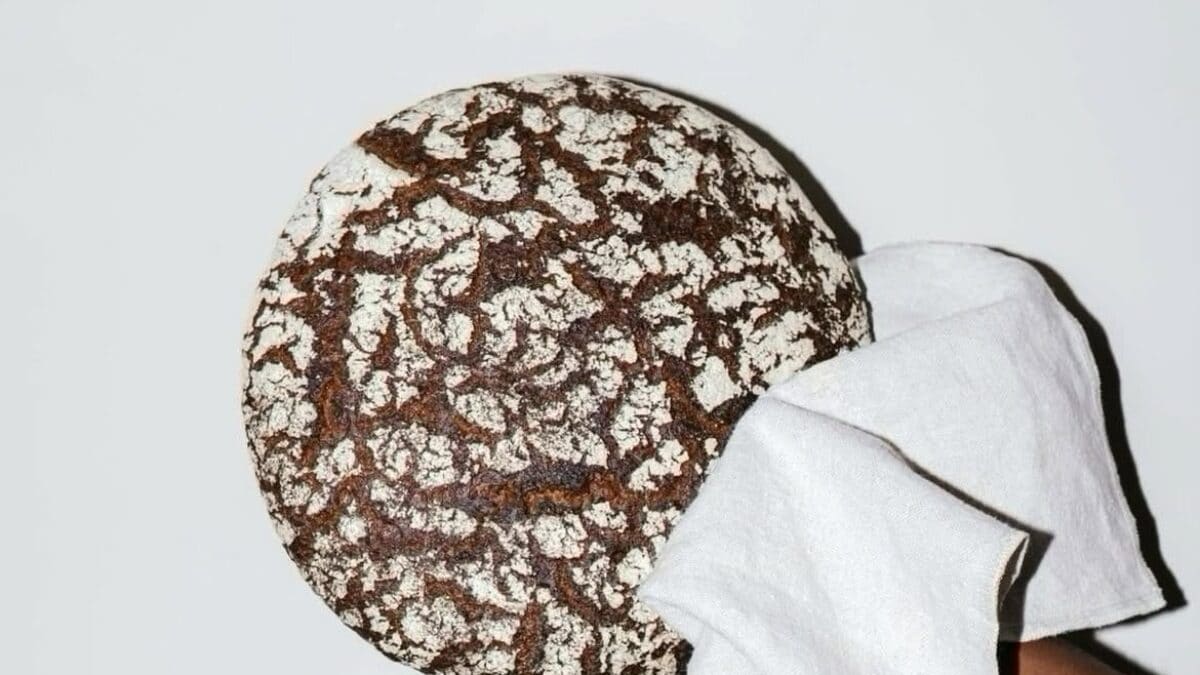
In the United States, and in New York in particular, the word "exaggerated" has long since lost its meaning: a cheese pizza can reach $40, and a corn dog, a breaded sausage on a stick, can reach $28. At this point, the question arises: what is the ultimate limit of reasonable pricing? The answer came last week from Lafayette Street, where a loaf of rye bread cost $60. Bread, the food that by definition should be affordable for everyone, has ended up joining the list of things in the Big Apple that cost more than seems reasonable. The most surprising part of the story is that customers aren't running away. Those who witnessed the opening tell of curious people leaving the store, loaf after loaf, as if the price were part of the attraction. Before crying foul, however, it's worth understanding what we're talking about.
Who Are the Austrians Behind Rye Bakery
The shop is called Rye, and is located at 285 Lafayette Street in Manhattan. Behind the sign is Martin Auer, a baker of Austrian origin, who opened his first American location in New York. Working alongside him is his son Tim, who manages the project with him and is tasked with modernizing the shop's communication. The stated philosophy is to take baking to the next level, where craftsmanship and patience matter more than speed.
Why It Costs so Much and What Rye Bread is Made Of
Let's start with the object. The loaf is round, low, hand-shaped, and weighs about a kilo and a half. The crust is not scored, so the surface remains flat and mottled brown and white, so much so that it reminds some people of a Christmas cake. The ingredients can be counted on one hand: organic rye flour imported from Austria, water, and salt. There is no sugar, seeds, or spices, which often appear in New York breads. Tim Auer likes to say that there is another ingredient, and it can't be bought: time.
Time, in this case, is a lot. The sourdough starter, which the family claims has been around for over fifty years and arrived in New York directly from Austria, takes about a day to prepare. The dough is then kneaded, left to rest, shaped, and risen again, and each loaf matures naturally for about 24 hours. Baking in the oven then takes about seventy minutes. It doesn't end there, because freshly baked bread is still too moist inside and must rest for at least eight hours on wooden racks before it can be sold and cut without making a mess. At home, the Auers assure, it keeps well for up to six days. The resulting loaf has a slightly nutty, malty flavor, almost sweet without being quite so.
The Austrian entrepreneurial family explains that the $60 sums up the cost of the finest ingredients, the manual labor, and the operating expenses of a business in the heart of one of the most expensive cities in the world. But since the Auers know that not everyone is willing to spend that much, they also offer a half loaf for $30 or a quarter for $15. Those who just want to sample can order a single slice with one of fourteen sweet or savory toppings: butter, chives, or fish roe (an addition that can cost up to $14). In between, there's the liptauer, an Austrian cream cheese colored with paprika, for $8, and even a sandwich with peanut butter and Viennese jam, for $6. For those who want to be a true American, the pastrami is a must.
Social Media Success, Among Curious People and Critics
A $60 loaf of bread is the perfect fuel for online discussions, and indeed it's been a hot topic. Images of the flat, speckled loaf are circulating mostly on Instagram, fueled by the curiosity of those who want to see the most expensive bread in town with their own eyes. Not all comments are enthusiastic. One user wrote that they would never pay that much for a loaf, and another observed that bread should be humble, something to be shared and not displayed. It's the classic debate that accompanies any luxury product applied to an everyday food. However, judging by the people queuing, the controversy doesn't seem likely to slow down sales—quite the opposite.
;Resize,width=767;)
