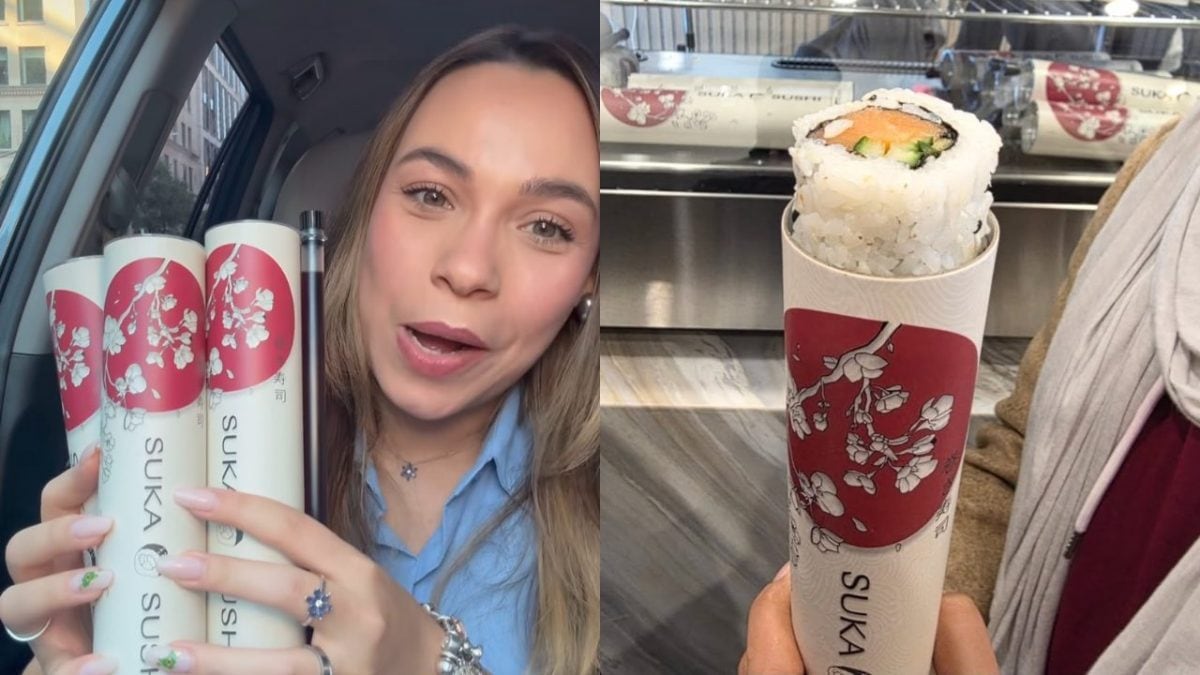
Social media has the power to launch and spread trends at lightning speed, and the latest trend taking the web by storm is pop-up sushi. Originating in New York City and recently landing in other countries abroad, this trend transforms one of the world's most famous dishes into a practical and instant on-the-go food, enclosed in a cylinder and consumed like a cylindrical popsicle. While this demonstrates the creativity of modern marketing, it's also impossible not to see how this stunt undermines an art, a millennia-old tradition, which is thus reduced and sold off as an object of frenetic, social-media-dependent consumption.
Why Pop-Up Sushi Works, And Why It's So Popular
The pop-up originated in the United States, where people are constantly searching for new things at a frenetic pace. The idea, specifically, came from the kitchen of Suka Sushi, in New York City. The restaurant now makes this dish its flagship product, with many influencers flocking there to try it. "Sushi like you've never seen it before," they write on their website. "It's worth the wait," they continue, given the incredibly long lines you have to stand in to try this latest innovation.
But how does the pop-up actually work? It's a cardboard cylinder containing a single, whole roll of sushi. At the bottom, there's a tube of sauce (mostly soy) that acts as a piston: by pushing it upwards, the product slowly comes out of the package, just like a popsicle, and is simultaneously seasoned with sauce. No chopsticks, napkins, or plates: from this point of view, the pop-up is perfect for eating while out and about. The strength of this new social media trend lies precisely in its practicality and accessibility: people are going crazy for the possibility of enjoying a much-loved dish immediately, without sitting at a table, waiting for service, or spending (much) more money in a restaurant. Sushi, therefore, loses its solemnity and becomes a quick and economical solution for a quick lunch or snack. This convenience, however, comes at a high cultural cost: the cheaper and quicker sushi is, the more it disconnects from its essence.
From New York City to Global Supermarkets
Sushi itself is not a cheap alternative, as it is primarily made from raw ingredients that must be handled precisely and in accordance with rigorous rules. In this sense, the price of this pop-up could already be a warning sign regarding the true quality of the product, given that it is sold in supermarkets for less than 10 dollars. The most painful aspect for fans of Japanese culture, however, is the total debasement of gastronomic culture, which is stripped of its authenticity and placed inside disposable packaging. Eating the pop-up, in fact, means nullifying the sacredness of the chef's preparation, but also ruining the relationship between food and those who eat it.
In this way, sushi ceases to be an experience and becomes a soulless fast food, a toy that sacrifices quality and history in favor of mass consumption and digital entertainment. In fact, forget about Japanese tradition when you eat the new pop-ups: not only because of the way sushi is served, but also because the types of rolls that best lend themselves to this trend are all Western reinterpretations, from the California roll to the shrimp mango, a very popular combination that combines the saltiness and texture of shrimp with the sweetness of mango.
;Resize,width=767;)
