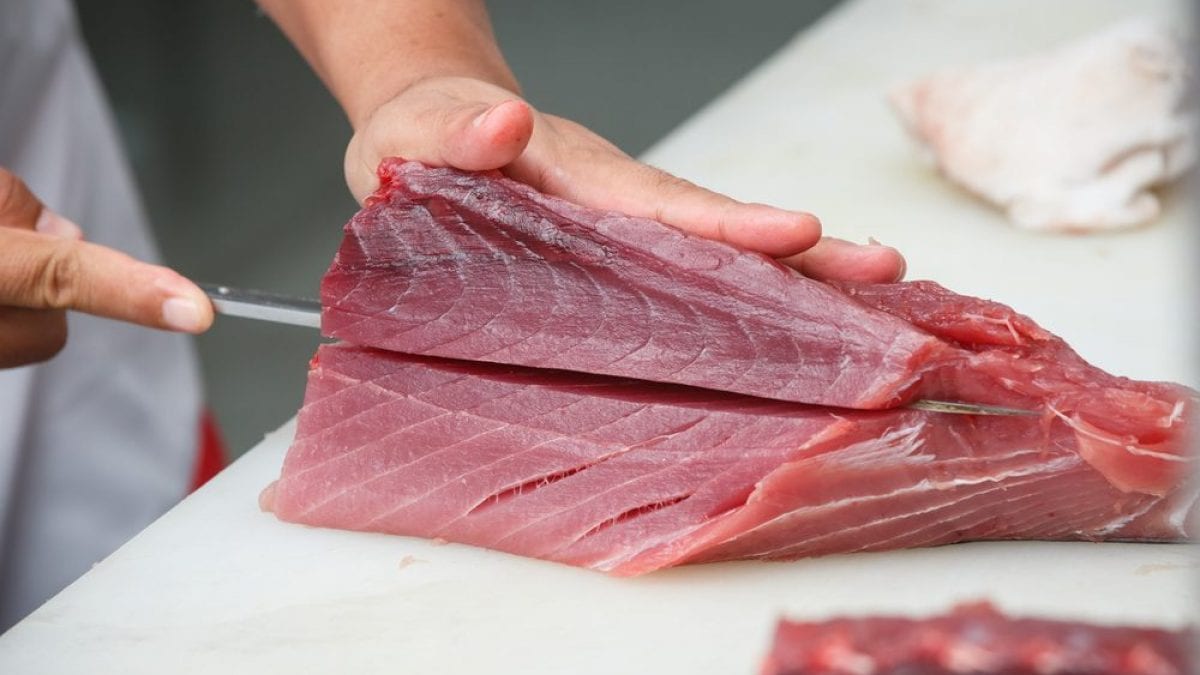
Tuna is one of the Mediterranean's iconic fish, especially red tuna, which traditionally features in typical Japanese and Italian dishes, the areas where tuna fisheries operate most. The tuna that reaches tables throughout the U.S., fresh and canned, comes in several varieties: the two most common are yellowfin and skipjack tuna, found in the waters of the Atlantic, Pacific, and Indian Oceans.
Tuna is commonly referred to as “the pig of the sea” because practically all its parts are used, from the renowned belly to the offal, starting with the prized bottarga. Its anti-waste nature is also reflected in its industrial processing: what is not canned in the classic tuna in oil, in fact, is increasingly used for other productions. According to data from ANCIT – the National Association of Fish Canners and Tuna Fisheries – tuna is a perfect example of a circular economy: meat scraps can be used in quality pet food or to make surimi, while bones, skin and tail are excellent sources of omega-3, protein and collagen, so they can be diverted towards pharmaceutical products, cosmetics or as food supplements. Let's discover all (or almost all) of the parts of tuna that we can eat and use.
1. Belly(or Ventresca)

Belly is one of the finest cuts of tuna, derived from the tender, fatty muscle bundles of the belly. It can be enjoyed fresh or preserved in oil: in both cases, it is enhanced in recipes that require no preparation, such as thinly sliced in sushi and sashimi, or simply pan- seared.
2. Fillet

This term refers to the lean parts of the fish from the abdomen and flanks, reaching just below the back. This is a premium, tender, and flavorful meat that is primarily cut up for fresh consumption, sold in slices to be cut into "steaks" used to create dishes such as tuna steak, tartare, or carpaccio.
3. Tarantello

It's found in the lower abdomen and is one of the most prized cuts of tuna, less readily available than the previous two. It has a good balance between lean and fatty parts, making it tasty. It's mainly packaged in oil, in tins or glass jars, mostly handcrafted: a precious ingredient for enhancing pasta and couscous, showcasing the quality of the raw material. When dried, it's called mosciame, also known as "sea bresaola."
4. Back

The meat extracted from the dorsal part of the fish is lean and flavorful, but less valuable than the other types we've just discussed. It's primarily used to make canned tuna, perfect for inexpensive, everyday recipes (like rice salad), or creative and delicious recipes like meatballs, meatloaf, stuffed tomatoes, rolls, and canapés, where the tuna is easily combined with other ingredients (like ricotta or mayonnaise) for appetizing fillings.
5. Cheeks

The cheeks, located just under the eyes, are a component of tuna that tends to be overlooked in home cooking because it's less well-known. However, fish lovers, chefs, and those who have lived with it for a long time know that it's a delicious piece of fish, with incredibly soft flesh. They can be used to make succulent ragùs, or sliced as the Japanese prefer, making sushi and sashimi.
6. Eyes

In the U.S., tuna eyes (and fish in general) aren't eaten, but in other countries they're considered a true delicacy. This is the case in Japan, where tuna eyeballs are called medama and are served as an appetizer or side dish: they're stewed or lightly seared, but they're also served raw, sushi-style. Their flavor is reminiscent of octopus and squid, while their texture is chewy.
7. Head

The cheeks and eyes are part of the head, but they are not the only part you can recover if you buy the whole fish. In fact, there are many "offal" here, such as the throat, the rump, the jaw, or the frontal caps, which are generally used in sauces, soups, and condiments as flavorings. The whole head itself, moreover, is excellent for making stock, broth, or fish stock. As a waste product from industrial processing, however, through its pressing it is possible to obtain fish oil, rich in omega-3, flours for animal feed, protein concentrates for supplements, or substances for cosmetics.
8. Tail's End

The tail refers to the entire rear section of the tuna and is divided into the black tail (the upper part) and the white tail (the lower part). It is a fibrous part, therefore less tender than the fillets, which lends itself to long cooking: the most famous dish featuring it as the main ingredient is tuna Carlofortina style, with the fillet first fried and then gently cooked in tomato puree.
9. Innards

The dried heart, the stomach used to make tripe, the roe used to make bottarga, and the seminal fluid used to make lattume: these are just some of the tuna innards, prized leftovers from its more or less well-known processing methods. Bottarga is undoubtedly extremely popular, and thanks to its intense seafood flavor and ease of use (just dust it or grate it), it makes a gourmet pasta dish or a toasted appetizer.
10. Skin

When the fish is processed for canning, tuna skin becomes waste, not thrown away but recycled. Being rich in omega-3s, the oil is extracted from it, and it also becomes one of the ingredients for making edible gelatin. Furthermore, it is a good source of marine collagen, which can be used as a supplement or in cosmetic applications. When we buy tuna, we remove all the scales and clean the skin carefully, as it is also edible.
11. Tail and Fins

The tail and fins of the fish are not edible, but are among those parts used for other purposes. In particular, being composed of skin and muscle tissue, they contain marine collagen, the basis of many anti-aging products.
12. Fishbones

The bones are the bony structure of the tuna and can be used in cooking together with the head to make broth or fish stock, while on an industrial level, when they are not needed, they are ground into powder and sent to the pet food sector or as food supplements, given that they contain proteins.
A Bonus? Canned Tuna Oil!

It's not actually a part of the tuna, but we include it as a "bonus." When you open the can or jar, you tend to throw the oil away because you think it's not good. In reality, if you buy a quality product, the oil it's stored in is also high-quality, rich in vitamin D and omega-3s: it can be used in a variety of ways, from condiments to marinades.
;Resize,width=767;)
