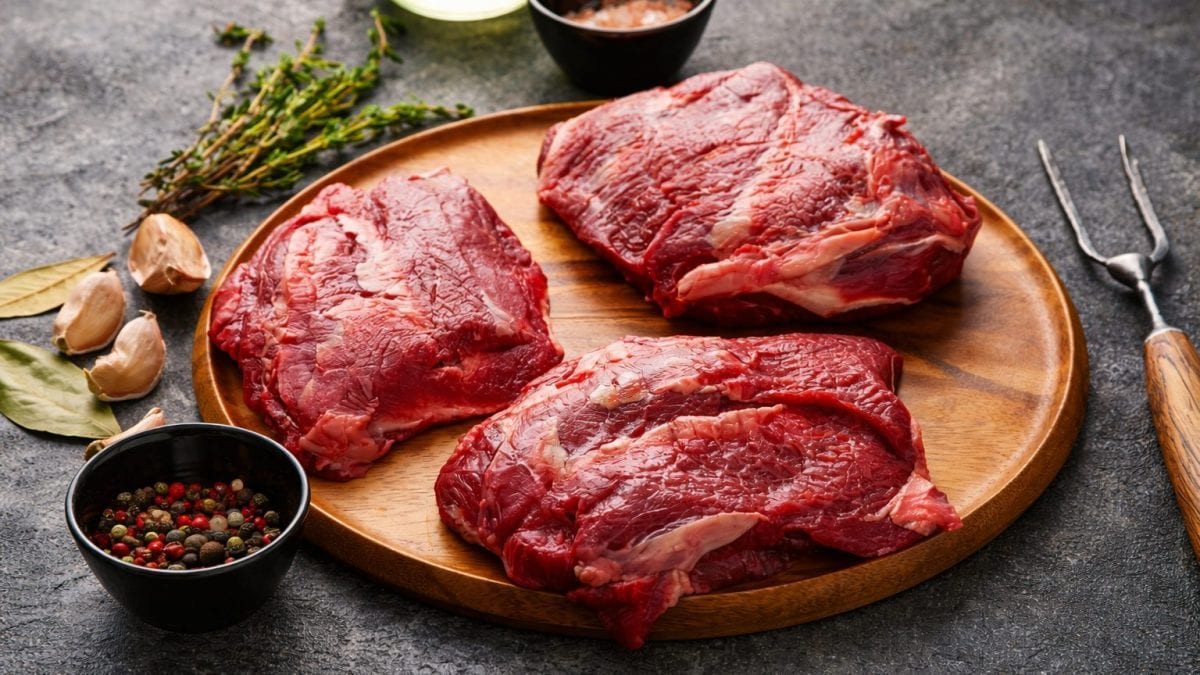
Among the less obvious but gastronomically interesting cuts of beef, beef cheek occupies a special place: it's the cut best suited to slow cooking. It's not tender when raw, it's not suitable for quick preparation, and it doesn't offer immediate results, but it's precisely this structure that makes it unique.
It's a highly processed muscle, rich in fiber and especially collagen, a protein that slowly dissolves during cooking, turning into gelatin. This process completely changes the consistency of the meat: from firm and tough, it becomes soft, almost melting, with a moist, enveloping texture.
For this reason, the cheek is one of the most used cuts in traditional cuisine for braised, pot roasts, and stewed dishes. In recent years, it has also been rediscovered in more contemporary cuisine, where it is valued for its ability to change structure and develop bold flavors. Here's everything you need to know about beef cheek: where it comes from, its characteristics, and how to best cook it.
A Third-Rate Cut Rich in Connective Tissue
The cheek is obtained from the masseter muscles of the bovine, those used for chewing. It is therefore a very active part of the animal during its life, characterized by a compact structure and a high presence of connective tissue. It is recognizable by its irregular shape, dark red color, and the evident presence of white veins, which indicate the quantity of connective tissue.
For this reason, it is classified in butcher shops as a third-category cut, along with other cuts intended for slow cooking. This definition does not indicate a lower quality, but simply a different intended use; these are cuts that require more time to express their full potential: the collagen, in fact, melts with prolonged heat and helps make the meat tender and juicy, as well as creating a slightly gelatinous consistency that is highly appreciated in stews.
Beef Cheek's Nutritional Profile
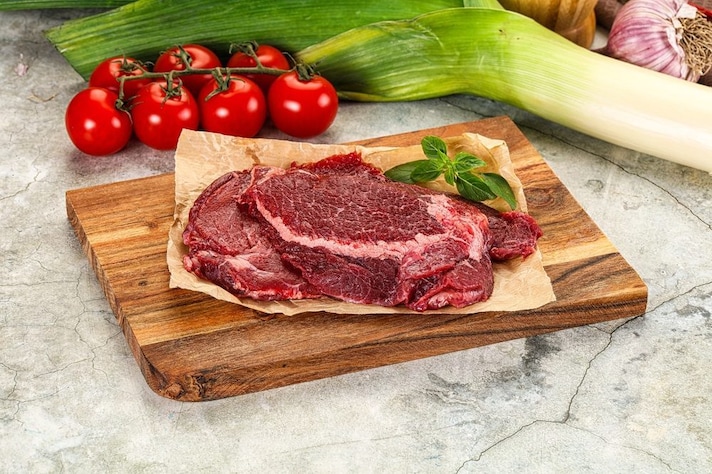
Nutritionally, beef cheek is a protein-rich meat, containing approximately 18–20 grams of protein per 100 grams. The fat content is higher than leaner cuts, but it's important to consider the significant presence of collagen, which transforms during cooking and contributes to the final texture of the dish. The average calorie intake is around 180–220 kcal per 100 grams. It's also a good source of heme iron, zinc, and B vitamins, particularly vitamin B12.
How to Cook Beef Cheek
Beef cheek is a cut that thrives with slow, long cooking. The gentle heat allows the collagen to melt, making the meat tender and juicy.
1. Braised and Pot Roasted
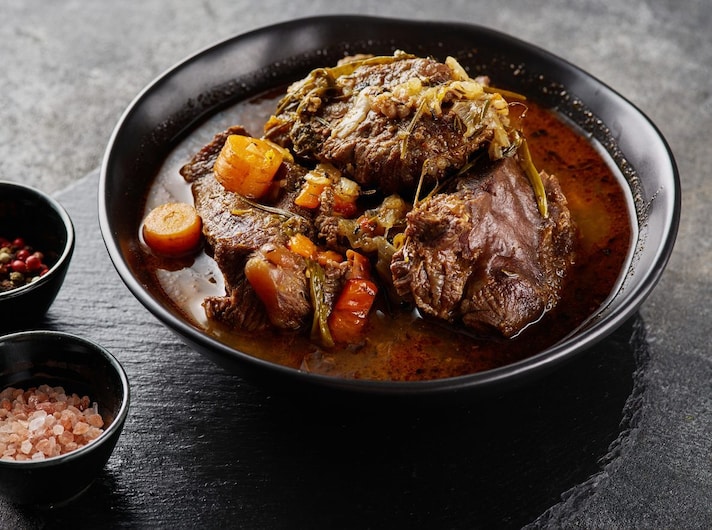
The most classic preparation is braised: the cheek is slowly cooked in a liquid, such as red wine or broth, along with vegetables and herbs. Cooking must be gentle and prolonged (about 3–4 hours), to allow the collagen to dissolve completely. The result is a very tender meat, which flakes easily and binds with a thick, flavorful sauce.
2. Red Wine Cheek
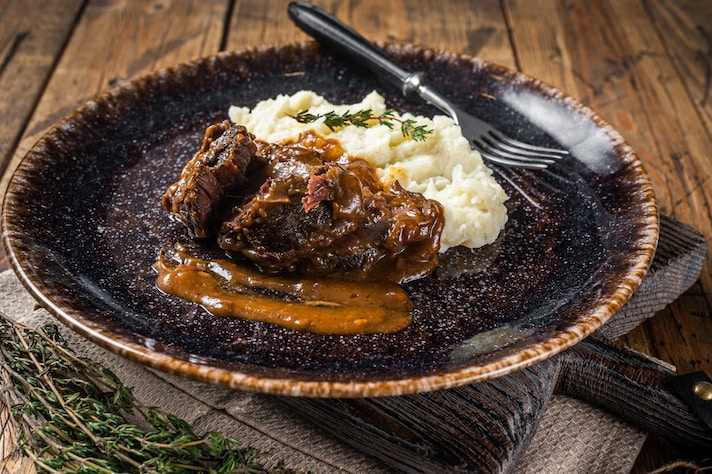
One of the most common versions involves cooking in red wine, often with a strong structure. In this case, the meat absorbs the wine's aromas and develops an intense, complex flavor. This is a typical traditional dish, but also widely used in restaurants.
3. Low Temp Cooking
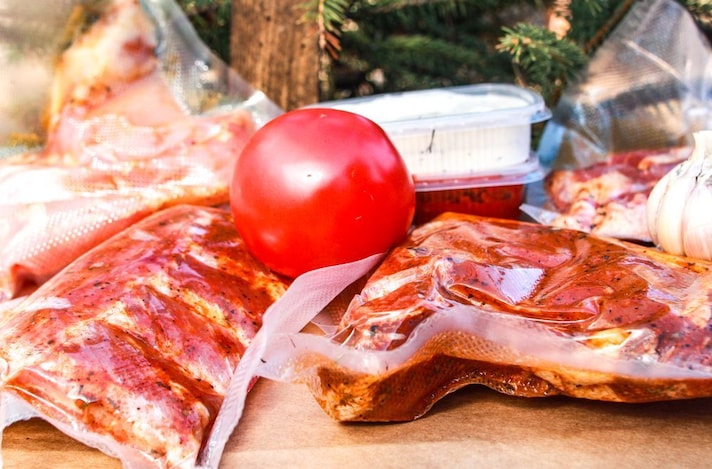
In more modern settings, the cheek is often cooked under vacuum at low temperatures: this method allows for better control of the collagen transformation and obtains a very uniform consistency. It is then usually quickly browned to create a light crust on the outside.
Differences With Other Braising Cuts
The cheek is often compared to other cuts suitable for slow cooking, but it has some important differences. Compared to the rump or the top blade steak, it has a higher amount of collagen, which makes it softer and more gelatinous once cooked. Compared to the shank, it contains no bone or marrow, but offers a more uniform texture and firmer meat. In general, it is one of the cuts that undergoes the most noticeable transformation during cooking.
How to Choose Beef Cheek From The Butcher
Choosing a good beef cheek requires more than just a quick glance: it's a small exercise in attention, almost like reading a map made of fibers and colors.
- The color should be a deep, uniform red, vibrant but not artificially bright. Avoid shades that are too dark or brown, which could indicate meat that isn't very fresh. At the same time, a red that's too bright and shiny could be the result of processing or recent oxygenation.
- The surface should feel firm and springy to the touch, never slimy. A slight dampness is normal, but if the meat appears wet or weeps excessively, it's best to leave it as is.
- The white veins of connective tissue are the true hidden treasure: the more visible and harmoniously distributed they are, the more the cheek promises a slow and spectacular transformation during cooking. It's precisely that collagen that, as it melts, will give it a soft, almost creamy consistency.
- Also look at the marbling, that is, the small infiltrations of fat: they must not be excessive, but a balanced presence helps keep the meat juicy during long cooking.
- Value provenance: opt for traceable meat, preferably from local or certified farms. A good butcher will be able to tell you the story of that cut, and that's often where the difference lies between "any" cheek and one that melts like butter on your plate.
It's always best to choose meat that's been properly aged, as this natural process relaxes the fibers and improves both tenderness and flavor. Don't be afraid to ask your butcher how many days it's been aged: it's a question for connoisseurs.
Choose Beef Cheek if You Have To…
- prepare braised, stewed or pot roast dishes;
- obtain very tender meat after long cooking;
- create rich and structured dishes;
- cook at low temperature;
- enhance an economical but very tasty cut.
Don't Choose Beef Cheek If You Have To…
- cook quickly;
- prepare grilled meat;
- obtain thin slices;
- consume very lean meat;
- avoid soft and gelatinous consistencies.

