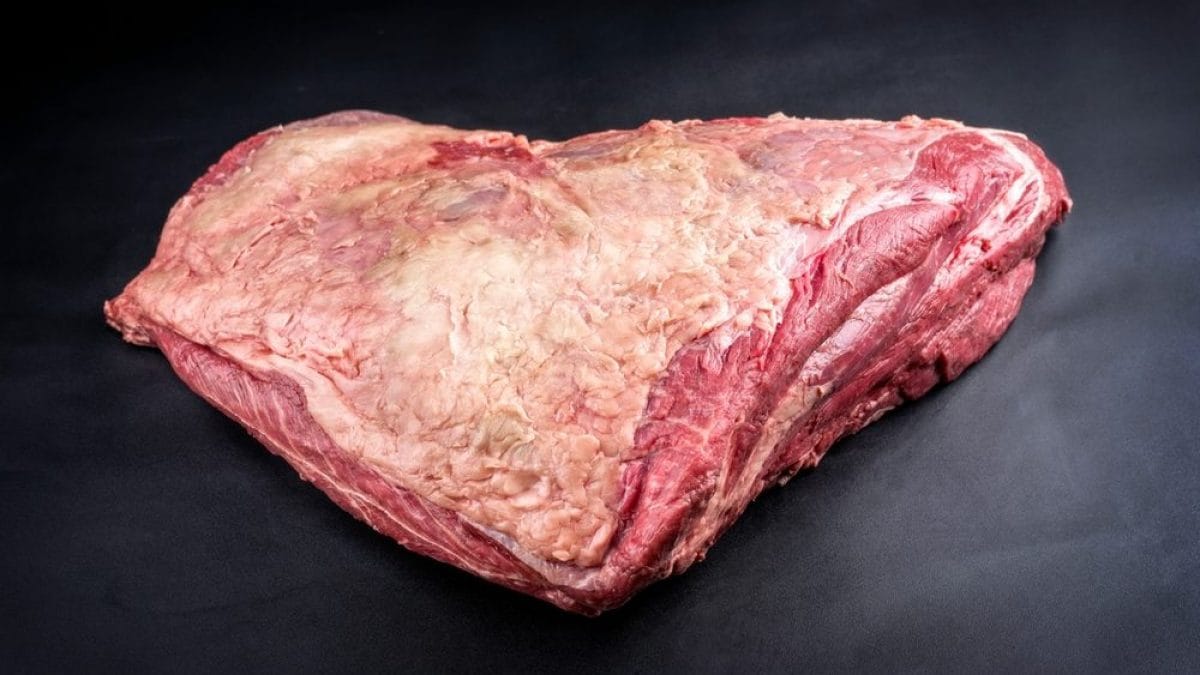
Also known as shoulder clod, chuck tender or blade chuck roast, the top blade is one of the most "intelligent" beef cuts. Lean but flavorful, neat in shape, with just the right amount of connective tissue, it is one of those cuts that combines flavor, practicality, and cooking yield, becoming the perfect ally for those who love slow but not overly rich cooking.
Of all the beef shoulder cuts, it is perhaps the most "gentle": it lacks the harshness of muscle, nor the fattiness of real beef, but maintains a surprising versatility, which makes it so popular in both home and professional kitchens. It is the ideal meat when seeking a balance between structure and tenderness: lean enough to be elegant, yet with that delicate collagen marbling that, melting gently, provides elastic fiber and full flavor.
Just like a well-constructed hat, this cut also has a regular, elongated, and rounded shape, which lends itself to precise slicing and even cooking.
A "Noble" Cut of Beef Shoulder
The top blade is obtained from the inner part of the shoulder of beef, veal, or young beef. Although classified as a second-rate cut, it is actually one of the most prized in the area: its fiber is compact yet regular, lean yet supple, with a connective tissue thread that helps the meat remain tender during cooking.
This fine marbling is what makes the difference: it's not a fatty cut, but a structure that, when cooked slowly, softens, transforming the meat into tender and juicy morsels. Compared to other shoulder cuts, it offers a finer chewiness and a cleaner flavor.
Top Blade's Nutritional Profile
The top blade is a lean cut, with a low fat percentage (4.6 mg per 10 grams) and a good supply of high-quality protein (20.3 mg per 100 grams). It is rich in iron, B vitamins, and minerals —especially sodium and calcium—which support energy and metabolism. These characteristics are common to shoulder cuts, but here they are enhanced by the regular structure of the muscle, which guarantees a superior cooking performance compared to other lean cuts.
While it doesn't have the amount of collagen typical of shank, it has enough connective tissue to improve flavor and tenderness without requiring excessively long cooking times.
How to Use Top Blade in The Kitchen
The top blade is a cut that loves to be slowly cooked: the more gently it is cooked, the more its internal marbling dissolves, making the meat tender, succulent, and naturally enveloping. It's perfect for recipes that require structure but not too much gelatin, flavor but not excess fat, and evenness but not toughness.
1. Stews, Braised Meats and Braised Dishes
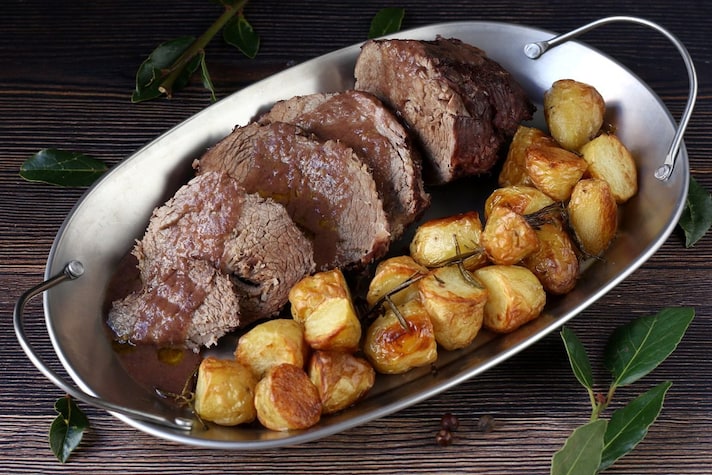
This is probably where the top blade comes into its own. Its natural balance of leanness and collagen makes it ideal for all dishes that require prolonged cooking in a casserole: rich stews, braised meats in red wine, and braised meats flavored with herbs, spices, and brown stock.
In culinary traditions, it's the star of stew, a slow and fragrant dish, often cooked for hours until the meat yields simply by the pressure of a spoon. Perfect on winter Sundays, when the kitchen smells of wine, spices, and warmth.
2. Soft Stews
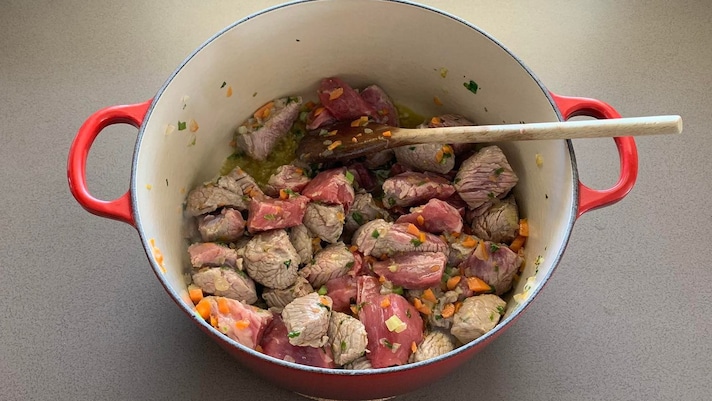
Cut into even cubes, the priest's hat holds its shape without falling apart, while remaining incredibly tender. The result is a soft and juicy stew, ideal paired with potatoes, seasonal vegetables, or legumes. Thanks to its uniform texture, each bite is firm but not dry, perfect for creamy or melt-in-the-mouth recipes.
3. Escalopes and Morsels
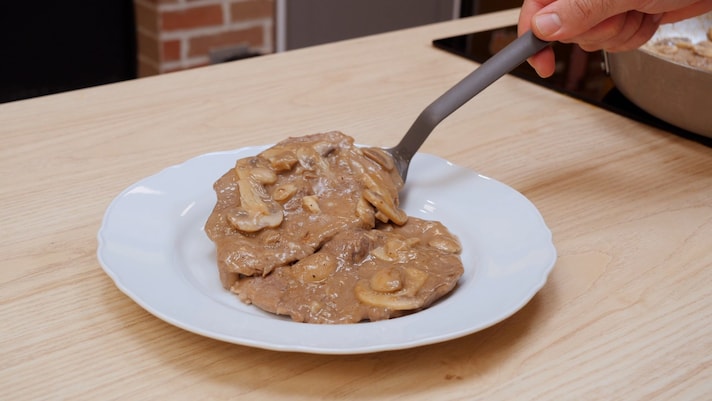
Although it was created for a long cooking time, the top blade can also be used in quicker preparations. Sliced or cut into bite-sized pieces, it is excellent for escalopes, light sautés, or pan-fried dishes when you want lean but not dry meat. Its internal marbling, even with short cooking times, helps maintain a minimum level of juiciness, offering a balanced and tastier result than other lean cuts.
Differences Compared to Other Similar Cuts
The top blade is often compared to cuts such as the royal, bell, or muscle. Compared to these, it stands out because it is leaner than the royal, but almost as flavorful. It is more tender and evenly sized than the muscle, which has coarser fibers. It is more balanced than the bell, less fatty, and smoother in the mouth. It is the perfect cut when you want meat that melts but is not gelatinous, rich but clean in flavor.
How to Choose Top Blade at The Butcher
A quality top blade can be recognized at first glance, because it has precise characteristics that directly influence its taste, cooking resistance and final softness.
The first thing to look at is the color of the meat: it should be a vivid red, bright but not artificially shiny. A uniform color indicates good aging and fresh, non-oxidized meat.
To the touch and appearance, the fiber should be compact and regular, without coarse filaments or excessively frayed areas. It is precisely this orderly texture that allows the top blade to be cooked for a long time while maintaining its structure, without becoming dry or leathery.
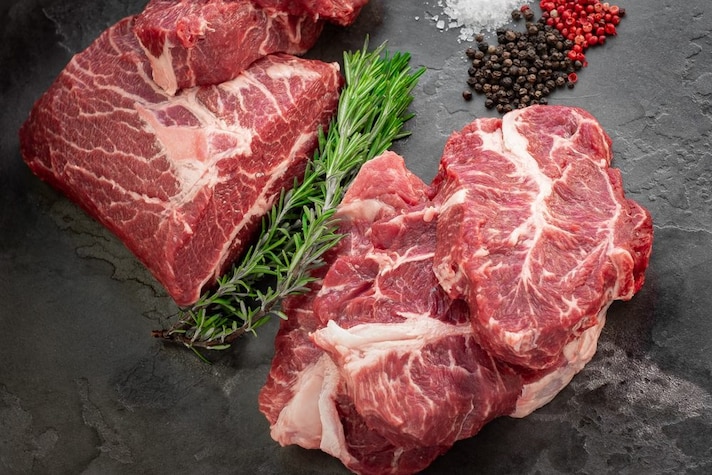
Another key element is its light, thin, and well-distributed marbling: this is the natural collagen that runs through the cut. When this marbling is uniform and continuous, it means the meat will have that characteristic ability to soften and flavor during slow cooking, releasing juiciness without turning into excessive gelatin.
Shape is also a sign of quality: a good top blade should be slightly elongated, with a slightly rounded and regular center. This harmonious profile allows for a balanced cut and even cooking, avoiding overly thin areas that would tend to dry out.
Choose the Top Blade If…
- you want to prepare braised dishes, stews or casseroles;
- you are looking for lean, juicy meat, not dry;
- you need a versatile cut, suitable both whole and sliced.
Don't Choose the Top Blade If…
- you want a very gelatinous and rich meat (in this case the shank is better)
- you need a cut that cooks very quickly (in this case, topside or rump is better)
- you are looking for a piece for grill or plate (in this case sirloin).
;Resize,width=767;)
