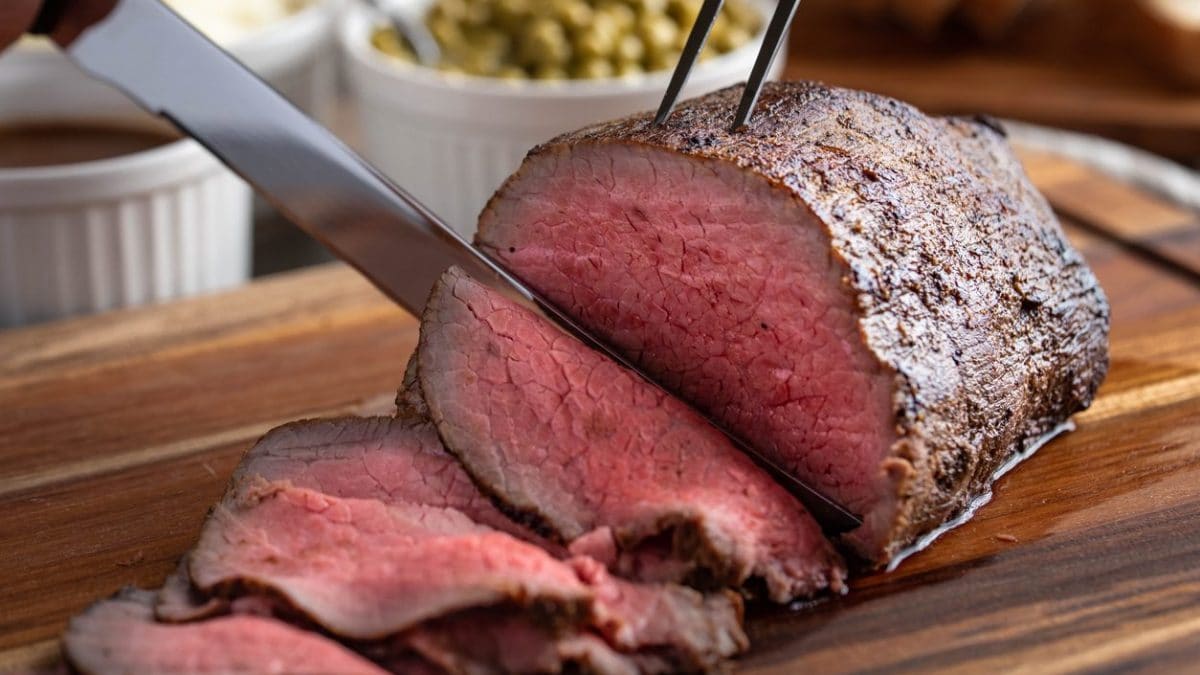
Roast beef is one of the great classics of cuisine, a seemingly simple preparation that truly belongs to the roast family: it is in fact a whole piece of meat cooked dry, in the oven or in a casserole dish, without added liquids or with minimal quantities.
Originating in the Anglo-Saxon tradition, roast beef is prepared exclusively with beef: it is precisely this that guarantees the structure, tenderness, and typical yield of this preparation. Other meats, such as pork or veal, can be roasted but yield different results in terms of consistency, flavor, and cooking behavior, and do not fit the classic definition of roast beef.
Furthermore, roast beef is distinguished by a shorter, more controlled cooking process, which keeps the inside pink and juicy. For this very reason, the choice of cut becomes even more important: not all parts of the bovine are suitable for quick and even cooking.
Why It's Important to Choose the Right Cut
As with any roast, the quality of the result depends largely on the raw material. In the case of roast beef, however, mistakes are more costly: shorter cooking times and more precise temperatures leave no margin for "recovering" a bad cut. The ideal piece should be:
- tender, because cooking is not long enough to soften tough fibres or connective tissues: if you start from a stiff cut, the result will inevitably be stringy;
- compact and regular, so that it cooks evenly over the entire surface, avoiding overcooked areas and other raw ones;
- with a light marbling, essential for retaining the juices during cooking and keeping the meat tender even after resting.
Cuts that are too lean tend to dry out quickly, while those richer in connective tissue (such as rump or muscle) are better suited to braising or stewing, where time helps loosen the fibers. These are, ideally, the best beef cuts for roast beef:
1. Sirloin
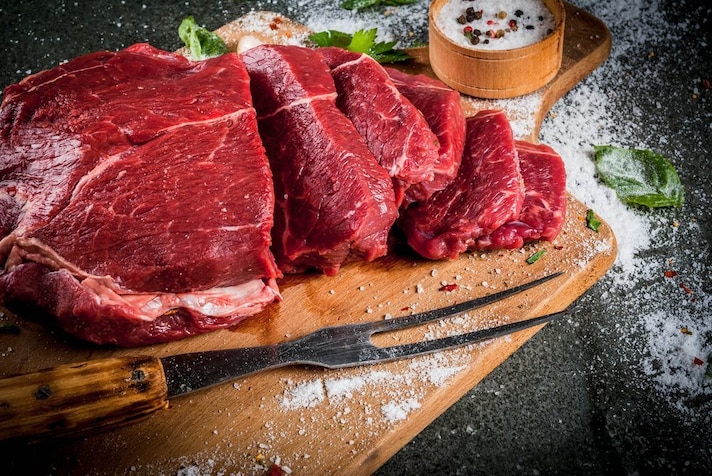
The sirloin is one of the most suitable cuts for roast beef: it has fine fiber, is naturally tender, and has a balanced marbling. This means that during cooking, it develops a good crust on the outside, while the inside remains soft and juicy. It's the ideal choice for those seeking a classic, elegant, and well-balanced result.
2. Rump

The rump is a versatile cut, slightly cheaper but still very good. It has a firm structure and good tenderness, with just enough fat to keep the meat tender without weighing it down. It's perfect for those who want a flavorful roast beef that's less "rich" than the sirloin.
3. Topside (Round)
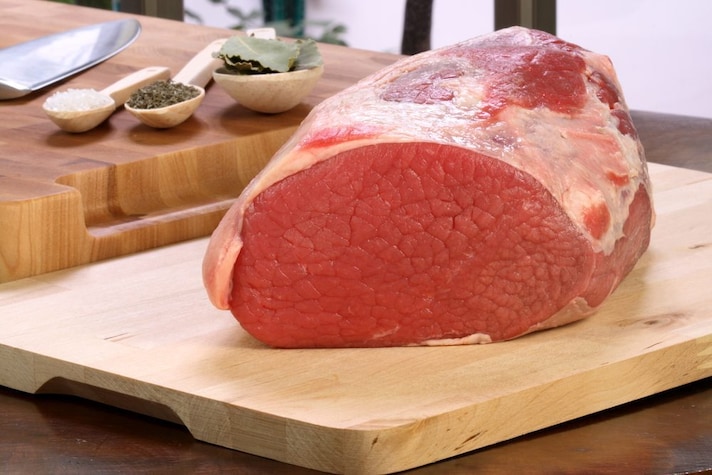
Beef topside, also known as magatello, is one of the most commonly used cuts in cuisine for roast-like preparations: it is very lean and has a regular cylindrical shape, allowing for precise, uniform slices. However, precisely because of its low fat content, it requires extremely careful cooking: even a small amount can lose its juiciness. It is especially ideal for roast beef served cold or warm.
4. Walnut

The nut represents a good compromise between leanness and juiciness: compared to the round, it is slightly more tender and less dry, while still remaining a fairly lean cut. It lends itself well to controlled cooking, offering a balanced and delicate result.
5. Flank
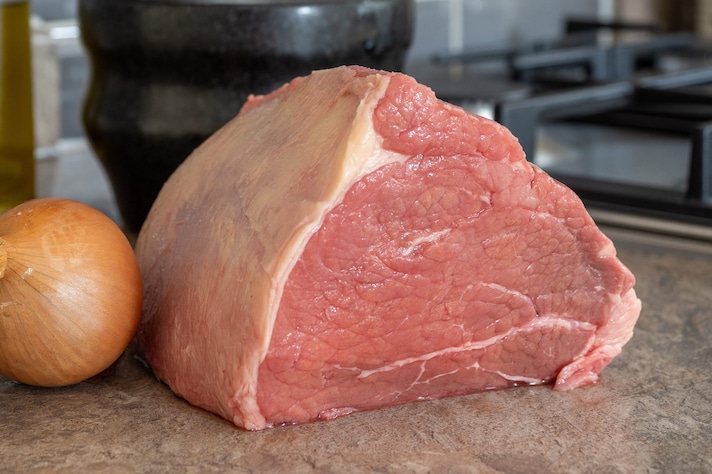
Flank steak is a lean, firm cut, often chosen for light preparations. It can yield excellent results in roast beef, but only if handled with care: thorough browning and short cooking are essential to prevent it from drying out. It's ideal for those seeking a lighter version.
Which Are Better, Lean or Marbled Cuts?
In roast beef, as with many roasts, the secret is balance: meat that's too lean tends to lose liquid quickly, resulting in a dry and less flavorful dish; conversely, meat that's too fatty can be heavy and less elegant on the palate, especially if served thinly sliced. The best solution is to choose cuts with moderate marbling: the intramuscular fat melts during cooking, contributing to keep the meat tender, improve the perception of juiciness, and develop more intense aromas. For this reason, sirloin and rump remain the most balanced choices in most cases.
How to Choose The Right Cut Based on The Final Result
Choosing the right cut isn't just a matter of technique, but also depends on the desired outcome. Tailoring the cut to the final goal allows for a consistent and successful roast beef, avoiding unbalanced results.
- For a classic, juicy, and pink roast beef, sirloin is the best choice: it guarantees tenderness, flavor, and a pleasant texture even when cooked rare or medium; rump is also a valid alternative, slightly more structured but still balanced.
- For compact, perfect slices, even when cold. The round steak is ideal thanks to its regular shape and compact grain: it allows for thin, precise slices, perfect for elegant presentations or for dishes best served cold.
- For a lighter, more delicate version, rump and flank steak are the best choices: they have less fat and a more delicate flavor, but require more attention to prevent the meat from losing its tenderness during cooking.
Tips for a Perfect Roast Beef
In addition to the choice of cut, success depends on a series of fundamental technical measures:
1. Bring the Meat to Room Temperature
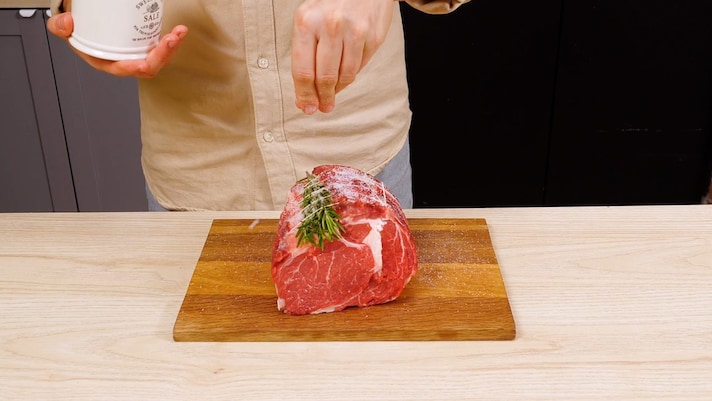
Removing the meat from the refrigerator at least 30-60 minutes before cooking helps avoid thermal shock. If the meat is too cold, the outside will cook quickly while the inside will lag behind, making it difficult to cook evenly.
2. Brown the Outside Well
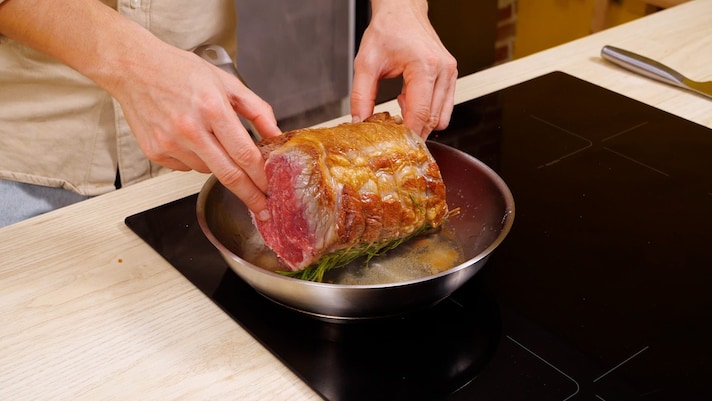
The initial browning is a key step: it occurs at a high temperature and allows the Maillard reaction to develop, responsible for the golden crust and intense aromas. It also creates a surface that helps retain some of the juices during subsequent cooking.
3. Check The Internal Temperature
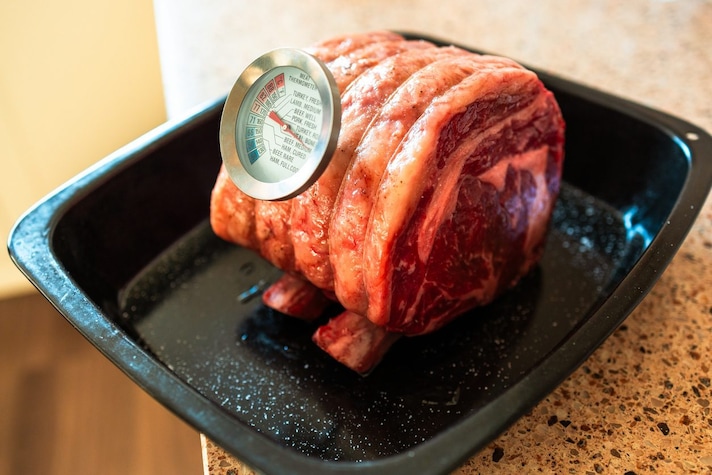
For roast beef, time is a guideline, but temperature is crucial. Using a cooking thermometer allows for precision:
- 118-122°F/48-50°C → rare, very pink and juicy;
- 131-136°F/55-58°C → medium rare, more balanced.
Exceeding these thresholds increases the risk of drying out the meat, especially in leaner cuts such as rump or topside.
4. Let the Meat Rest
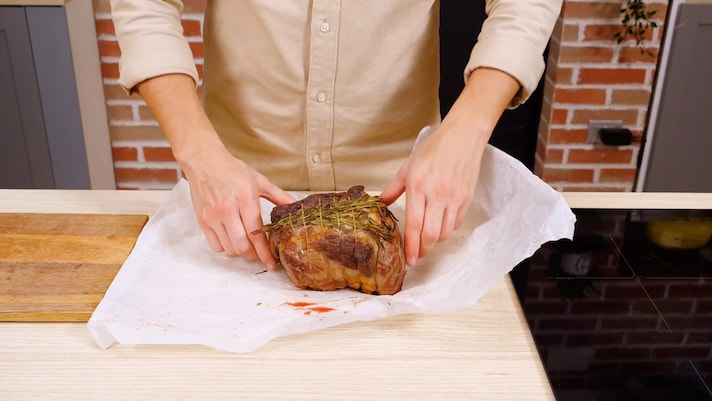
After cooking, don't carve the meat immediately: during the resting time (at least 10-15 minutes), the internal juices redistribute. If you carve it immediately, these juices will leak out, making the roast beef less juicy.
5. Cut Against the Grain
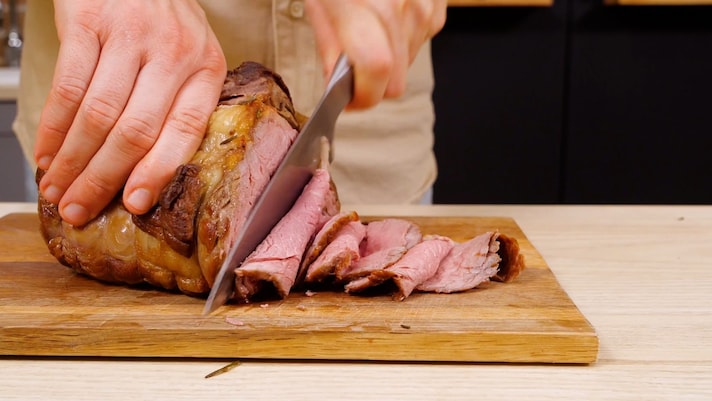
Meat fibers have a specific direction: cutting them in the opposite direction shortens them, that is, against the grain, making each slice more tender and easier to chew. This step is especially important with leaner or firmer cuts.
;Resize,width=767;)
