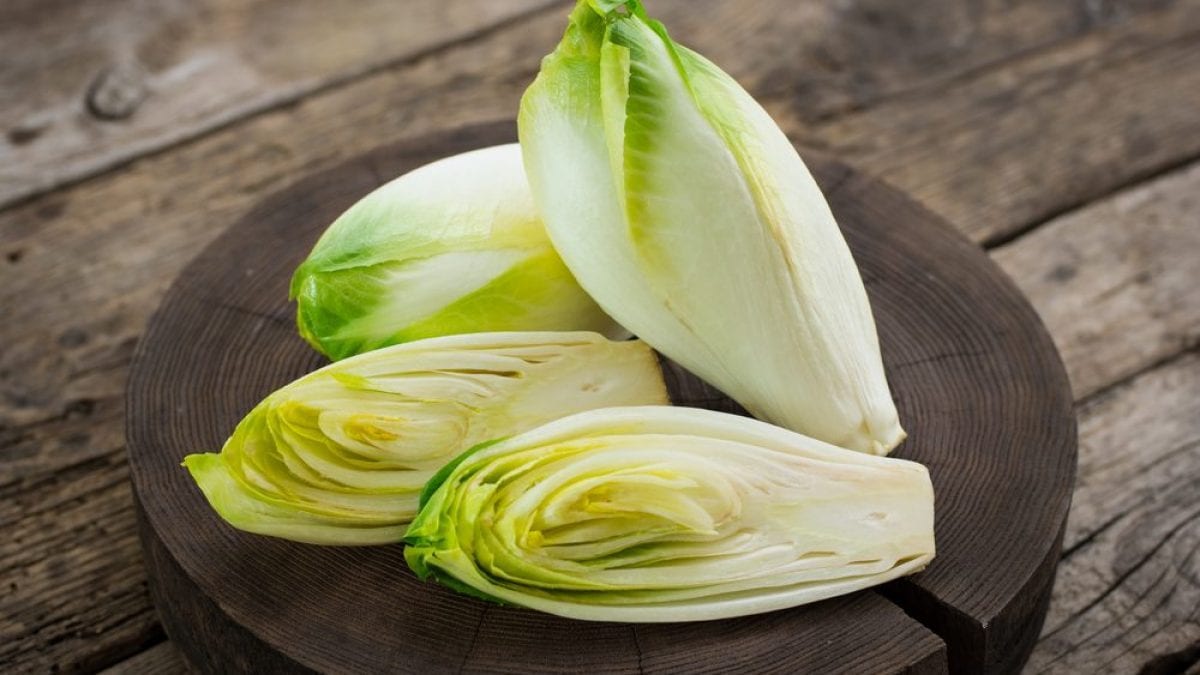
Of all the vegetables, few can compete with Belgian endive in terms of lightness, digestibility, and versatility. This particular type of chicory can be used in dozens of different recipes. Its merit lies in its deliciousness in every way —raw and crunchy, but also soft and cooked—and in its almost completely calorie-free nature and rich in beneficial elements for our body.
What is Belgian Endive?
Belgian endive, also known as Witloof or Brussels chicory, is a vegetable native to Belgium and belongs to the chicory family. It differs from radicchio and other members of the same species due to its broad leaves and white color with greenish tips, a result of the shoots growing in very dark environments. Its flavor, however, is the bitterness typical of chicory.
There's even a legend surrounding the origins of endive cultivation. The story goes that, in 1850, a Belgian farmer pulled hundreds of chicory roots from his land to prevent them from freezing during the winter and stored them in his cellar. At the end of winter, the man returned to the cellar and discovered that those same roots, stored safely in the dark, had produced tender, yellow sprouts. Curious, the farmer tasted them and was incredulous: they were tender, crunchy, and only slightly bitter, the perfect fresh vegetable to grow in the cold Belgian winters, when nothing else grows.
Thus began the cultivation of Belgian endive, which is in fact a winter vegetable. Its natural season runs from October to April, but today, due to the trend towards deseasonalization, it is increasingly sold year-round.

Belgian Endive's Characteristics and Benefits
Belgian endive is one of the lightest vegetables in existence: composed of approximately 95% water, it is also extremely low in calories, with 100 grams of raw salad containing only 15 calories, making it highly recommended for diets.
At the same time, however, endive is rich in fiber, which gives it a certain crunchiness and also helps create a good feeling of satiety. It is also rich in vitamins, especially A, B, and C, mineral salts and iron, while its sodium content is very low.
Precisely because of its richness, Belgian endive is excellent for our body in many ways: it can regulate the intestine, have a detox and diuretic effect, and also has a strong antioxidant effect, capable of counteracting cellular aging.
It is often recommended for those who practice a lot of physical activity, because the presence of calcium stimulates the contraction and natural development of muscles, and during pregnancy due to the presence of folic acid, essential for the growth of the fetus during gestation.

How to Use Belgian Endive in Cooking
Like all members of the chicory family, such as radicchio or escarole, Belgian endive has a slightly bitter aftertaste that makes it very tasty. A little tip to tone down the bitterness is to remove the small white cone at the base of the core.
It is an extremely versatile type of salad because every part of it can be eaten: it is a vegetable with practically no waste, and is excellent to eat both raw and cooked, which is why it lends itself to so many different recipes ranging from appetizers to side dishes.
Used raw, it's excellent for preparing rich mixed salads of all kinds, or to enhance its crunchiness, it can be used as a boat stuffed with fresh ricotta and dried tomatoes. If you prefer to try it cooked, you're spoiled for choice: for example, you can grill it and serve it as a side dish with meat dishes, or you can prepare gratinated and baked endive, a simple recipe with an aromatic flavor.