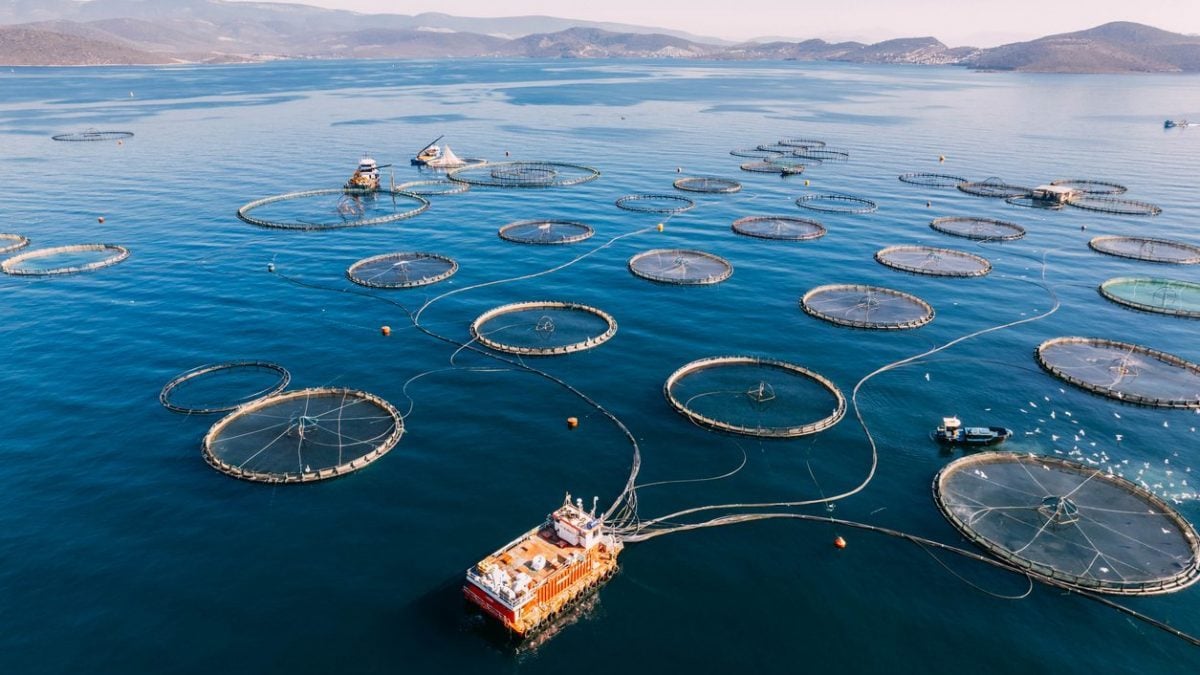
Salmon farming‘s long road to becoming sustainable is a path that will only be possible under certain conditions. In recent years, demand for salmon production has skyrocketed. Today, imagining eating at a sushi restaurant, an all-you-can-eat restaurant, or a poke restaurant without this fish is almost unthinkable. Gone are the days when salmon was considered a "bourgeois" dish, with the legendary pasta with cream that marked the 1980s.
Ultimately, however, how can we satisfy everyone's demand? The answer lies precisely in aquaculture, which, in recent years, according to the FAO's 2025 SOFIA report, has surpassed wild fishing in production (94.4 million tons versus 92.3 million tons from wild fish).
Large Industrial Impact
Nutritionally, salmon is beyond dispute: it's an excellent source of omega-3s, vitamins, and minerals. But are we sure that everything we eat is healthy and, above all, sustainable? As we've seen, aquaculture, while it can make food resources available to all, continues to present challenges. According to the UN, in sixty years, the world's population will reach nearly ten billion. Consequently, we will be two billion more than the current eight, and for this reason, the main question we ask ourselves is obvious: will food production be able to sustain the pressure of future demand? At this rate, the risk of a global food crisis is inevitable.

Aquaculture is an age-old practice: it originated 4,000 years ago in China and then spread to the rest of the world, becoming a fully-fledged global business. The food safety of farmed fish must be paramount when we eat farmed fish. Essentially, this type of production must be sustainable and thus contribute to the demand for seafood.

In 2021, an investigation into a salmon farm in Scotland caused a particularly high profile. Footage revealed the unhealthy environment in which Atlantic salmon, Salmo salar, the most commercially traded species, was raised. The horrifying images showed filthy waters filled with algae and excrement, with fish swimming in virtually a tiny space. The proliferation of parasites and diseases was so high that the salmon mortality rates were so high that they never even made it to market.
Towards Sustainable Salmon Farming?
The intensive salmon farming industry raises significant environmental issues, which is why it is undergoing a period of diverse initiatives and approaches. First, efforts are being made to regulate fish density in farms to reduce stress and disease. Research is underway to develop a more sustainable type of feed that reduces reliance on meal and oil: algae or microalgae could be a solution. Pollution should also be reduced through excellent wastewater purification systems and technological innovations, such as those for monitoring environmental conditions and fish health, should be maximized. This will facilitate efficient farm management.

But, in terms of animal welfare and environmental impact, what is the cost of the industry? We've seen how salmon farming has become a global economic force in recent years, providing ever-increasing jobs and meeting the enormous and ever-increasing demand. The industry's challenge must therefore be to evolve toward truly sustainable practices to minimize negative impacts and foster more responsible salmon production in the future.
;Resize,width=767;)
