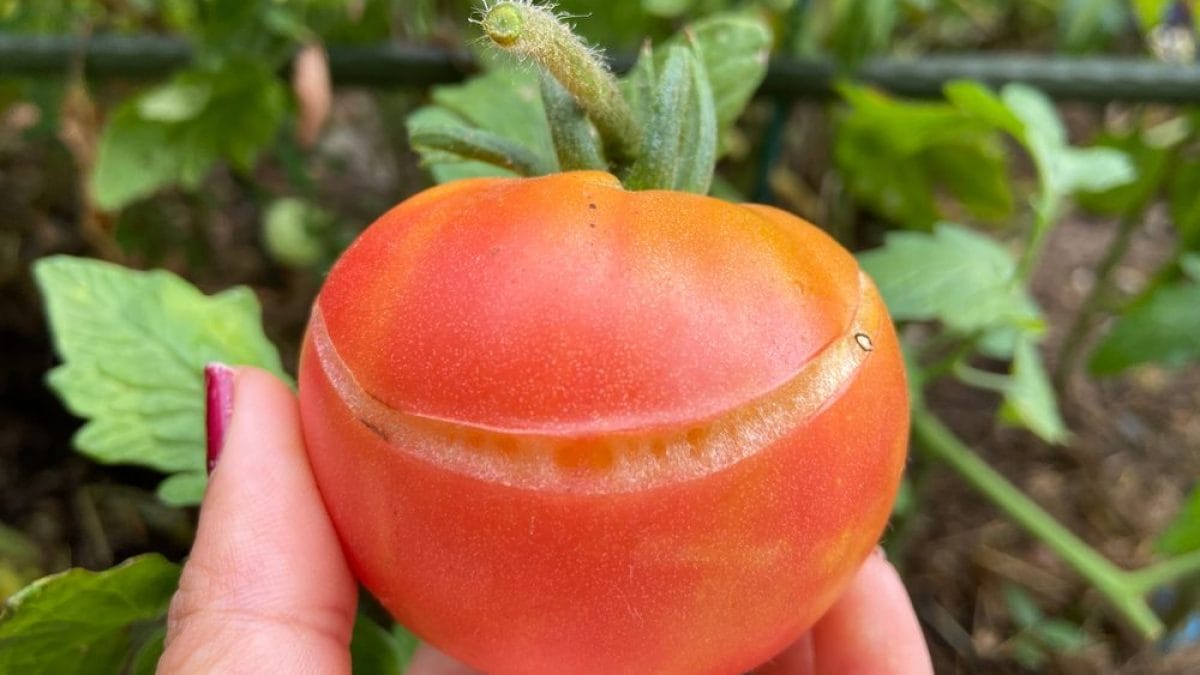
If you have a small garden where you enjoy growing tomatoes, or you're a regular buyer of this delicious and beneficial vegetable (or rather, fruit), you've undoubtedly encountered some aesthetic problems that are sometimes immediately obvious. Blossom-end rot is one of the most common, but we're sure you've also often encountered tomatoes with cracked skin: these are vegetables with a sort of whitish "scar" that separates the tomato in half, a bit like the lines on a tennis ball.
What is it? It's simply an aesthetic defect that can be caused by several factors, primarily incorrect watering of the plant. Let's say right away that you don't need to worry; the tomato remains edible because the cracks are merely a visual problem. However, in some cases, they could be deeper and lead to rot, so it's best to be careful. Let's take a closer look at the split skin phenomenon.
Why Do Tomatoes' Skins Split?
The main and most probable cause of a tomato's skin cracking is an irrigation problem, specifically an excess of water due to heavy rain or an error in watering the plants: in jargon it is therefore called "physiopathy", that is, a problem that arises in the plant due to external conditions that it is subjected to during the ripening process.
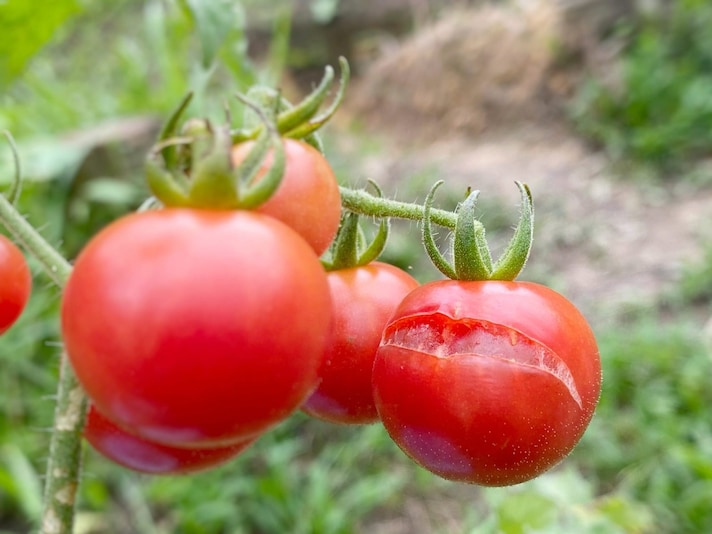
When the soil becomes too waterlogged, the tomato plant accumulates too much moisture, causing the cells inside the fruit to expand rapidly, increasing in volume until they create internal pressure that the tomato skin, which is rather thin, cannot withstand. This causes the skin to "explode," forming a crack. Water isn't the only factor triggering this phenomenon, which can generally be caused by sudden or rapid temperature changes or by the use of fertilizers.
In this case, it makes no difference whether the fertilizer is natural or chemical, because the component that causes the cracking is nitrogen: if the fertilizer contains too much nitrogen, the same phenomenon occurs as water: the molecules swell and expand until the skin cracks. Another factor to consider is the variety of tomato: some are more susceptible to the problem because they have thinner and more delicate skin, such as cherry tomatoes, known for their thin skin.
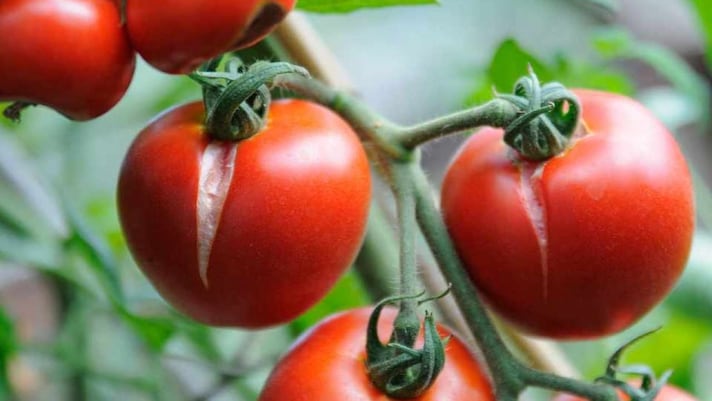
Are Tomatoes With Split Skins Still Edible?
As we've explained, cracked tomato skin is merely an aesthetic issue, not a plant disease, and therefore tomatoes with this phenomenon are completely safe to eat. The only precaution to take is to check that there are no signs of rot around the skin or that the crack hasn't opened up to reveal the pulp: while it's an aesthetic defect, the crack weakens the fruit, which, if it's opened too much, may already be going bad inside or may have attracted small insects like ants. If your tomatoes have passed inspection, you can safely eat them raw, but if you're unsure, simply use them in cooked dishes to avoid any possible (even remote) contamination. In both cases, we recommend removing the cracked part, as it may have an unpleasant taste.
;Resize,width=767;)
