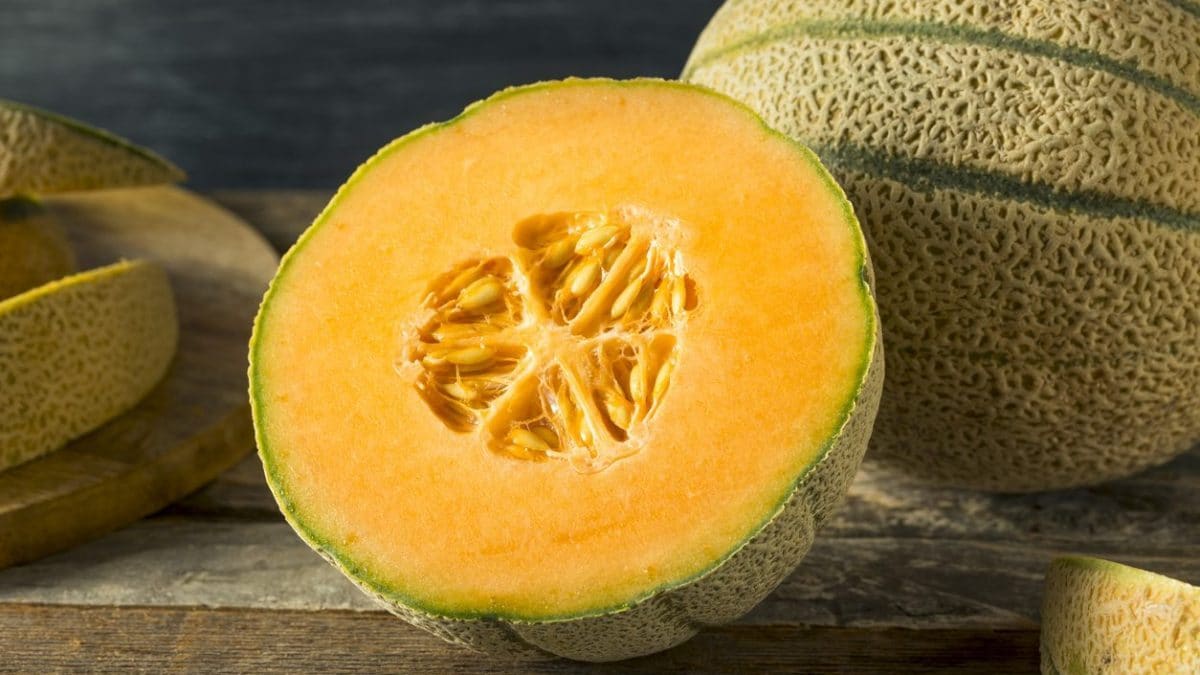
Juicy, fragrant, and sweet, cantaloupe melon is undoubtedly one of the most beloved and consumed spring and summer fruits. Appreciated not only for its irresistible flavor and its ability to enhance any dish it's used in, it's also, and above all, a powerhouse of valuable nutrients. "Nutritionally, it's about 90% water, so it's a great hydrator," explains Simone Gabrielli, biologist and nutritionist.
Essential for recharging during the hottest months and replenishing fluids and minerals lost through sweating, melon is also a great ally for your figure: just 34 calories per 100 grams. "That's why it's an excellent choice as a light snack or natural dessert," suggests our expert. Its high fiber, vitamins, and minerals, such as potassium and magnesium, round out its excellent nutritional profile.
Belonging to the Cucurbitaceae family, the same as cucumbers, pumpkins, and watermelons, cantaloupe melon is characterized by its smooth or slightly wrinkled rind, with more or less pronounced ribs. Its straw-yellow color tends to ochre as it ripens, and its intense orange flesh is firm and pleasantly yielding to the bite. Typical of the spring and summer season —its harvest takes place from May to October—and, despite its ancient Asian and African roots, this particular variety appears to have originated in Cantalupo in Sabina, a small town in the province of Rieti, in Lazio.
Legend has it that in the 15th century, Catholic missionaries returning from Asia brought the seeds of this fruit to the papal castle of Cantalupo: once cultivated, it was so highly prized that it took the name of the place. On the other hand, it is truly impossible to resist: its sweet pulp and intoxicating aroma make it a true summer must-eat. Enjoyed on its own, alone or in the company of other summer fruits, or as the protagonist of a simple and authentic home-made pastry, it is at its best when paired with savory ingredients. Like prosciutto, in the most classic and timeless of combinations, or shellfish and goat's cheeses, for original and appetizing dishes.
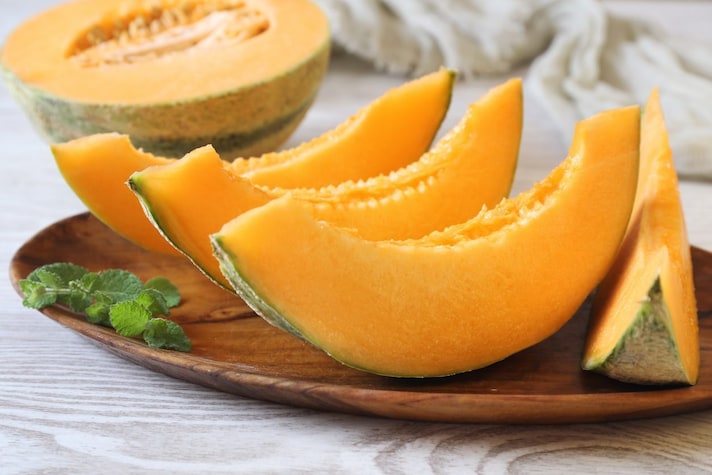
Cantaloupe Melon's Properties
As mentioned, cantaloupe melon is composed primarily of water —about 90%—and simple sugars, and is low in calories: 34 calories per 100 grams of edible pulp. In addition to being exceptionally thirst-quenching and hydrating, this fruit is characterized by its good contribution of vitamin C, vitamin A, in the form of beta-carotene, and minerals such as potassium and magnesium, "important for muscle function and electrolyte balance."
With its antioxidant and anti-inflammatory properties, vitamin C supports the immune system, while beta-carotene is beneficial for skin, vision, and bone health. Finally, it's rich in fiber, making it satiating and satisfying, and recommended for constipation or intestinal irregularity. Always be careful not to overdo the portions: remember that a standard serving is about 150-200 grams, which should be combined with a small source of fat or protein to keep blood sugar levels stable and avoid the classic stomach upset just a couple of hours after our snack.
One last tip: if you suffer from abdominal bloating or low blood pressure, you can add a pinch of whole sea salt to improve its digestibility. This will also make a natural salt supplement, also very useful after an intense workout session to replenish lost fluids.

Benefits and Contraindications
Thanks to its richness in nutrients, cantaloupe melon is a fruit that can boast numerous benefits.
- Natural diuretic: its high water content and the presence of potassium make it an exceptionally hydrating food, useful for eliminating excess fluids, counteracting water retention and promoting the elimination of toxins;
- friend of the skin and eyesight: thanks to the presence of beta-carotene and vitamin C, it is a precious ally for the health of the eyes and skin, protecting it from damage caused by the sun and free radicals, and keeping it elastic and luminous;
- A weight-loss ally: extremely low in calories, yet naturally sweet and irresistible, it's an ideal snack or after-meal treat for those wanting to lose weight or simply watching their weight. Its high water and fiber content makes it satiating, satisfying, and even helpful for constipation or intestinal irregularity.
- antioxidant role: thanks to vitamin C, it supports the immune system and has a decisive antioxidant action;
- blood pressure control: potassium and magnesium, which melon is rich in, are involved in numerous biological functions, such as maintaining pH and fluid and electrolyte balance, and the transmission of nerve impulses; potassium in particular takes part in muscle contraction, including cardiac contraction, and helps balance sodium levels, when the latter is consumed in excessive quantities;
- Natural relaxant: the presence of magnesium contributes to the reduction of stress and the improvement of sleep quality.
Are there any contraindications to its consumption? "None," Gabrielli reassures, "just don't overdo it."
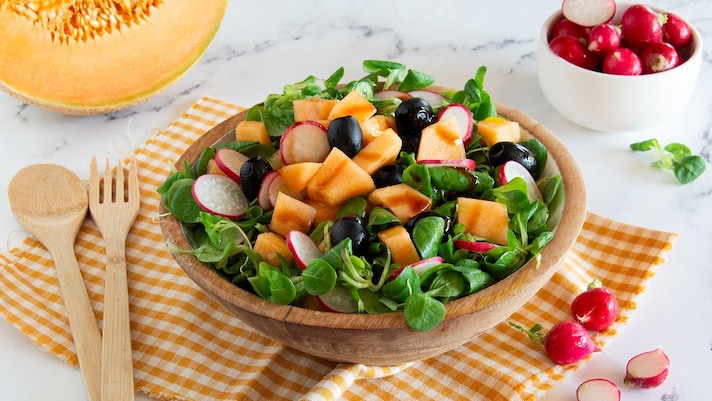
Uses in Cooking
Delicious on its own, alone or paired with other seasonal fruits, melon is an excellent choice for a light yet satisfying snack, or as a sweet treat to enjoy after a meal. Its versatility also makes it suitable for savory dishes, from the most classic and simple to the most original and elaborate.
"It's perfect in salads with arugula or paired with prosciutto, for example, but in the latter case I remind you that it's best to limit your consumption of processed meats and that it shouldn't be consumed too frequently," suggests our expert.
In addition to pairing with cured meats, which create a perfect balance of flavors, melon also pairs beautifully with fresh cheeses such as mozzarella and burrata, feta and goat cheeses, enhancing their savory notes, and with fresh herbs, especially mint and basil. For those who enjoy experimenting, cantaloupe can be the star of fish dishes, tartare, and carpaccio, especially with shrimp, tuna, and salmon.
It can be the perfect addition to colorful and crunchy salads, enriched with fresh spinach, walnut kernels, goat cheese, and a honey and apple cider vinegar dressing, or topped with delicious cold pasta dishes, or even the base for soups and gazpachos with a sweet and savory contrast. In its sweet version, it can be used to create fresh and luxurious desserts, ice creams, sorbets, granitas, and soft and delicious desserts, perfect for breakfast and snacks for the whole family.
To best preserve its properties and full flavor, it's important to choose ripe, firm fruit. Avoid bruised fruit or soft, dark areas, and rely on your sense of smell and touch: when you sniff the end, it should release a sweet, intense aroma, and when you gently press the end opposite the stem with your thumbs, it should give slightly. Once opened, store it in the refrigerator, in an airtight container or tightly sealed with cling film, and consume within 2-3 days.
;Resize,width=767;)
