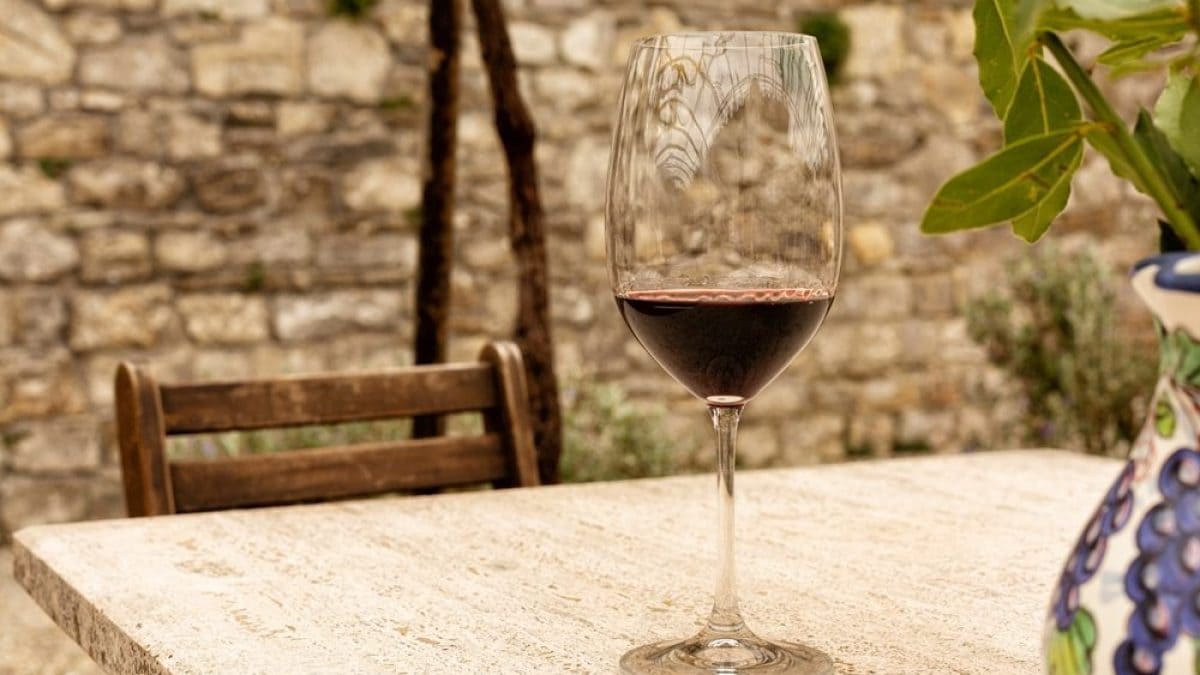
You know that feeling at a restaurant, when you're browsing the wine list and see "Chianti" written on one bottle and "Chianti Classico" on another, and you wonder for a moment if you're simply looking at two versions of the same wine? It happens often, and there's nothing strange about it. The confusion has specific historical roots: both wines originate in Tuscany, both are based on Sangiovese, both bear the name "Chianti" on the label. For years, before the denominations were precisely regulated, the line between the two was truly blurred, and the generic use of the term "Chianti" to refer to any Tuscan red of that type didn't help clarify the issue.
However, today, we're talking about two distinct DOCGs, with different production areas, different regulations, different flavor profiles, and even an iconic brand that belongs to only one of the two: the Gallo Nero del Chianti Classico. Understanding the differences isn't just a sommelier's whim; it helps you choose the right wine for every table, read a label more carefully, and even, why not, share something specific at your next dinner party?
Today, we'll look at the terroir differences between the two denominations, what each specification says about grape composition and aging times, how they behave in the glass, and how to quickly recognize them on a wine shop shelf.
Chianti and Chianti Classico's Production Areas
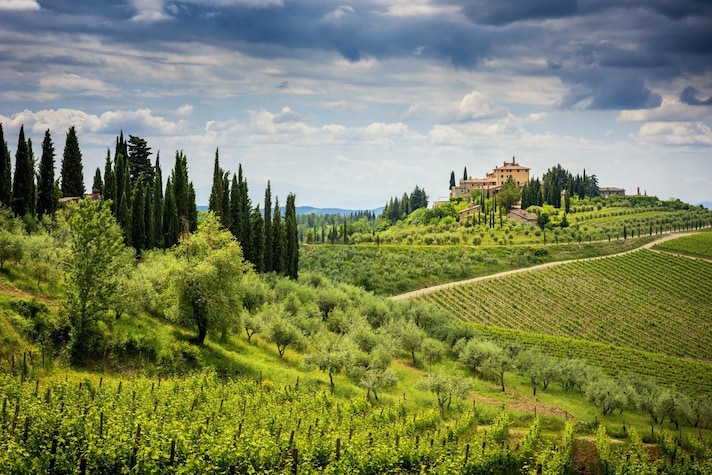
The two appellations share a name, but not the same geographical area. The territory is the first and perhaps most significant differentiating factor: understanding where these wines are produced already helps us understand why they are so different in the glass. Both areas are located in Tuscany, but one is large and spread across multiple provinces, while the other is compact and historically defined with almost surgical precision.
Chianti DPCG, a Denomination as Vas as A Region
Chianti DOCG is, in terms of size, one of Italy's largest appellations. It covers approximately 15,500 hectares of vineyards spread across much of central Tuscany, encompassing the provinces of Florence, Siena, Arezzo, Pisa, Pistoia, and Prato. Translated into production numbers, this vastness translates to between 700,000 and 800,000 hectoliters annually in typical years: volumes rarely achieved in more compact appellations.
Within this scope, the production regulations recognize seven official subzones: Colli Aretini, Colli Fiorentini, Colli Senesi, Colline Pisane, Montalbano, Montespertoli, and Rufina. These are very different geographical areas in terms of morphology, soil, and climate, which partly explains why a Chianti Colli Aretini and a Chianti Rufina can have quite distinct characteristics despite sharing the same basic denomination. The zone includes inland hills as well as less markedly hilly areas, with varying altitudes and soil and climate conditions from one end of the denomination to the other.
Chianti Classico DOCG, The Historic Heart Between Florence and Siena
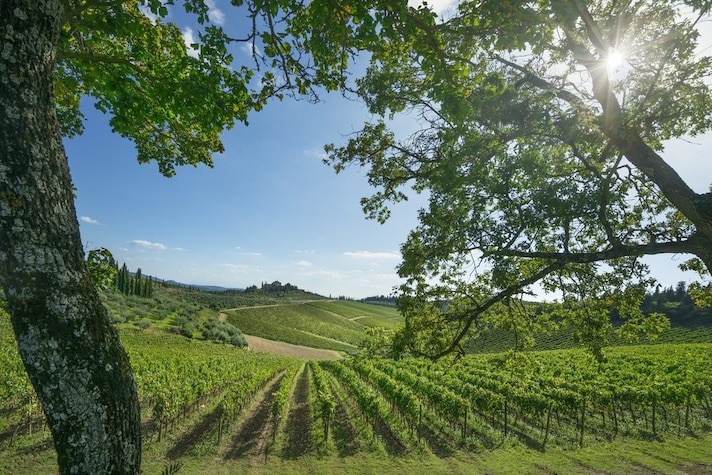
Chianti Classico occupies a much smaller area: approximately 7,200 hectares of vineyards, with an annual production of between 260,000 and 300,000 hectoliters. These numbers alone make it clear that it is a territory with precise boundaries and a well-defined vocation, far from the logic of large-scale production.
Those boundaries have distant origins: the Chianti Classico territory coincides with the area historically delimited in 1716 by the Grand Ducal proclamation of Cosimo III de' Medici, who first identified certain Tuscan regions as particularly suited to the production of quality wines. Today the regulations identify an area encompassing the municipalities of Greve in Chianti, Castellina in Chianti, Gaiole in Chianti, and Radda in Chianti, with portions of other municipalities such as Barberino Tavarnelle, San Casciano in Val di Pesa, Castelnuovo Berardenga, and Poggibonsi.
The Chianti Classico vineyards are located on hilly terrain up to 700 meters above sea level, with predominantly sandstone, calcareous marl, and clay – schist soils. Damp valley floors and heavily clayey soils are excluded from the production regulations: this choice aims to ensure drainage, concentration, and structure in the grapes, guiding the denomination toward a precise quality profile.
Why Chianti Classico's Terroir Makes the Difference
The combination of higher altitudes than average for Chianti, sharp day-night temperature variations, and poor but well-drained soils is what distinguishes the Chianti Classico profile, starting from the vineyard. Cool nights slow ripening and preserve the natural acidity of Sangiovese; poor soils limit yield per vine and concentrate aromas. This is why Chianti Classico wines tend to have more structure, more freshness, and a greater capacity to evolve in the bottle than many Chianti expressions from warmer or more fertile areas.
Grapes, Specifications and Aging Differences
Territory aside, the most tangible differences between Chianti and Chianti Classico can be found in the production regulations: technical documents that establish the minimum percentage of Sangiovese, the grapes permitted in the blend, the yields per hectare, and the mandatory aging periods. These are rules that define the wine's character before it even enters the cellar, and they explain many of the differences that are then perceived in the glass.
Chianti DOCG's Ampelographic Basis
The Chianti production regulations stipulate a Sangiovese percentage of between 70% and 100%, thus leaving significant room for the inclusion of other varietals. These include native varieties such as Canaiolo and Colorino, as well as international varieties such as Merlot and Cabernet Sauvignon, which together cannot exceed 15% of the composition. White grapes are permitted, provided they do not exceed 10% overall: a window of opportunity increasingly less used by producers, but technically still open.
The Colli Senesi subzone requires a slightly higher percentage of Sangiovese, set at a minimum of 75%, with a maximum of 10% white grapes. In terms of alcohol content, "annata" Chianti requires a minimum of approximately 11.5%, with higher values for the "Riserva" designation. Minimum parameters for total acidity and dry extract are also required.
Chianti Classico DOCG's Ampelographic Basis
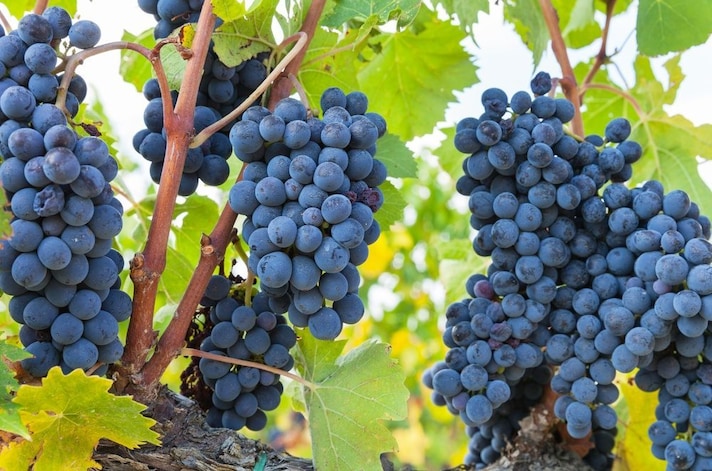
Chianti Classico works with a more stringent composition: Sangiovese must represent 80% to 100% of the grapes, and the remaining portion, up to 20%, can only be made up of red grape varieties suitable for cultivation in Tuscany. These include Canaiolo, Colorino, as well as Cabernet Sauvignon and Merlot. White grapes were definitively excluded starting with the 2000 harvest: a turning point that marked the denomination's shift toward more structured and long-lived wines, strengthening the distinctive character of Sangiovese.
The minimum alcohol content for Chianti Classico is generally around 12%, with stricter parameters for the Riserva and Gran Selezione types in terms of acidity and dry extract.
Quality Pyramid and Refinement Times
Here the differences become particularly visible. Chianti Classico has a quality pyramid divided into three levels: the Vintage, with a minimum 12-month aging period; the Reserve, with at least 24 months of aging, part of which must be in the bottle; and the Gran Selezione, which requires a minimum of 30 months and requires the grapes to be sourced from select estate vineyards. Three clear steps, each with increasing requirements.
Chianti also has several different styles: Annata, Superiore, and Riserva. The latter requires at least 24 months of maturation from January 1st following the harvest, with higher alcohol and extract levels than the base vintage. Yields per hectare in Chianti are generally higher than those of Chianti Classico, with greater flexibility depending on the subzone, resulting in larger production and styles often geared toward immediate drinking and enjoyment.
Flavor Profile and Style
Every choice made in the vineyard and cellar ultimately arrives in the glass. The way Chianti and Chianti Classico present themselves on the nose and palate reflects all the differences already noted in the terroir and production regulations, with nuances that become more evident as you move up the quality pyramid. Before choosing a bottle, it's worth knowing what to expect from each.
Chianti DOCG's Profile
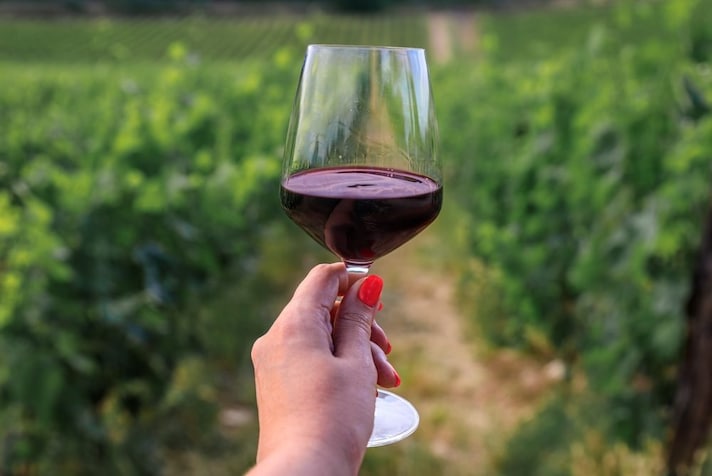
Chianti generally presents a vibrant ruby red color, tending toward garnet with aging. On the nose, it offers fruity and direct aromas: cherry, berries, and often a hint of floral violet. It has a pleasant, recognizable aromatic profile, also designed for those new to the world of Sangiovese without the need to decipher excessive complexity.
On the palate, the vintage is dry, with moderately present but not aggressive tannins, balanced acidity, and a medium-bodied structure that makes it versatile for pairing. The Superiore and Riserva versions add concentration, a more or less pronounced use of wood, and a few more years in the cellar, but the underlying style remains focused on readability and ease of drinking. Internal variability is wide, precisely because the appellation is so large: the differences between a Chianti Rufina and a Chianti Colline Pisane can be quite marked, and knowing the subzones helps you orient yourself more precisely.
Chianti Classico DOCG's Profile
Chianti Classico begins with a base of Sangiovese grown on poorer soils at higher altitudes. This is evident in the color, an intense ruby that becomes dark and full-bodied in the more structured versions. On the nose, the bouquet is more complex from the very beginning: violet and iris intertwine with ripe cherry, small berries, and, in the Reserves and Gran Selezioni, spicy, balsamic, and occasionally tobacco or graphite nuances.
On the palate, it's the tannins that make the difference: more present, more incisive, with a texture that in young versions can seem tight but that, with a few years in the bottle, softens into a fine and persistent texture. The acidity is pronounced, a structural characteristic of Sangiovese Classico that guarantees freshness and longevity. The acidic and mineral backbone you perceive with every sip is what allows certain Chianti Classico Riservas to withstand ten or fifteen years in the cellar without losing momentum. It's one of the characteristics that distinguishes great reds for aging from those designed to be enjoyed young.
How to Recognize Then and Which One to Choose Based on The Occasion
Once you've gotten there, the theory is clear. But when faced with a wine shelf or a wine list, the distinction must be legible in a matter of seconds. There are specific elements to look for on the label, and some practical criteria to guide your choice without consulting the specifications every time.
What to Look for on The Label
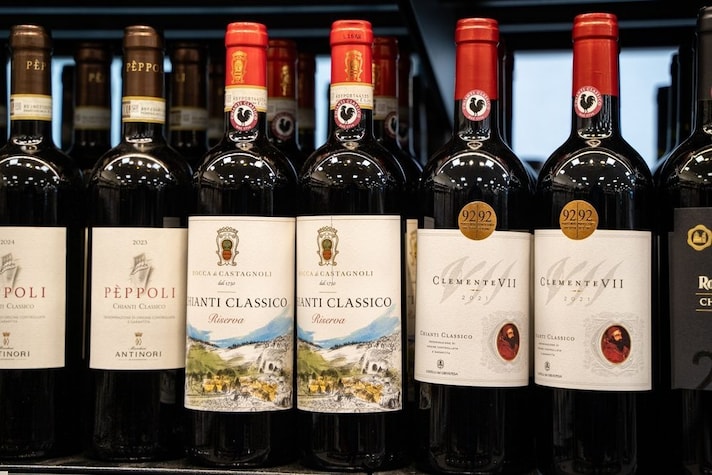
The first thing to look for is the full name of the denomination: "Chianti DOCG" or "Chianti Classico DOCG." The word "Classico" isn't a stylistic addition or a way of indicating a traditional version: it's an integral and inseparable part of the denomination's name. If you only see "Chianti" on the label, you're looking at Chianti DOCG.
The second element is the Black Rooster. All bottles of Chianti Classico must bear the Black Rooster logo, the official and mandatory symbol of the Consortium, affixed to the neck of the bottle or the front label. A bottle with this symbol is necessarily a Chianti Classico. "Simple" Chianti, while it may graphically recall the terroir, cannot use the Black Rooster: that logo remains exclusive to the classic denomination and alone is sufficient to distinguish the two bottles even from a distance.
Qualitative Mentions
For Chianti Classico , the label's description says a lot about the wine you're about to open. The absence of additional information indicates the vintage; the word "Riserva" indicates at least 24 months of aging; the term "Gran Selezione" is the tip of the pyramid, with grapes from select estate vineyards, at least 30 months of maturation, and a profile designed for those seeking the ultimate expression of the Black Rooster terroir. Some Gran Selezioni also include mentions of individual municipalities or additional geographical units, an increasingly popular tool for exploring Chianti Classico's terroir in greater detail.
For Chianti, the label may include the terms "Superiore" and "Riserva," as well as any sub-zone designations such as "Chianti Colli Senesi DOCG" or "Chianti Rufina DOCG." These are useful indicators for distinguishing the denomination's seven geographical areas, each with its own characteristics, and for finding a Chianti that best suits your preferences.
Which Ones to Choose Based on The Occasion
The choice depends largely on what you're serving and what you're looking for in your glass. For a casual lunch with Tuscan cured meats, pasta with meat sauce, a mixed grill, or even just a schiacciata with prosciutto, a Chianti Annata or Superiore is a perfect choice: fruity, drinkable, with a medium structure, and often very affordable. It works well without the need for a carefully crafted pairing.
If you're dining with a Florentine steak, wild boar stew, aged hard cheeses, or dishes that call for a structured wine, a Chianti Classico Riserva or Gran Selezione will give you something extra: depth, complexity, palate-cleansing tannins, and a length that accompanies every bite without disappearing. For those who also want to explore the nuances of terroir, Chianti Classico now offers label mentions of individual municipalities or additional geographical units, especially in the Gran Selezione: a way to understand the Gallo Nero territory not as a single block, but as a mosaic of places where Greve, Radda, Gaiole, and Castelnuovo Berardenga each tell a different story about Sangiovese.
;Resize,width=767;)
