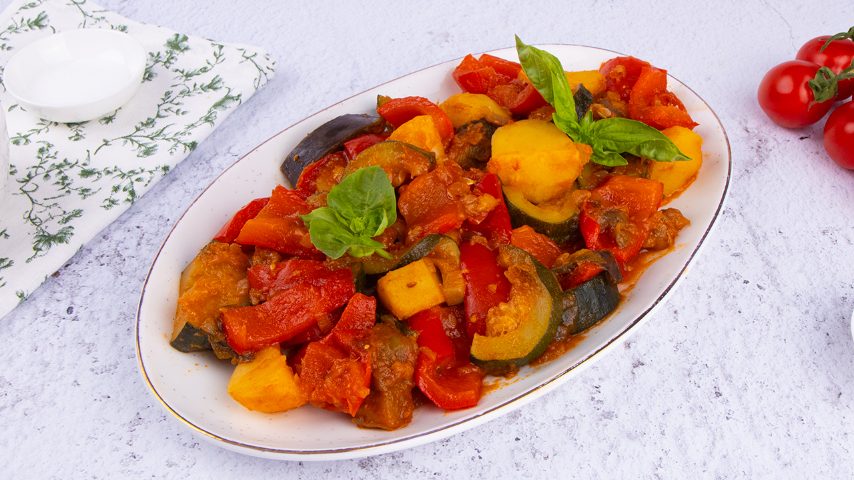
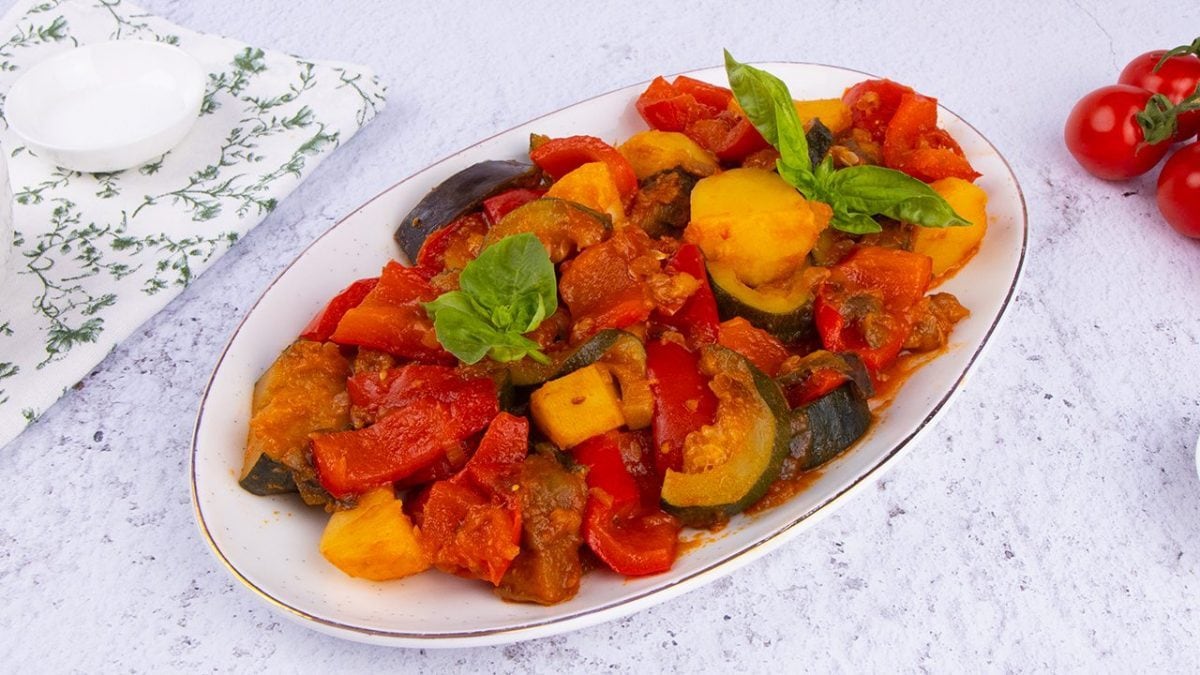
Stewed Vegetables, also known as Ciambotta, is a rustic and flavorful Italian side dish made with a colorful mix of zucchini, potatoes, eggplants, peppers, tomatoes, and aromatic basil. Slowly cooked with tomato sauce and olive oil, this recipe transforms simple vegetables into a comforting dish full of Mediterranean flavor.
Perfect served warm or at room temperature, ciambotta is a versatile side dish that pairs beautifully with grilled meats, fish, fresh bread, or can be enjoyed as a light vegetarian meal.
Why Everyone Will Love This Recipe
This stewed vegetable dish is loved for its rich flavors, tender texture, and simplicity. Each vegetable contributes something special: potatoes add heartiness, eggplants provide creaminess, peppers bring sweetness, and tomatoes create a delicious sauce.
It’s also a practical recipe that celebrates seasonal ingredients. Easy to prepare and naturally vegetarian, ciambotta is a great example of how traditional cooking can turn humble vegetables into something truly satisfying.
What Is Ciambotta?
Ciambotta is a traditional Southern Italian vegetable stew, especially associated with regions such as Campania, Basilicata, Calabria, and Puglia. The name and preparation can vary from area to area, but the dish generally refers to a mixture of seasonal vegetables slowly cooked together with olive oil, tomatoes, and herbs.
The recipe reflects the Mediterranean tradition of using fresh, local produce and allowing simple ingredients to develop deep flavors through slow cooking. Similar vegetable stews can be found throughout Italy, including dishes like caponata and peperonata, but ciambotta is particularly known for its generous combination of summer vegetables and rustic character.
Cooking Tips
- Choose vegetables that are fresh and firm because their quality greatly influences the final flavor of the dish.
- Cut the vegetables into similar-sized pieces so they cook evenly and maintain a pleasant texture throughout the stew.
- Cook the onion slowly in olive oil before adding the other vegetables because this creates a flavorful base and enhances the natural sweetness of the dish.
- Add the vegetables according to their cooking time if you want a more structured texture, starting with firmer ingredients such as potatoes and eggplants before adding softer vegetables.
- Avoid adding too much water because the vegetables naturally release moisture while cooking, and a thicker sauce creates a more flavorful result.
- Use fresh basil near the end of cooking because it preserves its delicate aroma and adds a bright Mediterranean note.
- Allow the ciambotta to rest briefly before serving because the flavors continue to blend and become more intense after cooking.
Frequently Asked Questions
Can I Use Different Vegetables?
Yes, ciambotta is a very flexible recipe that can be adapted according to the season. You can add ingredients such as carrots, green beans, celery, mushrooms, or other vegetables you have available while keeping the rustic style of the dish.
Can I Make Ciambotta Without Tomato Sauce?
Yes, you can prepare a lighter version without tomato sauce by cooking the vegetables with olive oil, herbs, and a little vegetable broth or water. The result will have a fresher vegetable flavor while maintaining the same comforting character.
Can I Serve Ciambotta as a Main Dish?
Absolutely. Although traditionally served as a side dish, ciambotta can become a complete vegetarian meal when served with crusty bread, rice, pasta, or legumes. Its combination of vegetables makes it satisfying and flavorful.
Can I Add Spices to This Recipe?
Yes, you can customize ciambotta with spices such as chili flakes, oregano, black pepper, or a touch of paprika. These additions can enhance the Mediterranean flavors while giving the dish a slightly different character.
Why Is My Vegetable Stew Too Watery?
Vegetables naturally release water while cooking, especially zucchini and tomatoes. To create a thicker stew, cook uncovered for a few extra minutes at the end or reduce the amount of added water.
How to Store
Store stewed vegetables in an airtight container in the refrigerator for up to 3 days. The flavors often become even richer after resting, so it can be enjoyed warm or at room temperature after storage.
How to Freeze
Freeze ciambotta in freezer-safe containers for up to 1 month. Allow it to cool completely before freezing, then thaw in the refrigerator and reheat gently on the stove until warmed through.
Ingredients
How to Make Ciambotta

To prepare the ciambotta, first rinse the vegetables and dry them, then cut the courgettes into regular pieces.
To prepare the ciambotta, first rinse the vegetables and dry them, then cut the courgettes into regular pieces.

Peel the potato, cut it in half and cut it into cubes.
Peel the potato, cut it in half and cut it into cubes.

Trim the eggplant and cut it into small pieces too.
Trim the eggplant and cut it into small pieces too.

Brown the onion, finely chopped with a knife, in a large saucepan with a generous drizzle of extra virgin olive oil.
Brown the onion, finely chopped with a knife, in a large saucepan with a generous drizzle of extra virgin olive oil.

Add the eggplants to the sauté, mix with a wooden spoon and let it flavor for a few moments.
Add the eggplants to the sauté, mix with a wooden spoon and let it flavor for a few moments.
;Resize,width=712;)
Then add the potatoes and peppers, previously cleaned and cut into pieces.
Then add the potatoes and peppers, previously cleaned and cut into pieces.

Add the halved cherry tomatoes and the zucchini.
Add the halved cherry tomatoes and the zucchini.

Flavor with a few fresh basil leaves, then pour in the tomato puree and moisten with 70 ml of water.
Flavor with a few fresh basil leaves, then pour in the tomato puree and moisten with 70 ml of water.

Add salt to taste and mix well with a wooden spoon.
Add salt to taste and mix well with a wooden spoon.

Cover with a lid and let it cook gently for about 15 minutes.
Cover with a lid and let it cook gently for about 15 minutes.

Once the cooking time is up, turn off the heat.
Once the cooking time is up, turn off the heat.

Transfer the ciambotta to a serving plate, bring to the table and serve. Enjoy!
Transfer the ciambotta to a serving plate, bring to the table and serve. Enjoy!
;Resize,width=767;)
