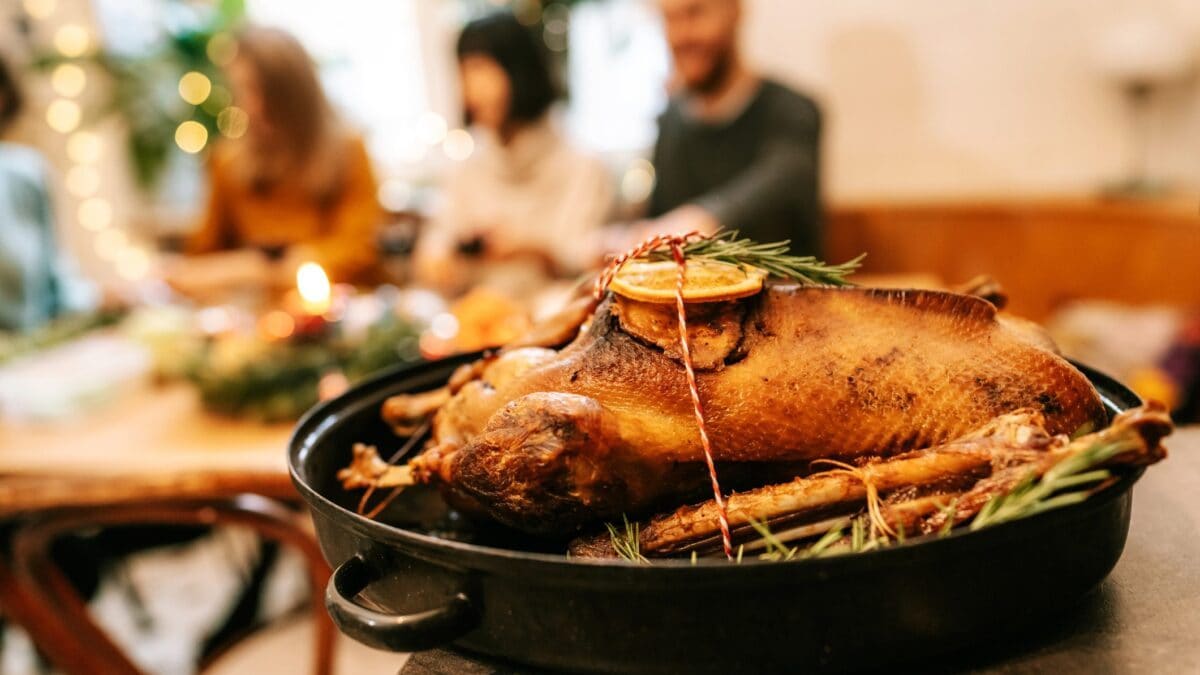
In Denmark, November 10th is a special evening spent at the table with family, in front of a plate of roast duck: it's called Mortensaften and is a tradition linked to Saint Martin and a curious legend involving some geese. A celebration that is renewed every year with a typical menu, made up of dishes and flavors that also return to the Danish Christmas table.
What is Mortensafted and When Is It Celebrated?
Mortensaften is a Danish tradition celebrated annually on November 10, the eve of St. Martin's Day, which falls on November 11. The name can be translated as "Martin's evening": Morten is in fact the Danish form of the name Martin, while aften means "evening." The holiday is not an official holiday and daily life continues as normal: the celebration takes place mostly with the family, with a dinner featuring roast duck. The choice to celebrate the evening before the day dedicated to the saint is linked to an ancient way of calculating time: in European agricultural societies, the new day began at sunset, not at midnight.
The Legend of Saint Martin
The tradition of Mortensaften is linked to a legend that explains why geese became the gastronomic symbol of this holiday. Martin of Tours, who according to tradition was born around 315 and became bishop of Tours in the 4th century, did not wish to assume this office. When the city's inhabitants decided to elect him bishop, he allegedly tried to hide in a pen full of geese. The animals, however, began quacking loudly, revealing his hiding place: Martin was thus discovered and appointed bishop. From this legendary episode, the custom of eating goose on his feast day arose, almost as a sort of symbolic punishment for the animals that had revealed his hiding place.
The story has become part of European popular tradition, but the link between Saint Martin and the consumption of goose also developed for practical reasons: November was in fact the period in which, in the countryside, geese were slaughtered.

Why Do People in Denmark Eat Duck Instead of Goose?
Originally, the traditional Mortensaften dish was roast goose, called mortensgås in Danish. The custom is attested in Denmark as early as the 16th century and was already consolidated by the 18th century: as evidenced by a hospital's dietary regulations on the island of Lolland, roast goose was included in the St. Martin's Day dinner.
Over time, however, the goose was gradually replaced by the duck. The reason was primarily practical: the goose, a large and expensive animal, was more suitable for large, wealthy families, while the duck was easier to prepare and share even among smaller households. Today, the latter therefore takes center stage on most Danish tables, although some families opt for chicken.

Mortensaften's Traditional Menu
The Mortensaften dinner features a fairly specific menu, somewhat reminiscent of the Danish Christmas meal. The main course is roast duck, usually stuffed with apples and prunes and baked in the oven. It's served with red cabbage, potatoes caramelized in a pan with sugar and butter, and a sauce made from the cooking juices, which can be enriched with cream. It's a hearty and convivial dinner, bringing families together around a lavishly laid table, and it's no coincidence that many of the same dishes are also featured on Danish Christmas Eve.

