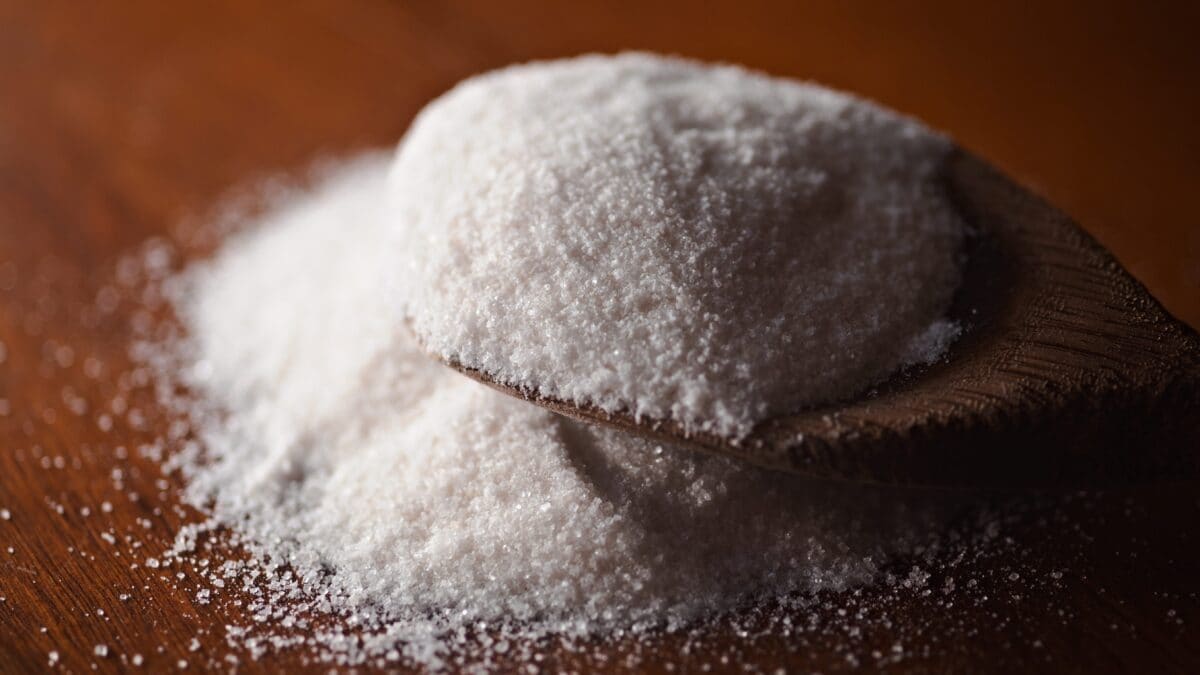
Aspartame, the sugar substitute that many of us consume more or less unknowingly, has its own unique timetable: every two or three years someone reopens the case, and each time the verdict is very similar to the previous one.
On 10 September 2026, the European Food Safety Authority concluded the re-evaluation of aspartame-acesulfame salt, the additive code E 962, and in the process also gave the green light to aspartame, E 951, which appears on the labels of thousands of sugar-free products.
The acceptable daily dose is the one already established in 2013, forty milligrams per kilogram of body weight, and anyone who was hoping for a reconsideration after last year's European petition will have to resign themselves.
What Has ESFA Decided About Aspartame?
The review isn't a sudden scare, because since 2010, a European regulation has required the EFSA to individually reassess the 315 additives already authorized in Europe before 2009, almost all of which were approved between the 1980s and 1990s using the scientific criteria of the time. The sweeteners are being reviewed one by one, from aspartame in 2013 to saccharin in 2024, and finally acesulfame K last year.
The verdict, approved in July 2026 during a session open to external observers, was signed by the Authority's scientific committee that evaluates additives and flavorings. The substance at the center of those pages, E 962, is a molecule that binds aspartame and acesulfame K together and, upon ingestion, separates back into its two original components. For this reason, the evaluators examined the two substances one at a time, given that in the body they behave as if they were ingested separately.
The answer to aspartame is clear, because neither the additive nor the products of its breakdown in the intestine (aspartic acid, phenylalanine, and methanol) are genotoxic, meaning they are capable of damaging cell DNA. None of the studies published after 2013 provide sufficient evidence to revise the acceptable daily intake, which remains at forty milligrams per kilogram, while estimated consumption remains below that ceiling across all age groups.
The document concludes with two recommendations: updating the Community specifications for E 962 and revising the arsenic and lead limits tolerated in E 951.
What is Aspartame and Where Is It Found?
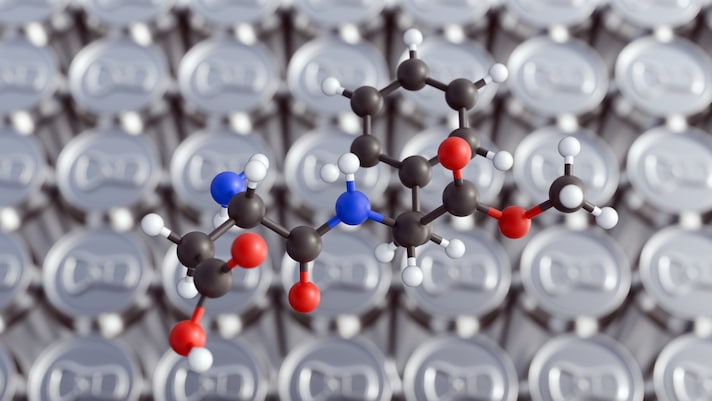
We're talking about a synthetic sweetener that was invented by chance in 1965 by an American chemist working on an ulcer drug. It's a methyl ester composed of two amino acids, aspartic acid and phenylalanine, and has a sweetening power about two hundred times greater than that of sugar. In Europe, it appears in over 2,500 products, including diet drinks, chewing gum, yogurt, desserts, and tabletop sweeteners.
On the label, we find it as E 951 or in full, always accompanied by the mandatory warning about the presence of a source of phenylalanine. That line is an important warning for those living with phenylketonuria, a rare condition that prevents the body from properly eliminating that specific amino acid.
How Much Aspartame Can You Take in a Day?
The 40 milligram per kilogram of body weight limit corresponds to 2.8 grams for a 70-kilogram adult. A 330-milliliter can of sugar-free soda contains between 200 and 300 milligrams, so to exceed the limit, we would need to drink nine to fourteen a day, not counting other foods with added sweeteners.
For acesulfame K the permitted threshold drops to 15 milligrams, a value that the 2025 revision has however raised compared to the nine set in the 1980s.
Why Aspartame is Considered a Possible Carcinogen
In July 2023, the International Agency for Research on Cancer placed it in Group 2B, that of possible carcinogens for humans, based on evidence deemed limited.
Of particular weight are three studies that observed a statistical link between aspartame consumption and hepatocellular carcinoma, the most common form of liver cancer, without however managing to demonstrate that the former causes the latter. The classification measures the strength of the scientific evidence and not the actual extent of the risk, so much so that in the same group (2B) coexist the extract of whole aloe vera leaves, radiofrequency electromagnetic fields and benzophenone.
Along with that classification, however, the WHO released a second verdict, signed by the committee of experts the Organization manages with the FAO. That committee answered a different question: how much of a substance can be consumed daily without adverse effects. Its conclusion is that the permitted dose, forty milligrams per kilogram, should not be touched and that aspartame can continue to appear in foods without restrictions.
The European Petition to Ban It
On February 4, 2025, the non-governmental organization Foodwatch, the French League Against Cancer, and a label-reading app (Yuka) launched a petition in eleven countries to ban the additive, an operation that attracted more than 400,000 signatures.
The proponents invoke the precautionary principle and challenge the 2013 assessment, which they believe is flawed by conflicts of interest. They also cite research linking habitual sweetener consumption to type 2 diabetes and cardiovascular disease. EFSA, for its part, maintains that it has not found any evidence among the studies published after 2013 to justify a change to the acceptable daily intake.
The case, predictably, doesn't end here, because aspartame shares the same fate as the serial defendants, acquitted at every level and reinstated at the first available opportunity.
;Resize,width=767;)
